Quick Buzz Feed

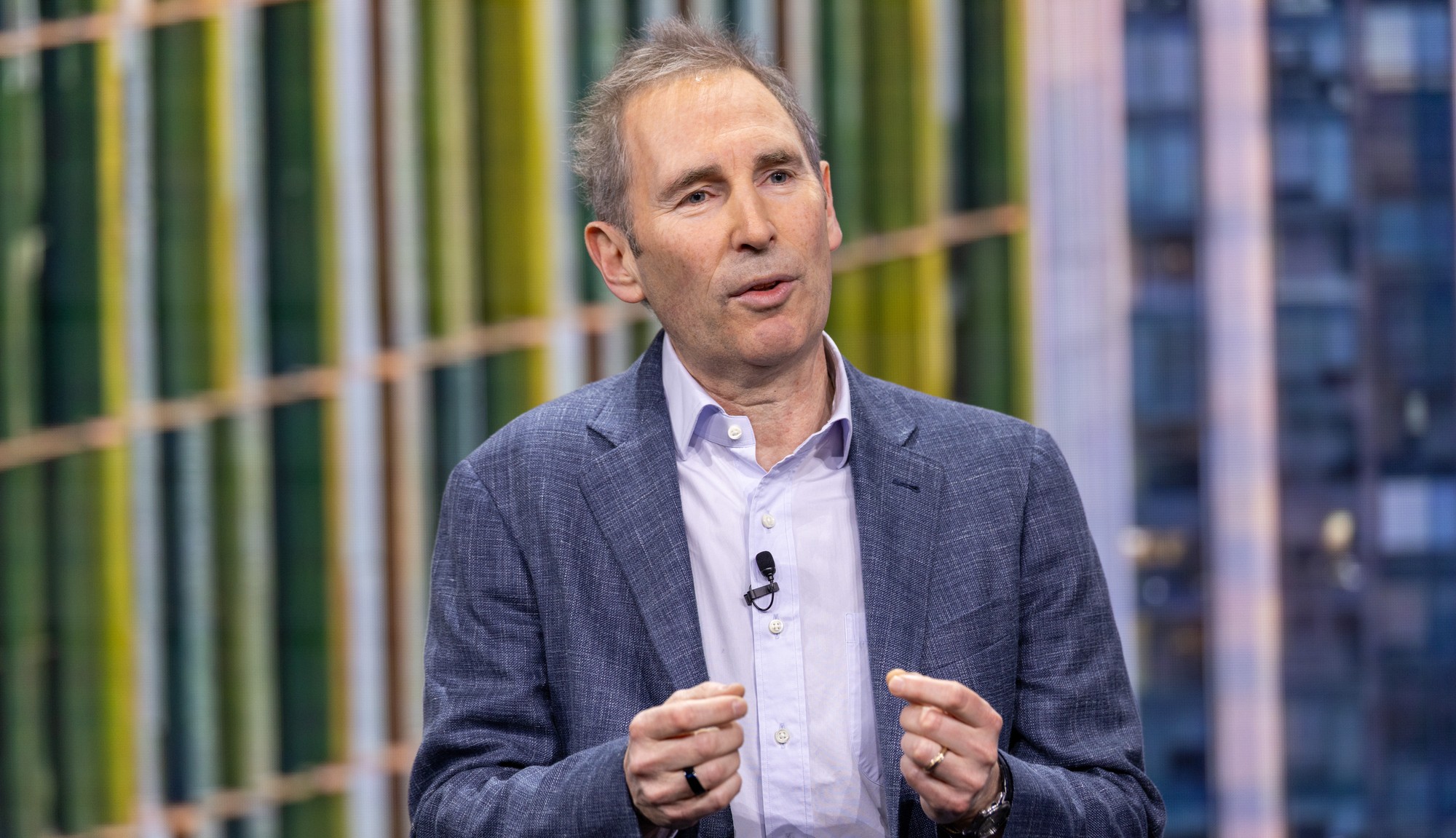
Andy Jassy recently spent some time justifying Amazon's growing AI infrastructure budget.
Amazon's increased capital expenditure (capex) outlook for 2026, driven by higher memory costs for AI infrastructure, directly impacts its free cash flow. In the last 12 months, free cash flow shifted to a $7.6 billion outflow due to a $66.1 billion year-over-year rise in property and equipment purchases, largely for AI. Despite Amazon Web Services (AWS) revenue and operating income significantly growing, the massive scale of AI capacity build-out temporarily causes negative free cash flow. This is seen not as operational weakness but as a necessary upfront investment whose returns are expected over time, once new facilities and servers are operational and utilized by customers.
During the earnings call, CEO Andy Jassy elaborated on the long-term economic benefits of AI data centers. He noted that data centers have a useful life of 30 years or more, allowing for five or six generations of servers to be cycled through, which improves unit economics after the initial capital investment. However, Amazon is currently building multiple data centers simultaneously, ahead of revenue generation, leading to elevated capex and immediate pressure on free cash flow. Jassy indicated that even with a $220 billion budget, Amazon expects to face AI capacity bottlenecks into 2027 as enterprise customers are still early in adopting AI inference workloads, highlighting the sustained and robust demand for AI infrastructure.
Andy Jassy's most notable remark was an updated long-term vision for AWS, where he stated it could 'very possibly be a trillion-dollar annual revenue business.' This significantly higher ambition frames the current heavy investment in AI infrastructure as a necessary step for a market with extraordinary long-term potential, rather than a speculative or short-lived trend. This perspective suggests that AI is still in an early phase, with its growth measured in years or decades, not quarters. For patient investors, this indicates a compelling opportunity to accumulate Amazon stock, viewing it as a blue-chip compounder whose competitive edge in cloud and AI is strengthened by these investments, despite immediate cash flow pressures.