Quick Buzz Feed

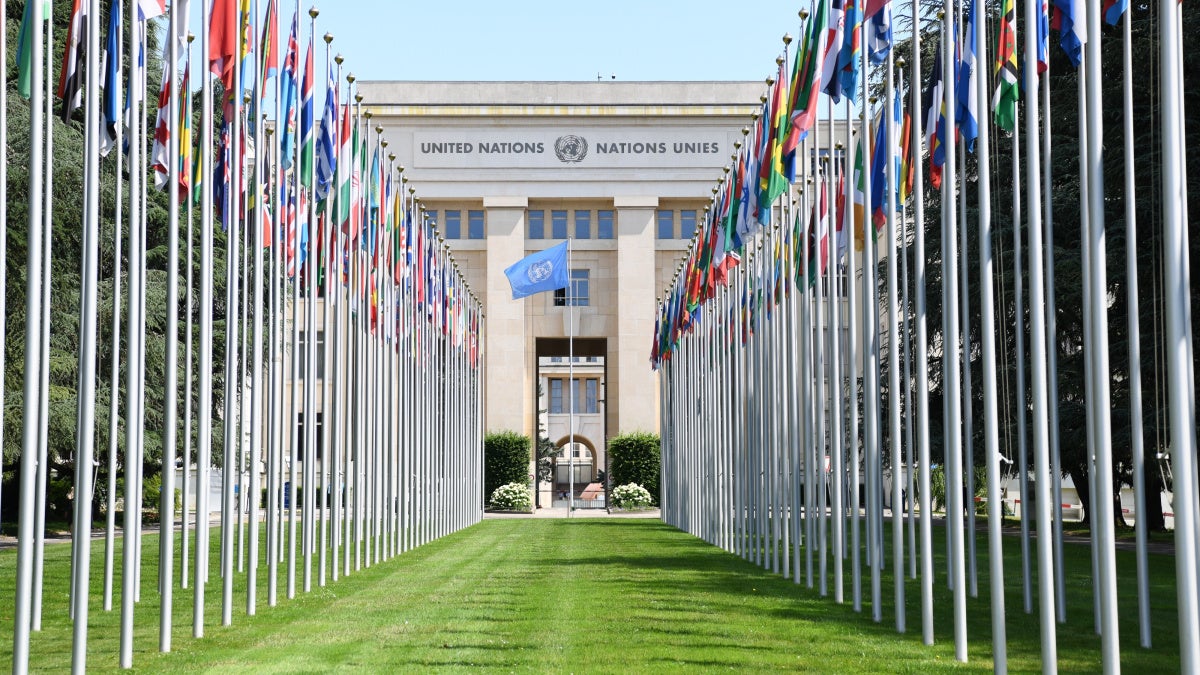
This briefing, prepared by Human Rights Watch for the informal multi-stakeholder exchanges convened in Geneva in June 2026 pursuant to United Nations General Assembly resolution 80/58, sets out what states should do, through a series of recommendations to promote compliance with international humanitarian and human rights law and protect civilians in response to the threats posed by AI in the military domain.
Militaries are rapidly integrating artificial intelligence (AI) into critical decisions concerning the use of force, including targeting and assessing harm to civilians. This global trend raises significant human rights and humanitarian concerns, particularly the risks associated with removing meaningful human control from military actions. Human Rights Watch (HRW) has extensively researched these impacts, from autonomous weapons systems to the use of automated digital tools in conflict zones like Gaza. This briefing, prepared for the UN informal exchanges in June 2026, presents recommendations for states to ensure adherence to international humanitarian and human rights law. HRW identifies three core concerns: first, the swift adoption of AI-enabled capabilities bypasses necessary testing and evaluation, effectively turning battlefields into testing grounds. Second, AI facilitates attacks at speeds and scales that make it challenging or impossible to implement meaningful precautions to protect civilians. Third, AI-driven decision support can undermine human judgment crucial for legal compliance, exacerbated by automation bias, system opacity, and the substitution of statistical data for nuanced qualitative assessments. This risks a decline in civilian protection standards, treating probabilistic outputs as sufficient for legal assessment. The UN exchanges offer a crucial opportunity for states to set a clear agenda on how to address these urgent humanitarian and human rights issues raised by military AI, by clarifying existing legal applications and identifying where new laws are needed.
Human Rights Watch, in collaboration with the Stop Killer Robots campaign, urges states to implement an immediate moratorium on using any AI system, including generative AI, for targeting decisions. This moratorium should remain in effect until critical safeguards are established. These safeguards include ensuring that systems involved in the use of force do not utilize data gathered in ways that violate human rights or other international laws, especially unreliable or inappropriate data. Furthermore, all military AI systems must operate under meaningful human control, particularly regarding speed and scale, to ensure decisions remain within human cognitive capacities. Life-and-death decisions must never become de facto automated, requiring deliberate and informed human decision-making. States must also mandate predictability, reliability, explainability, and traceability for all AI systems, alongside transparency about their applications and impacts. Complementing these calls, HRW recommends that states reaffirm that AI use should never lower civilian protection standards, and that national doctrines should articulate how this standard will be maintained. States should acknowledge the novel challenges AI systems, including machine learning and algorithmic tools, pose to transparency and accountability due to their technical design, licensing, and the involvement of private sector actors. A process to develop common good practices for testing, evaluation, verification, validation (TEVV), risk forecasting, harm mitigation, legal reviews, auditing, reporting, and post-action reviews is essential. Future discussions should focus on applying international law to AI in force use and developing steps to address specific humanitarian concerns, such as establishing red lines and applying precautions in attack. Prioritization should be given to AI applications with the most severe humanitarian implications. Finally, accessible mechanisms for adequate fulfillment of rights to remedy and redress for AI-related abuses in the military domain must be established.
AI is an overarching term for a diverse set of general-purpose technologies that derive their effects from integration with data and other digital systems, including sensors, autonomous platforms, munitions, cloud infrastructure, and surveillance data. It's crucial to understand that AI is not a singular 'weapon' but a network of interconnected systems. Militaries are rapidly adopting AI for various applications, categorized broadly into five core capabilities: reasoning (networking dispersed data), learning (optimizing operations based on experience), planning (designing and executing strategies), perception (mapping environments via sensor data), and communications (generating information for human-machine and machine-machine interaction). Practical examples include computer vision for target identification, reinforcement learning for uncrewed system mission planning, and large language models for intelligence summaries and course-of-action generation. These capabilities manifest in four key military uses of force: autonomy (e.g., autonomous weapons like loitering munitions), insight (generating inferences from data to classify persons or objects, such as Israel's Lavender and Gospel systems), decision-making (recommending or selecting courses of action, like Palantir's Maven Smart System or Israel's 'Fire Factory'), and management (coordinating drone swarms or multi-domain operations). These diverse applications highlight the complexity of regulating military AI.
The term 'AI in the military domain' is broad, covering everything from logistics and training to autonomous weapons systems. This briefing specifically focuses on AI applications that have the most direct and documented implications for civilians and their human rights. This primarily includes AI used to support decisions on the use of force, encompassing the identification, selection, and engagement of targets, as well as the assessment of expected civilian harm. Crucially, this briefing does not cover autonomous weapons systems, which independently select and engage targets without human intervention; HRW and others advocate for separate, legally binding instruments to regulate these specific systems. This focused approach is justified by current military AI uses, such as Israel's documented deployment of digital tools in Gaza that increased civilian harm risks, Russia's integration of AI-enabled target recognition systems in Ukraine that altered conflict patterns, and the US's reliance on AI for accelerated targeting in operations in Iran. Other applications, like multi-source intelligence platforms used by NATO, AI in air defense, and AI in cyber operations, also illustrate the diversity of uses. The varied nature of these applications necessitates distinct legal and humanitarian policy responses tailored to each specific use case.
Many states now view the adoption of military AI as a critical strategic and operational imperative, leading to its rapid integration into defense capabilities. This accelerated adoption is significantly influenced by close working relationships between defense ministries and technology suppliers, including companies whose products were not originally developed for military use. These suppliers often reinforce the narrative of urgency and strategic necessity, further propelling the rapid deployment of AI. Consequently, AI capabilities are frequently put into service before their performance can be reliably and independently tested and evaluated to established universal standards, raising serious concerns about their safety and compliance with international law.
Over the past five years, the diplomatic and policy landscape concerning military AI has significantly expanded, responding to increased AI deployment in military campaigns. States have initiated and endorsed various commitments, such as the Political Declaration on Responsible Military Use of Artificial Intelligence and Autonomy, the Paris Declaration on Maintaining Human Control in AI Enabled Weapon Systems, and outcome documents from REAIM Summits. While these efforts have raised awareness and identified common concerns, they are often limited by high-level and abstract language of 'responsibility.' This imprecise framing risks overshadowing existing state obligations under international law and obscuring areas where new legal frameworks are necessary. The dual-use nature of some AI technologies, applicable in both civilian and military contexts, further complicates regulatory efforts. To effectively protect civilians and their rights, states must move beyond abstract principles to explicitly define existing legal obligations, clarify their practical application, and identify further steps needed, including establishing moratoria and red lines for military AI, alongside commitments to transparency, accountability, and remedial mechanisms. The June 2026 informal UN exchanges represent a crucial opportunity for states to prioritize these humanitarian and human rights concerns, shaping the agenda for future international discussions.
States are rapidly adopting and deploying AI systems in military contexts, driven by the perceived strategic and operational advantages. This haste often results in AI capabilities being fielded before their performance can be reliably and independently tested, evaluated, validated, and verified (TEVV) to established standards. This raises a critical concern: parties to armed conflict may lack the necessary information to comply with international humanitarian law (IHL), particularly regarding the anticipation and control of weapon effects. IHL mandates constant care to spare civilians, verification of military objectives, and assessment of incidental civilian harm, all of which presuppose an attacker's ability to foresee a capability's performance. AI capabilities, especially probabilistic systems, challenge traditional TEVV methods, making formal verification difficult and empirical tests only partially indicative of behavior. The inherent opacity of many AI systems further complicates the identification of failure points. When TEVV lags behind adoption, legal reviews and operational decisions are made without adequate information, increasing the risk of indiscriminate attacks or disproportionate civilian harm. Conducting 'iteration' on the battlefield, against real persons and objects, is an unacceptable substitute for pre-deployment testing, and data from one conflict may not be suitable for testing in another.
Militaries are increasingly leveraging AI-enabled systems to rapidly convert observations into actions, including using force against targets. These systems process vast amounts of data and generate outputs like target nominations and recommended courses of action at unprecedented speed and scale. This dramatically compresses the time available for human decision-makers to implement necessary precautions, such as verifying targets, assessing expected civilian harm, and determining anticipated military advantage, potentially rendering compliance with international humanitarian law (IHL) difficult or impossible. Recent examples include the UK's Project ASGARD, which aims to reduce targeting cycles from days to minutes, and the US's reliance on Palantir’s AI-enabled Maven Smart System during Operation Epic Fury against Iran, where officials attributed the campaign's tempo and widespread scale to AI. However, critics linked these accelerated operations to targeting errors and civilian casualties. While IHL's 'feasible precautions' are contextual, a party cannot manipulate the circumstances—such as self-imposing time pressure through AI adoption—to excuse a failure to take required precautions. When AI-enabled methods of warfare shorten the time for verification and harm prevention, that self-imposed compression cannot justify a failure to meet IHL obligations, leading to an increased risk of civilian harm.
International humanitarian law (IHL) requires human planners and combatants to make qualitative, context-dependent judgments regarding lawful targets, proportionality, and feasible precautions. However, the integration of AI for insight, decision-making, and management in military operations can severely undermine these essential human judgments. A phenomenon known as 'automation bias' causes users to over-rely on machine-generated outputs, even when they may be flawed, perceiving statistical inferences with unwarranted confidence. This unreliability, stemming from incomplete, unrepresentative, or contaminated data, or flawed inferential steps, often remains invisible to the user during operations and subsequent reporting. Consequently, system operators may be unable to comply with the principles of distinction and proportionality, as they apply the law to a potentially inaccurate representation of the situation that they cannot independently verify. Relatedly, the 'opacity' of AI systems prevents operators from understanding how an output was generated, making it difficult to interrogate its validity. This opacity can be technical, data-based, due to component interactions, institutional, or procedural. When operators cannot perceive the unreliability or reasoning of AI inferences, they cannot fulfill their IHL obligations. A compelling example is the Israeli military's reported use of the 'Lavender' system in Gaza, where intelligence officers reportedly spent only 20 seconds reviewing AI-generated target nominations, often just confirming the target's gender despite known error rates. This illustrates how human judgment can be degraded, effectively rubber-stamping AI outputs and leading to de facto automated decisions, severely eroding the capacity for legal compliance.
International human rights law (IHRL) applies universally, covering all aspects of military AI development and deployment in both peacetime and wartime. States must ensure that their use of AI systems upholds fundamental human rights, including the rights to life, privacy, non-discrimination, expression, peaceful assembly, dignity, and remedy. Many human rights concerns associated with autonomous weapons systems are equally pertinent to other AI systems in military contexts. A significant risk is privacy violations, particularly as 'dual-use' AI systems often collect widespread civilian data in non-military settings, potentially constituting mass surveillance incompatible with IHRL. The repurposing of such data for military use raises additional concerns regarding necessity and proportionality, requiring data collection to serve a specific legitimate aim. Discriminatory impacts are also a critical risk; algorithmic bias, influenced by programming policies and training datasets, can disproportionately affect vulnerable and marginalized groups based on race, ethnicity, gender, disability, or immigration status. The opaque design of AI systems, compounded by their use in classified military contexts and proprietary secrets, obstructs transparency, oversight, and accountability, creating significant barriers to accessing remedies for rights violations. This accountability gap is a major challenge for fulfilling redress rights. Furthermore, private sector companies contracting with state agencies for military AI products and services bear a responsibility to respect human rights, as per the UN Guiding Principles on Business and Human Rights. Their due diligence should be heightened in conflict-affected contexts where the risk of gross human rights abuses is elevated.