Quick Buzz Feed

Chris Unruh, an instructor at Thaddeus Stevens College of Technology, teaches students in his advanced welding class with a machine that, in some companies, is now equipped with artificial intelligence. This AI software, like the Miller Electric Copilot Builder with Blue IQ, automates parts of the welding process, making welds more precise by adjusting for inconsistencies, improving efficiency, and enhancing worker safety by reducing exposure to harmful conditions.
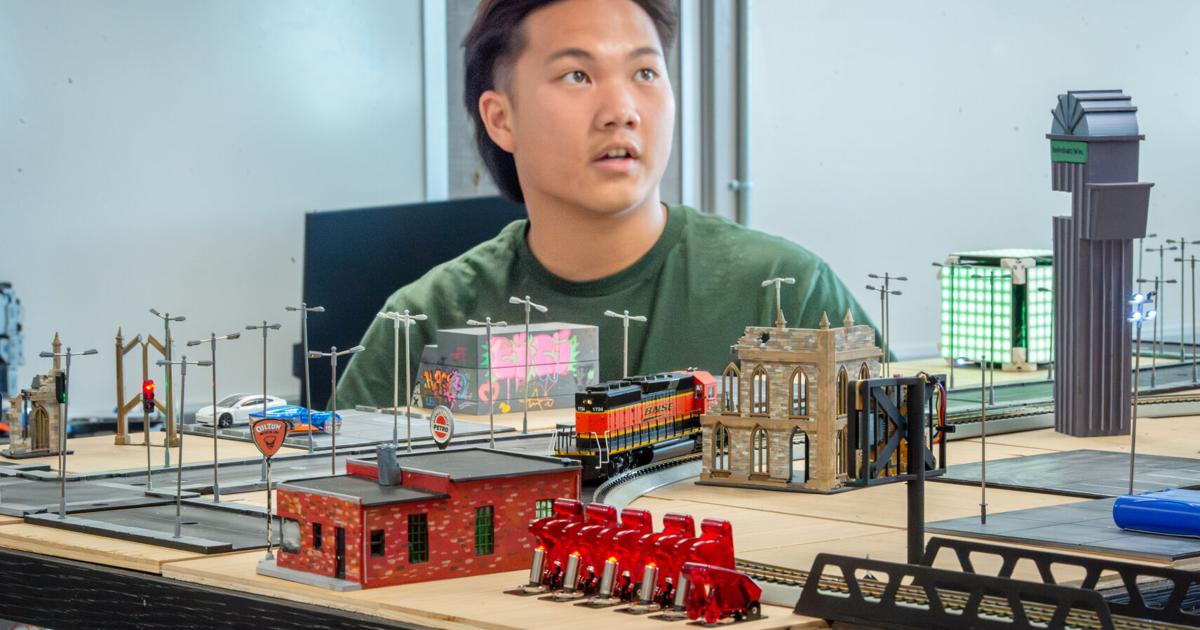
The integration of AI is profoundly reshaping the skilled trade workforce, driving a 'resurgence' in interest in these careers. While some fear AI replacing white-collar jobs, trade and technical fields are experiencing growing demand for their stability, strong wages, and hands-on nature. AI is seen as a tool to improve safety and efficiency, mitigating chronic injuries and protecting workers from hazardous environments. Furthermore, AI can serve as a valuable knowledge repository for younger workers, helping bridge the gap left by retiring, experienced tradespeople and making complex tasks more accessible by, for example, generating necessary code for projects like building a cyber city in computer networking classes, which students then learn to troubleshoot.
Despite the benefits of AI, educators emphasize that it should be viewed as a tool to augment, not replace, fundamental learning. Students are taught to master core trade skills first, using AI only after understanding the underlying processes. Troubleshooting, a critical skill in electromechanical technology and computer networking, is highlighted as an area where human expertise remains indispensable. As automation increases, the role of human troubleshooters and repair specialists will grow, requiring logical problem-solving and physical intervention that AI cannot perform independently. The ultimate responsibility for safety and correctness still lies with the human operator.
Trade schools are compelled to align their curricula with the evolving demands of industries that are increasingly adopting AI and automation. This adaptation is crucial, especially given the inconsistent exposure to AI education in K-12 systems, which makes institutions like Thaddeus Stevens College vital for bridging this knowledge gap. The executive director of Lancaster County Career and Technology Center advocates for equipping instructors with AI as a 'tool in their toolbox,' ensuring students are prepared for the technological realities of their future workplaces. Programs like web design specifically integrate the ethical implications and productive uses of AI, aiming to leverage its power responsibly while maintaining a human-centric approach to problem-solving and skill development.