Quick Buzz Feed

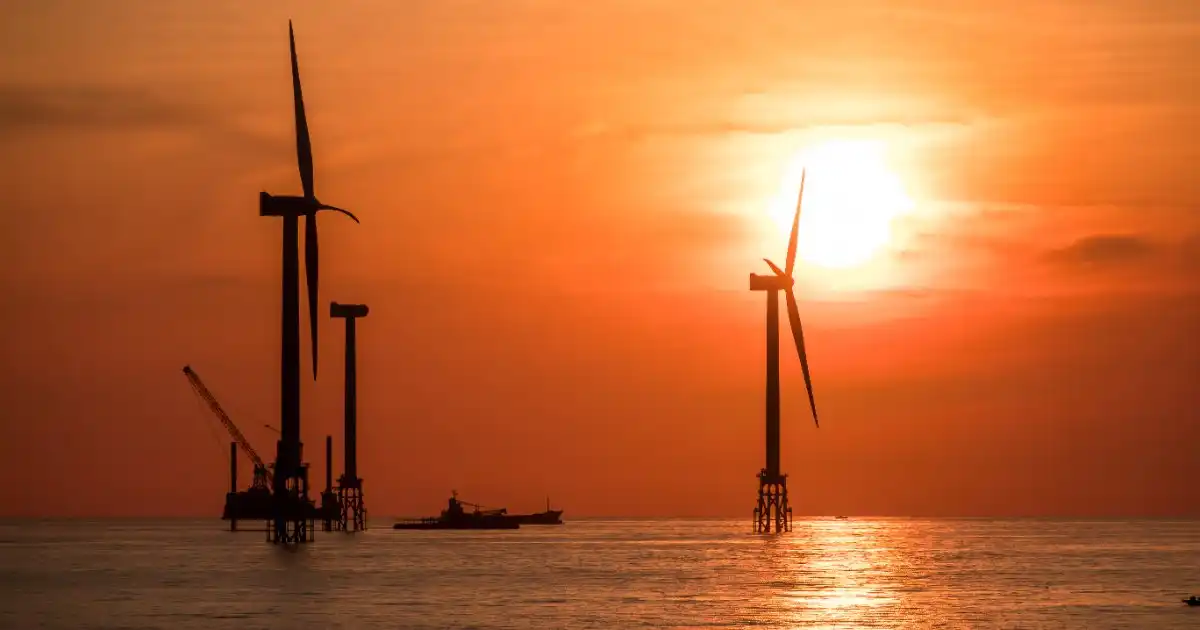
A University of Glasgow researcher has received funding through a £39 million UKRI initiative to develop AI tools that reduce the time and cost of seabed and subsurface investigations for offshore wind farm development. The work could transform how renewable energy infrastructure is planned and deployed.
Meeting the ambitious global offshore renewable energy targets by 2050 necessitates the installation of approximately 240,000 foundations and anchors across an expansive area of half a million square kilometers of seabed. However, current understanding of the geological conditions beneath these seabeds remains considerably limited. Unlike land-based surveys where detailed information is often readily available, engineers working on offshore projects often contend with sparse and mixed-quality data regarding the subsurface. This lack of comprehensive information makes traditional investigation methods not only expensive and time-consuming but also prone to significant risks. Unforeseen subsurface challenges can lead to substantial financial setbacks, as exemplified by one Scottish offshore wind farm project that incurred a staggering €106 million write-off due to unexpected ground conditions, underscoring the critical need for more efficient and reliable pre-construction surveys.
A transformative approach is emerging as part of a new £39 million UKRI investment supporting 20 AI research projects. Dr. Roisin Buckley, a distinguished senior lecturer at the University of Glasgow’s James Watt School of Engineering, has secured funding to lead an innovative project. This initiative focuses on developing advanced artificial intelligence (AI) tools specifically designed to significantly reduce both the time and monetary costs associated with seabed and subsurface investigations crucial for offshore wind farm development. The core of this groundbreaking work involves a sophisticated integration of AI technologies with established scientific principles derived from physics, geology, and engineering. This interdisciplinary fusion aims to unlock the full potential of vast quantities of existing geological, geophysical, and engineering data, enabling the creation of a much clearer and more accurate picture of sub-seabed conditions using substantially less primary data collection.
Dr. Buckley’s team is dedicated to developing sophisticated AI methods that seamlessly blend physical understanding with real-world data to minimize uncertainties in subsurface mapping. A crucial functionality of these AI tools is their capacity to precisely identify existing knowledge gaps and, importantly, to quantify the certainty associated with their predictions. This predictive power allows developers to strategically pinpoint areas where additional, more focused investigations are genuinely necessary, thereby optimizing resource allocation and preventing wasteful broad-area surveys. The economic implications are profound: current subsurface investigations for a single offshore wind farm can take up to a decade and cost tens of millions of pounds. By delivering more reliable and timely information, these AI-driven solutions are poised to accelerate the deployment of critical offshore renewable energy infrastructure, fundamentally reshaping the entire lifecycle from planning to execution of large-scale renewable projects.
The foundational work for this pioneering research has been meticulously established. Through a collaborative effort with ScottishPower Renewables, Dr. Buckley’s team has successfully amassed one of the world's most extensive and carefully curated databases of both onshore and offshore subsurface data. This comprehensive data repository provides a robust training ground for the AI tools, enabling them to learn and generalize from a diverse range of real-world scenarios. A key ambition for the project is to create AI solutions that are highly transferable and adaptable, allowing them to be effectively deployed across multiple development sites. Beyond its immediate application in offshore wind farms, this innovative methodology, which combines artificial intelligence with a deep understanding of physical principles, holds significant promise for a broad spectrum of other critical infrastructure projects. Potential applications span transport networks, telecommunications infrastructure, nuclear energy facilities, and advanced carbon capture and storage initiatives, highlighting the versatile and far-reaching impact of this AI-driven approach. This project is a vital component of a larger UKRI initiative that supports 20 new Turing AI Fellows, all dedicated to addressing diverse challenges ranging from healthcare to climate science, underscoring its national strategic importance.