Quick Buzz Feed

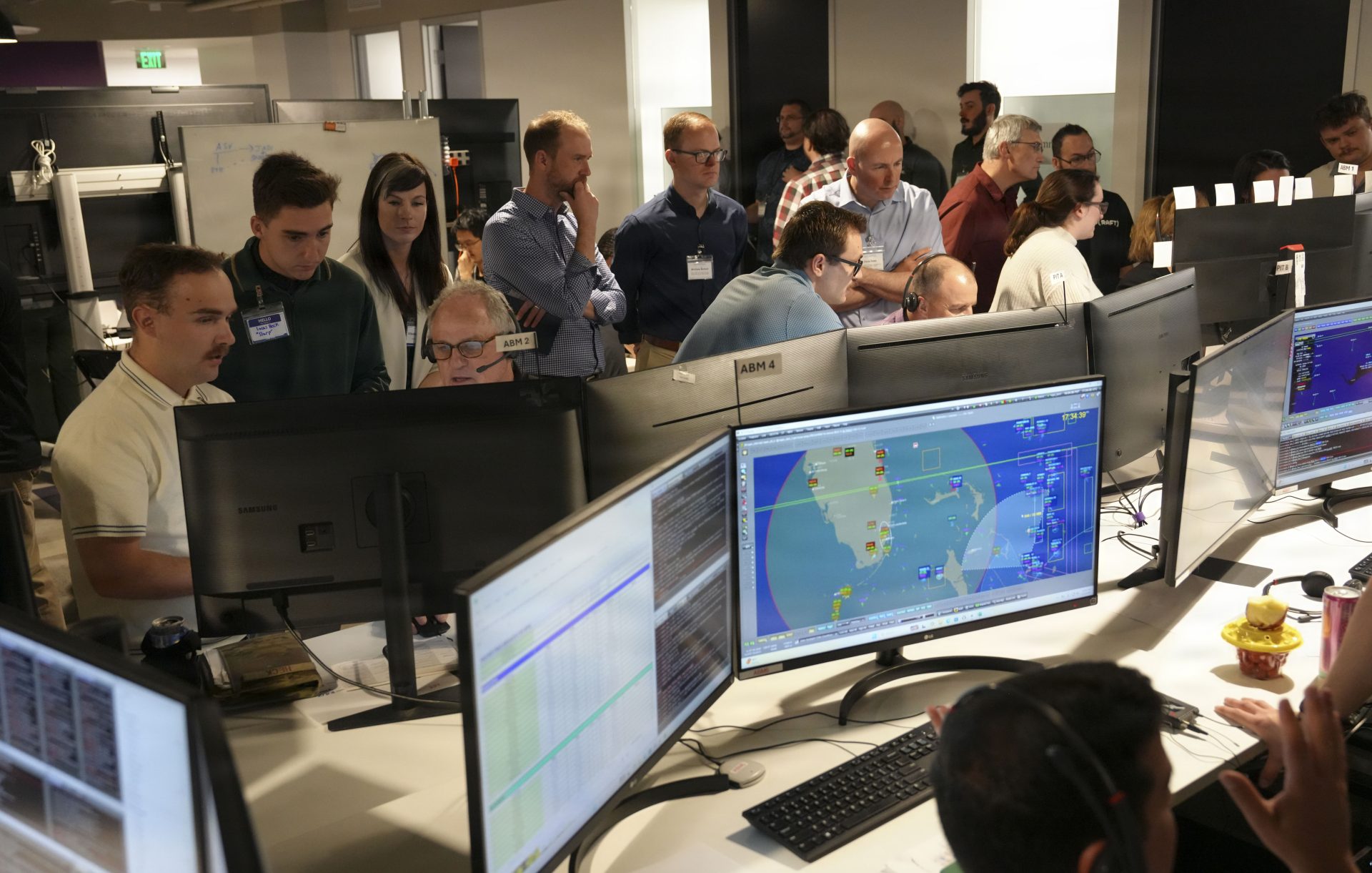
The Multi-Decision Advantage Sprint for Human-Machine Teaming wargame demonstrated that AI tools can significantly improve the Air Force's command-and-control operations.
The Air Force, through its Advanced Battle Management System (ABMS) Cross-Functional Team, conducted its inaugural Multi-Decision Advantage Sprint for Human-Machine Teaming (MASH) experiment in May. This two-week wargame in Las Vegas aimed to develop and test industry's AI-enabled battle management tools. MASH marked an evolution by successfully integrating disparate capabilities and actively involving Space Force guardians alongside airmen. Colonel John Ohlund, director of the ABMS CFT, highlighted initial trends showing a significant acceleration in decision-making speed, validating the potential for human-machine teaming to expand viable options for commanders during high-tempo operations.
The MASH experiment built upon previous efforts like the Decision Advantage Sprint for Human-Machine Teaming (DASH), initiated by the 805th Combat Training Squadron (ShOC-N) in 2024. While DASH focused on creating AI 'microservices' for individual command-and-control subfunctions, MASH introduced new complexities by evaluating multiple subfunctions and integrating them into a single, cohesive workflow. Six industry teams and ShOC-N software engineers developed custom AI tools to automate and accelerate air battle management. These tools were designed to automate three core decision-making functions: identifying and categorizing entities from complex data streams, matching appropriate joint capabilities, and generating optimized courses of action, all rigorously stress-tested in simulated operational scenarios.
A significant breakthrough during MASH was the Air Force's ability to integrate distinct software applications from various industry teams without affecting operations. This was achieved using an orchestration tool developed by the Air Force Research Laboratory (AFRL). Colonel Ohlund emphasized that AFRL's orchestrator ensures seamless exchange of data, ontologies, and metadata between different companies' software. This modular, plug-and-play approach not only proves effective but also fosters continuous competition, enabling the government to select the most advanced and best-of-breed software services as they mature, enhancing interoperability within the system.
MASH was the first ShOC-N experiment to include active participation from another military service, with Space Force guardians serving alongside airmen in battle management teams. This collaboration highlighted that despite operating in different domains, both Air and Space Forces share similar, fundamental requirements for rapid and synchronized decision-making. Guardians provided valuable expertise for the space domain, contributing to the development of software designed to support a truly integrated, multi-domain force. The AI tools proved highly beneficial, automating time-consuming tasks and consolidating vast amounts of incoming data, allowing service members to process situations much faster and focus on strategic decisions. Captain Adam Sochia noted a significant increase in task completion, from one task per hour to five or six. The ABMS CFT and 805th plan further AI wargames, intending to invite members from all military services to build an operational blueprint for modern, multi-domain Command and Control operations. The ultimate vision is for AI to autonomously ruminate over multi-domain effects, presenting commanders with high-quality decision options faster than ever before, preparing for the realities of future warfare.