Quick Buzz Feed

School using AI technology, co-founded by a tech billionaire, looking to open in Greenwich
A private school system, Alpha School, which integrates artificial intelligence into its educational model and is co-founded by a tech billionaire, is planning to establish a new location in Greenwich, Connecticut. This initiative marks a significant development in the local education landscape, aiming to introduce innovative learning methods to students in the area. The proposed site for this pioneering educational institution is a historic building situated at 20 E. Elm St. in central Greenwich, a location that has previously hosted various prominent businesses and offices. The school's arrival is set to transform a portion of this building into a modern learning environment, leveraging AI to enhance student learning experiences. The plans for this conversion have already been formally submitted to the town's planning department, signaling the initial steps toward its establishment.
Alpha School's distinctive educational philosophy revolves around harnessing the capabilities of AI technology to deliver highly personalized one-on-one learning experiences for each student. This approach is designed to accelerate knowledge mastery and optimize the learning process, effectively 'giving them the gift of time' by making education more efficient and tailored. The school redefines traditional teaching roles, referring to its educators as 'guides' who facilitate student-led learning and encourage the development of collaborative projects. This innovative model is championed by its co-founder, tech billionaire Joe Liemandt, reflecting a commitment to forward-thinking pedagogy. The organization currently operates several schools across the United States, and the planned Greenwich branch would represent its inaugural presence in Connecticut, further extending its national footprint from its Austin, Texas headquarters. This expansion highlights the school's vision to disseminate its AI-driven learning methodology broadly.
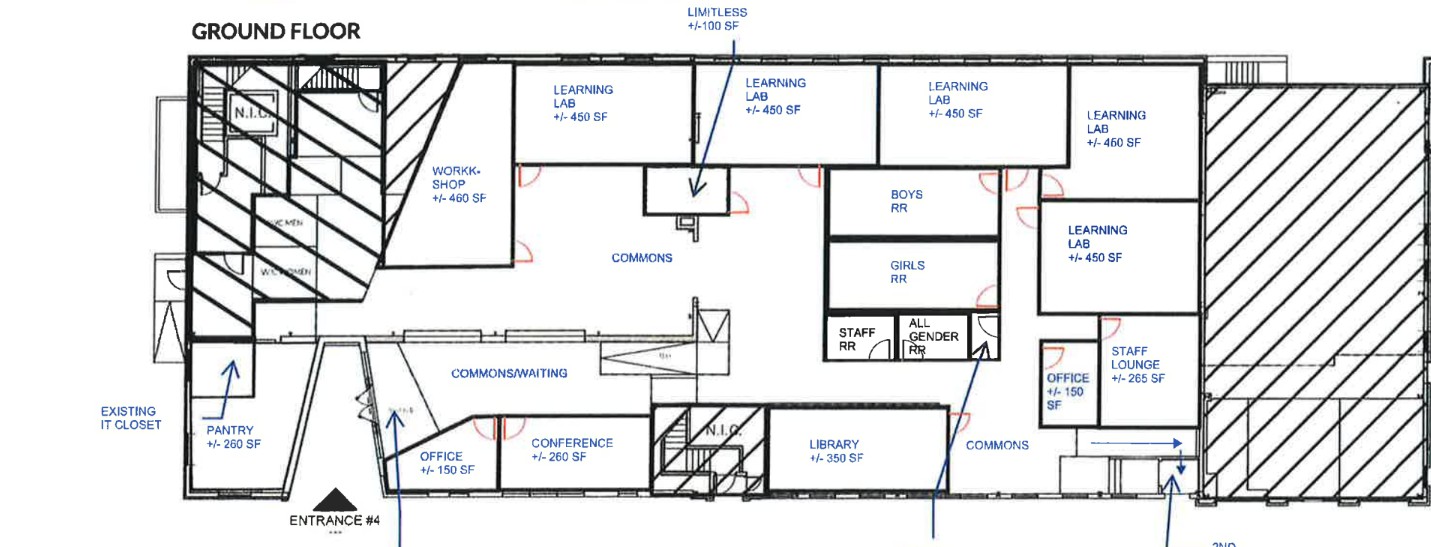
The comprehensive proposal for Alpha School in Greenwich outlines specific operational details. Attorney William Haslun, representing Alpha School, indicated that the institution intends to offer educational programs for students ranging up to the 8th grade. The school's physical operations would be concentrated on the first floor of the building at 20 E. Elm St. In terms of staffing, Alpha School projects a modest on-site team, with a maximum of 10 employees anticipated once the student enrollment reaches its full capacity. Student transportation and daily routines are designed for accessibility and convenience, with provisions for students to be dropped off or picked up, utilize public transportation, or commute to school by walking. These logistical considerations aim to integrate the school smoothly into the Greenwich community while maintaining its unique instructional focus.
The building slated to become Alpha School has a rich and varied history, serving as a prominent landmark in central Greenwich just off Greenwich Avenue. Its past tenants reflect a dynamic commercial and editorial presence over many decades. Notably, it housed an Urban Outfitters retail store, which ceased operations in 2014. Following this, the space was briefly occupied by Saks Fifth Avenue, specializing in shoe sales, before transitioning into use as a medical office. Prior to its retail incarnations, the building played a significant role in local media, serving as the editorial offices for the Greenwich Time newspaper for a considerable period, from 1937 until April 2008. An architectural assessment by Rudy Ridberg reveals that the structure itself dates back to 1929, with an expansion occurring in 1960. The newspaper's printing facilities were relocated to Stamford in the 1970s. The property is currently under the ownership of Elm Street RSK LLC and the New England Property Management Corp., underscoring its long-standing commercial significance.
To move forward with the transformation of the 20 E. Elm St. building into an educational facility, Alpha School's proposal must navigate the local regulatory framework. This primarily involves securing approval from the Planning & Zoning Commission for a crucial change of use – shifting from its current retail designation to an educational institution. Such a significant change necessitates a special permit, in addition to standard site-plan approval. As of the time of the article, the application had been officially submitted to the town planning department but had not yet been scheduled for a preliminary review by the commission. This indicates that while the initial steps have been taken, the process of obtaining the necessary permits and approvals is still in its early stages, with future deliberations and decisions pending from the local zoning authorities.