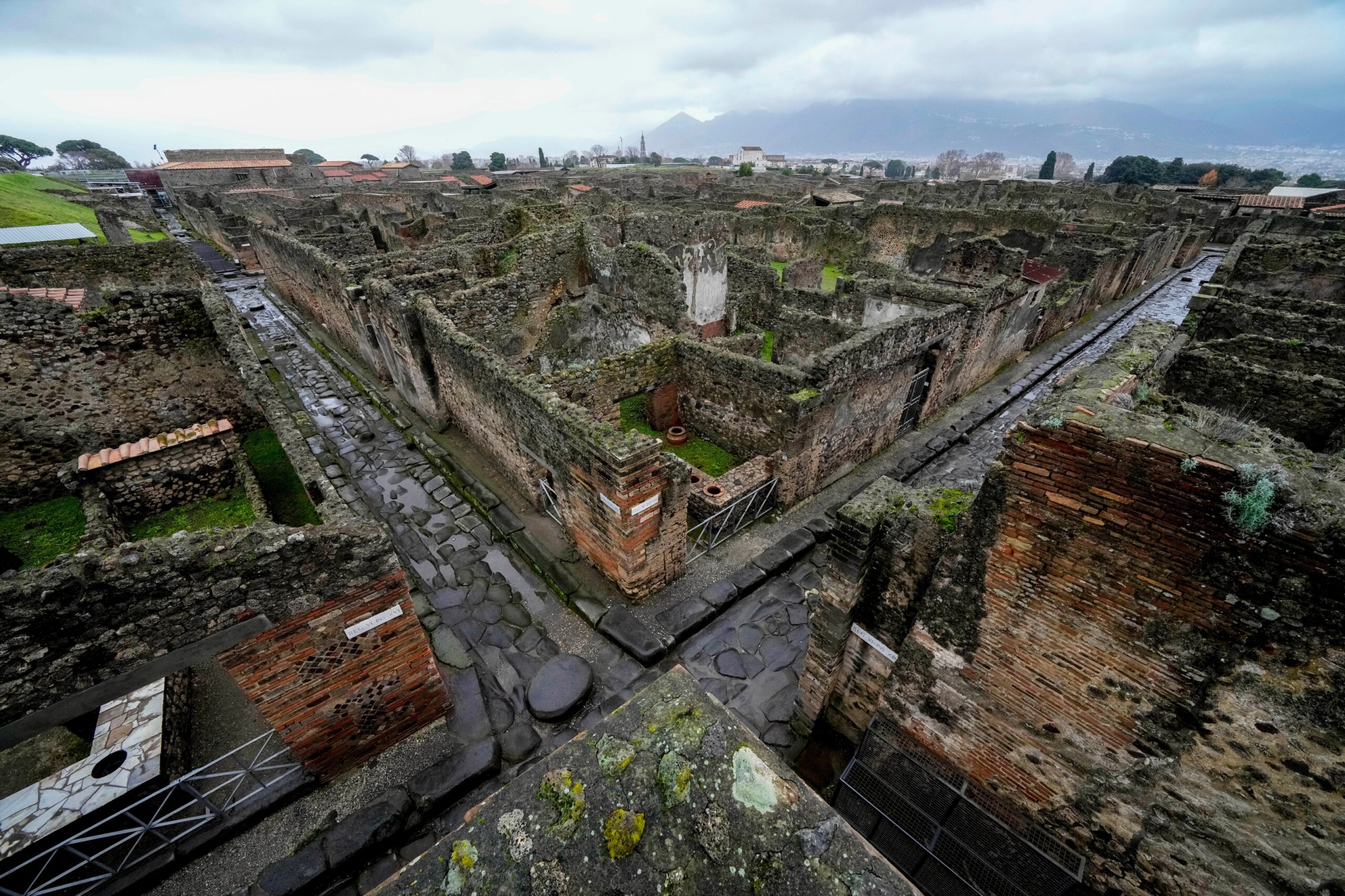
Archaeologists at the ancient Roman site of Pompeii have leveraged artificial intelligence for the first time to digitally reconstruct the face of a victim from the AD 79 eruption of Mount Vesuvius, offering a compelling new perspective on the catastrophic event.
AI Revitalizes Pompeii Research
Archaeologists and researchers at the ancient Roman site of Pompeii have for the first time utilized artificial intelligence to digitally reconstruct the face of one of the victims from the AD 79 eruption of Mount Vesuvius. This innovative approach offers a new way to understand the historical natural disaster.
The Identified Victim
The digital portrait depicts a man discovered near the Porta Stabia necropolis, who was among two victims attempting to flee the city. Researchers believe he died during an early, heavy fall of volcanic debris.
Collaborative Innovation at a UNESCO Site
This reconstruction project is a collaboration between the Pompeii Archaeological Park and the University of Padua, based on extensive archaeological survey data. Pompeii, a UNESCO World Heritage site, is famously preserved under the ash and pumice from Mount Vesuvius's eruption nearly 2,000 years ago.
Relics of a Final Moment
The man was found holding a terracotta mortar, interpreted as an improvised shield against falling volcanic stones, and carrying an oil lamp, a small iron ring, and 10 bronze coins. These personal items, along with ancient accounts like Pliny the Younger's, provide insight into his final moments and daily life.
Advancing Archaeology with AI
The digital likeness was created using AI and photo-editing techniques to translate skeletal and archaeological data into a realistic human portrait. The project aims to make archaeological research more accessible and emotionally engaging for the public, while maintaining a strong scientific foundation, demonstrating AI's contribution to classical studies.