Quick Buzz Feed

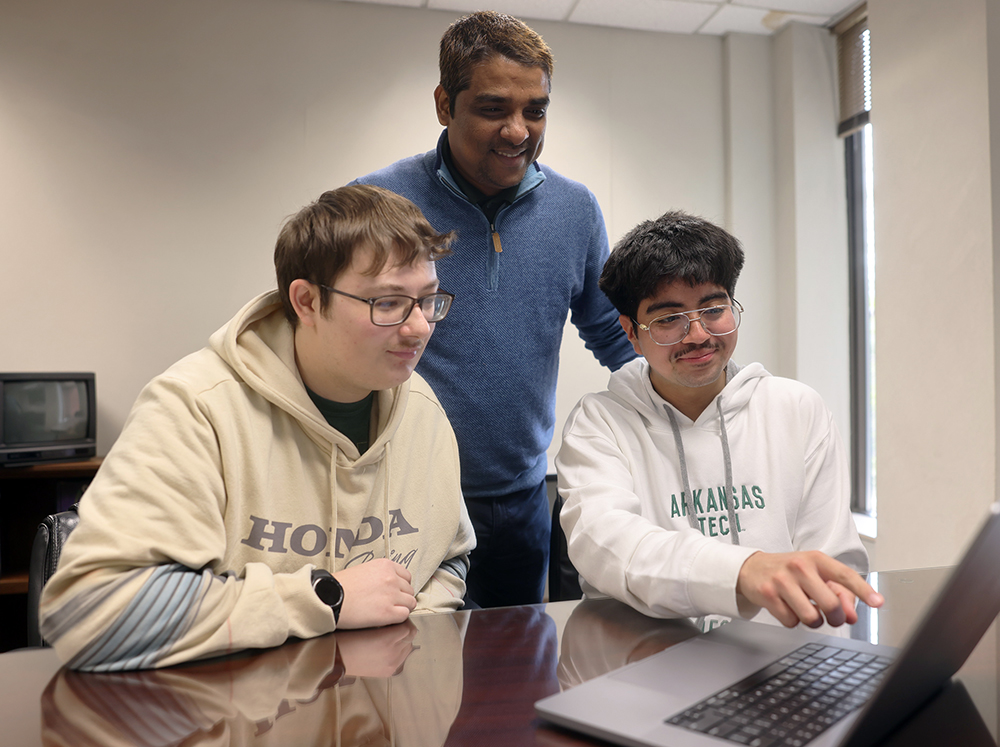
As one of the pioneering students, Logan Dawson recognizes the significant role artificial intelligence will play in shaping his generation. Arkansas Tech University is set to launch an innovative academic track in artificial intelligence, integrated into its Bachelor of Science degree in computer science, commencing in Fall 2026. This initiative positions students at the forefront of a rapidly evolving technological landscape, preparing them to contribute to groundbreaking AI advancements.
Arkansas Tech University (ATU) is making a significant stride in higher education by introducing a dedicated artificial intelligence (AI) academic track as part of its existing Bachelor of Science degree in computer science. This forward-looking program is slated to begin in Fall 2026. Students like Logan Dawson, an ATU junior from Des Arc, are among the first cohort to embrace this cutting-edge field, driven by the ambition to be part of the teams developing transformative AI solutions that could fundamentally alter the world. This new track underscores ATU's commitment to equipping its students with skills relevant to future technological demands, addressing the growing need for specialized expertise in AI.
The decision to establish an AI academic track at Arkansas Tech University is a direct response to a burgeoning need identified across various sectors. According to official documentation submitted to the Arkansas Higher Education Coordinating Board, the new AI option is 'driven by increasing demand for graduates with specialized knowledge in AI and machine learning across nearly every industry sector.' Advisory board members have explicitly highlighted this demand, emphasizing the critical requirement for computing professionals. These professionals are not only expected to be technically proficient but also ethically and socially aware, capable of navigating the complex implications of AI systems in diverse fields such as healthcare, finance, manufacturing, education, and transportation, thereby ensuring a well-rounded skillset for future challenges.
Juan Jose Almaraz, an ATU junior from Clarksville, shares Logan Dawson's enthusiasm and will also be pursuing the new artificial intelligence track. Almaraz addresses a common public concern about AI, stating, 'Ultimately, a big worry with AI is that it’s going to steal people’s jobs.' However, he passionately argues that humans are essential for studying and understanding AI, viewing it as a powerful tool rather than a threat. He draws a parallel to the introduction of the calculator, which, instead of replacing mathematicians, expanded their capabilities and opened new avenues for discovery. Almaraz envisions AI unlocking new creative avenues and fostering innovative thinking, particularly through generative AI, which already provides significant entertainment and serves as a robust brainstorming aid for various complex problems.
Dr. Robin Ghosh, an assistant professor of computer and information science at ATU, will be instrumental in implementing the new artificial intelligence track. Dr. Ghosh explains that integrating AI into the computer science curriculum offers substantial benefits, such as enhancing students' ability to efficiently identify and correct bugs in their coding processes. The comprehensive AI curriculum includes core courses like AI Fundamentals, Advanced AI, Natural Language Processing, Computer Vision, and Big Data and Cloud Computing. Notably, these specialized AI classes will also be accessible as electives for students enrolled in information technology and cybersecurity programs, broadening their interdisciplinary skills and preparing them for a wider range of career paths. Dr. Ghosh emphasizes that proficiency in AI and machine learning is increasingly vital for modern job seekers, particularly for roles in data science, and highlights the program's dual focus on technical AI development and ethical AI application to ensure responsible innovation.
The article touches upon a significant disparity in public perception versus expert opinion regarding the future of artificial intelligence. A 2025 Pew Research Center study revealed that only 17 percent of the general public anticipated a very or somewhat positive impact from AI on the United States over the next two decades. In stark contrast, 56 percent of AI experts held a positive outlook, reflecting a deeper understanding of its potential benefits. Logan Dawson, one of the pioneering ATU students in the AI track, provides a clear perspective, likening AI to 'a pick axe.' He asserts that AI is fundamentally a tool, not something destined to take over human roles, and its true influence will depend entirely on how effectively humans learn to wield it. This highlights the importance of education and informed understanding in shaping public views and maximizing AI's beneficial applications across society.
Prospective students and interested parties are encouraged to learn more about the Bachelor of Science degree in computer science at Arkansas Tech University, including the comprehensive details of the newly introduced artificial intelligence academic track. Full curriculum specifics, admission requirements, and program objectives are readily available on the dedicated ATU STEM website, providing a valuable and in-depth resource for those considering a future in this rapidly advancing and high-demand technological field.