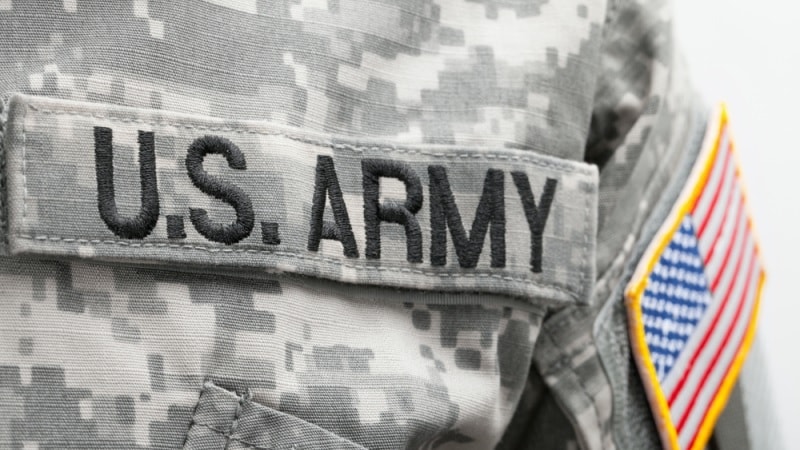
Military use cases show how AI can free personnel for mission work; rapid technology evolution raises questions about protecting sensitive insights.
AI Agent Reduces Cyber Workloads for Army and Task Forces Captain Ryan Hetrick, who leads the Pentagon’s GenAI Task Force, shared significant advancements in leveraging artificial intelligence for military operations. He reported that an AI agent, developed directly alongside soldiers from the Army’s 101st Airborne Division, dramatically streamlined a critical cyber workflow, reducing the time required from an extensive 100 hours to a mere 15 hours. This innovative tool was created by embedding the task force within military units at locations like Fort Campbell, Kentucky, utilizing sophisticated platforms including GenAI.mil, Maven Smart System, and War Data Platform. Hetrick stressed the crucial need for defense industrial base companies to collaborate directly with military end-users to effectively implement and scale AI-driven workflow efficiencies. He emphasized that truly impactful AI solutions emerge from a deep understanding of the warfighter's specific operational needs and mission contexts. Beyond cyber operations, Hetrick's team also developed a specialized Spot Report Agent for the White House’s FIFA World Cup task force, involving a multi-agency effort with personnel from the FBI, Coast Guard, and various military branches. This tool proved highly effective, cutting a crucial reporting process from approximately 20 minutes down to an impressive 90 seconds, thereby affording officials considerably more time to strategically coordinate responses to real-time events on the ground. Army Chatbot Helps Recruiters Navigate Complex Policies The U.S. Army has implemented Staff Sgt. Star, an advanced AI-powered chatbot, specifically designed to aid its recruiters in navigating the intricate and often bureaucratic process of onboarding new applicants. This innovative tool addresses a significant operational challenge by providing instant and accurate answers to complex policy questions, such as identifying the precise waivers required for applicants with diverse backgrounds and guiding recruiters through the correct processing steps. Developed remarkably quickly in less than three months, the chatbot functions as an indispensable, curated knowledge base, drawing from approved Army business processes and comprehensive system guidance, thus supplementing and enhancing traditional training methods. Its successful deployment has demonstrably reduced the workload on both seasoned recruiters and station commanders, allowing them to allocate their valuable time to more complex and strategic tasks. Furthermore, Staff Sgt. Star plays a critical role in distinguishing between genuine process-related inquiries and actual system malfunctions, which leads to a substantial reduction in unnecessary help desk tickets and frees up technical support teams to concentrate on developing and implementing further system enhancements. Addressing Security Risks in AI-Generated Insights Garrett Lee, regional vice president of public sector sales for Broadcom’s Enterprise Security Group, underscored significant security concerns related to AI's formidable capability to rapidly synthesize information and generate novel insights that may not be explicitly present in any single source document. He vividly illustrated this point with a hypothetical military logistics scenario: an AI system, when provided with seemingly disparate but individually controlled datasets—such as maintenance schedules, supply chain information, equipment readiness data, and deployment plans—could combine these elements to infer and highlight critical operational vulnerabilities. This profound assessment would be a creation of the AI, not explicitly contained within any of the original, protected documents. Lee forcefully argued that organizations must extend their protection strategies beyond merely securing the input data to also encompass the inferences, conclusions, and particularly unforeseen revelations that AI systems can derive. Building on this, Brandon Dixon, co-founder and CTO of endpoint security company Ent, emphasized the crucial need for granular visibility into how human users and AI agents interact with and utilize information within specific workflows. He recounted a telling incident from a hospitality company where human resources employees inadvertently exposed sensitive HR records by uploading them through WhatsApp, an approved communication tool, but after Meta AI had been integrated into it. This case exemplifies how seemingly innocuous updates or embedded AI functionalities within approved tools can introduce new and unforeseen data exposure risks, thereby necessitating robust security controls capable of intervening directly and immediately when potentially risky actions occur in real-time.
AI Agent Reduces Cyber Workloads for Army and Task Forces
Captain Ryan Hetrick, who leads the Pentagon’s GenAI Task Force, shared significant advancements in leveraging artificial intelligence for military operations. He reported that an AI agent, developed directly alongside soldiers from the Army’s 101st Airborne Division, dramatically streamlined a critical cyber workflow, reducing the time required from an extensive 100 hours to a mere 15 hours. This innovative tool was created by embedding the task force within military units at locations like Fort Campbell, Kentucky, utilizing sophisticated platforms including GenAI.mil, Maven Smart System, and War Data Platform. Hetrick stressed the crucial need for defense industrial base companies to collaborate directly with military end-users to effectively implement and scale AI-driven workflow efficiencies. He emphasized that truly impactful AI solutions emerge from a deep understanding of the warfighter's specific operational needs and mission contexts. Beyond cyber operations, Hetrick's team also developed a specialized Spot Report Agent for the White House’s FIFA World Cup task force, involving a multi-agency effort with personnel from the FBI, Coast Guard, and various military branches. This tool proved highly effective, cutting a crucial reporting process from approximately 20 minutes down to an impressive 90 seconds, thereby affording officials considerably more time to strategically coordinate responses to real-time events on the ground.
Army Chatbot Helps Recruiters Navigate Complex Policies
The U.S. Army has implemented Staff Sgt. Star, an advanced AI-powered chatbot, specifically designed to aid its recruiters in navigating the intricate and often bureaucratic process of onboarding new applicants. This innovative tool addresses a significant operational challenge by providing instant and accurate answers to complex policy questions, such as identifying the precise waivers required for applicants with diverse backgrounds and guiding recruiters through the correct processing steps. Developed remarkably quickly in less than three months, the chatbot functions as an indispensable, curated knowledge base, drawing from approved Army business processes and comprehensive system guidance, thus supplementing and enhancing traditional training methods. Its successful deployment has demonstrably reduced the workload on both seasoned recruiters and station commanders, allowing them to allocate their valuable time to more complex and strategic tasks. Furthermore, Staff Sgt. Star plays a critical role in distinguishing between genuine process-related inquiries and actual system malfunctions, which leads to a substantial reduction in unnecessary help desk tickets and frees up technical support teams to concentrate on developing and implementing further system enhancements.
Addressing Security Risks in AI-Generated Insights
Garrett Lee, regional vice president of public sector sales for Broadcom’s Enterprise Security Group, underscored significant security concerns related to AI's formidable capability to rapidly synthesize information and generate novel insights that may not be explicitly present in any single source document. He vividly illustrated this point with a hypothetical military logistics scenario: an AI system, when provided with seemingly disparate but individually controlled datasets—such as maintenance schedules, supply chain information, equipment readiness data, and deployment plans—could combine these elements to infer and highlight critical operational vulnerabilities. This profound assessment would be a creation of the AI, not explicitly contained within any of the original, protected documents. Lee forcefully argued that organizations must extend their protection strategies beyond merely securing the input data to also encompass the inferences, conclusions, and particularly unforeseen revelations that AI systems can derive. Building on this, Brandon Dixon, co-founder and CTO of endpoint security company Ent, emphasized the crucial need for granular visibility into how human users and AI agents interact with and utilize information within specific workflows. He recounted a telling incident from a hospitality company where human resources employees inadvertently exposed sensitive HR records by uploading them through WhatsApp, an approved communication tool, but after Meta AI had been integrated into it. This case exemplifies how seemingly innocuous updates or embedded AI functionalities within approved tools can introduce new and unforeseen data exposure risks, thereby necessitating robust security controls capable of intervening directly and immediately when potentially risky actions occur in real-time.