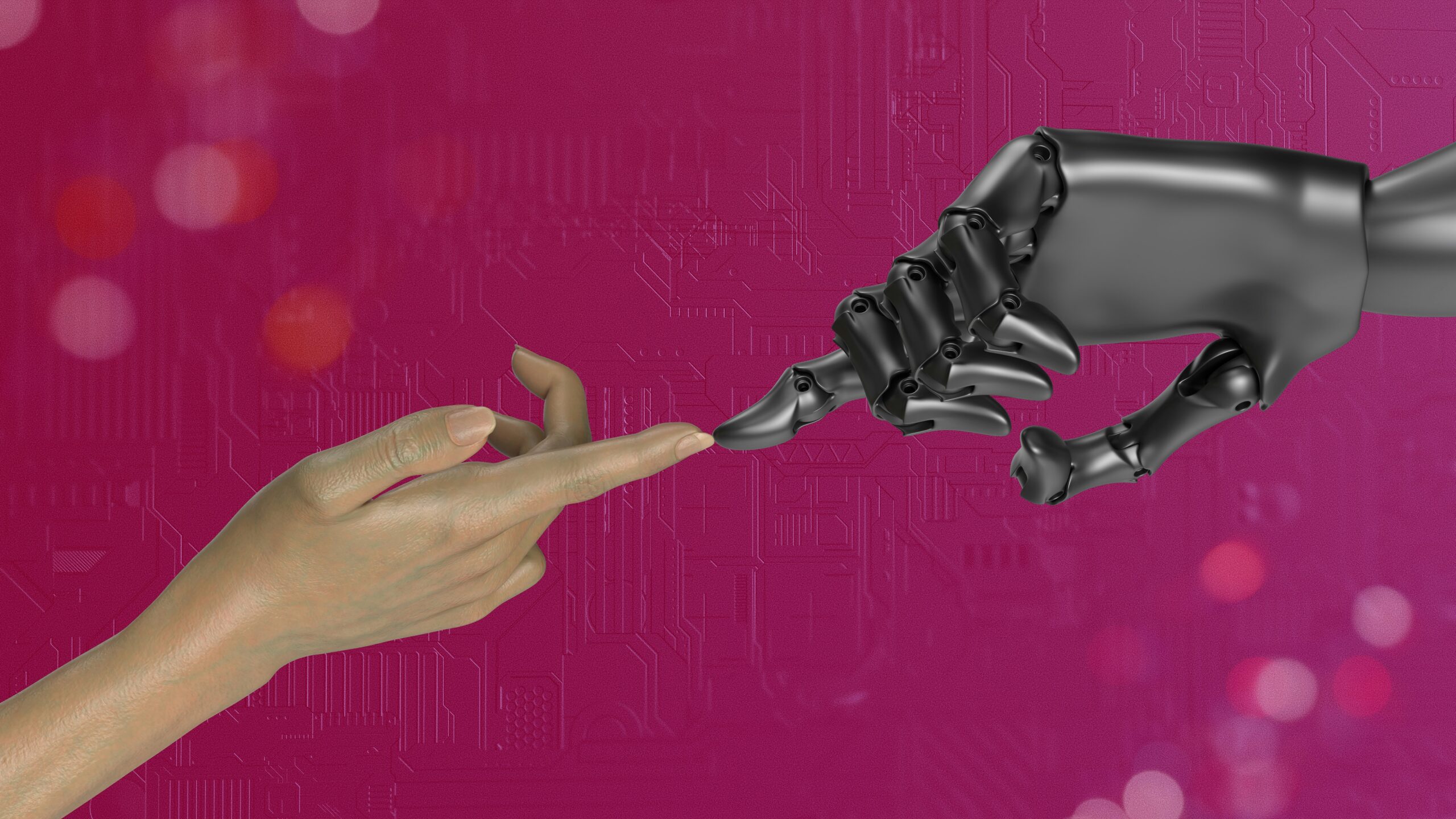
As artificial intelligence reshapes our world, Christians are called to approach technological progress with wisdom, discernment, and a renewed commitment to what makes us human.
New Technology, Familiar Questions Human history is replete with technological advancements like the printing press, Industrial Revolution, electricity, and the internet, each bringing profound changes and new challenges. Artificial intelligence (AI) is the latest in this lineage, presenting unique capabilities such as generating text, analyzing complex data, assisting in medical research, and engaging in human-like conversations. While AI offers immense potential for good, including breakthroughs in disease treatment, enhanced accessibility to education, and increased productivity, it also raises significant concerns. These include the spread of misinformation, the reinforcement of existing biases, threats to privacy, potential manipulation, job displacement, and the concentration of power among a few entities. These worries are not irrational but warrant serious attention, yet they should not lead us to believe that fundamental moral and ethical responsibilities are obsolete. The Challenge of Making AI Safe A critical discussion surrounding AI focuses on ensuring its safe development and use, particularly concerning data protection, prevention of malicious applications, and accountability for errors or harmful outcomes. Establishing comprehensive safeguards is challenging, especially given international competition, such as between the United States and China, where leadership in AI offers significant advantages. This creates a tension: governments recognize the need for safety standards but fear that excessive regulation might hinder innovation and concede a competitive edge. Different political systems and stakeholders will naturally have varying ideas about what constitutes 'responsible' development and which risks are most pressing. Therefore, simplistic solutions are inadequate, and progress demands careful judgment, honest dialogue, and moral responsibility, a conversation to which Christian faith can profoundly contribute. The Question Beneath the Technology Beyond debating AI's capabilities, a deeper question for Christians is: What is artificial intelligence doing to us? The Christian faith asserts that human dignity stems from being created in the image of God, not from intelligence or accomplishments. Thus, even if machines can perform tasks once considered uniquely human, it does not diminish our intrinsic worth. Humanity is fundamentally relational, created for love of God and neighbor, and for communion. AI can simulate conversation and provide information, but it cannot replicate the mutual responsibilities of genuine friendship, the spiritual formation inherent in proclaiming God's Word, or the profound reality of embodied human life. The core question is not merely what AI *can* achieve, but whether its use aligns with our calling as humans made in God's image. The Formation of Our Loves Christians understand that our habits shape our desires, and our desires, in turn, form the kind of people we become. Technology is not a neutral force in this process; it influences how we spend our time, focus our attention, solve problems, and interact. For example, while smartphones offer unprecedented access to information, they also foster distraction, comparison, and isolation. AI presents similar, potentially amplified, concerns. If AI provides instant answers, will we lose the patience to wrestle with complex ideas? If it can write for us, will our own creative and communicative abilities atrophy? If it offers simulated companionship, will we neglect the demanding work of authentic human relationships? Intentionality is crucial: we must ask if technology helps us cultivate faithfulness, patience, wisdom, generosity, and love, recognizing that convenience and efficiency are not the highest goods, and intelligence is not synonymous with wisdom rooted in a relationship with God. Living Faithfully in an Age of AI Drawing on C.S. Lewis's counsel during the atomic age, the article urges Christians not to let fear or excitement about AI overshadow their present responsibilities. Christians should actively and thoughtfully participate in discussions about AI safety, public policy, education, and technological development. The church, too, must consider how AI can serve its mission without undermining its core practices of formation. Our fundamental calling to love God and neighbor, seek justice, practice hospitality, worship, pray, and cultivate virtues remains unchanged and is, arguably, even more vital in an AI-driven world. While AI will bring complex benefits and challenges, and disagreements about its regulation are inevitable, Christians share a foundational belief in human dignity, the necessity of wisdom and love in wielding power, and that ultimate hope resides in Jesus Christ, not technological advancement. Our task is to remain faithful to Christ amidst this new technological era.
New Technology, Familiar Questions
Human history is replete with technological advancements like the printing press, Industrial Revolution, electricity, and the internet, each bringing profound changes and new challenges. Artificial intelligence (AI) is the latest in this lineage, presenting unique capabilities such as generating text, analyzing complex data, assisting in medical research, and engaging in human-like conversations. While AI offers immense potential for good, including breakthroughs in disease treatment, enhanced accessibility to education, and increased productivity, it also raises significant concerns. These include the spread of misinformation, the reinforcement of existing biases, threats to privacy, potential manipulation, job displacement, and the concentration of power among a few entities. These worries are not irrational but warrant serious attention, yet they should not lead us to believe that fundamental moral and ethical responsibilities are obsolete.
The Challenge of Making AI Safe
A critical discussion surrounding AI focuses on ensuring its safe development and use, particularly concerning data protection, prevention of malicious applications, and accountability for errors or harmful outcomes. Establishing comprehensive safeguards is challenging, especially given international competition, such as between the United States and China, where leadership in AI offers significant advantages. This creates a tension: governments recognize the need for safety standards but fear that excessive regulation might hinder innovation and concede a competitive edge. Different political systems and stakeholders will naturally have varying ideas about what constitutes 'responsible' development and which risks are most pressing. Therefore, simplistic solutions are inadequate, and progress demands careful judgment, honest dialogue, and moral responsibility, a conversation to which Christian faith can profoundly contribute.
The Question Beneath the Technology
Beyond debating AI's capabilities, a deeper question for Christians is: What is artificial intelligence doing to us? The Christian faith asserts that human dignity stems from being created in the image of God, not from intelligence or accomplishments. Thus, even if machines can perform tasks once considered uniquely human, it does not diminish our intrinsic worth. Humanity is fundamentally relational, created for love of God and neighbor, and for communion. AI can simulate conversation and provide information, but it cannot replicate the mutual responsibilities of genuine friendship, the spiritual formation inherent in proclaiming God's Word, or the profound reality of embodied human life. The core question is not merely what AI *can* achieve, but whether its use aligns with our calling as humans made in God's image.
The Formation of Our Loves
Christians understand that our habits shape our desires, and our desires, in turn, form the kind of people we become. Technology is not a neutral force in this process; it influences how we spend our time, focus our attention, solve problems, and interact. For example, while smartphones offer unprecedented access to information, they also foster distraction, comparison, and isolation. AI presents similar, potentially amplified, concerns. If AI provides instant answers, will we lose the patience to wrestle with complex ideas? If it can write for us, will our own creative and communicative abilities atrophy? If it offers simulated companionship, will we neglect the demanding work of authentic human relationships? Intentionality is crucial: we must ask if technology helps us cultivate faithfulness, patience, wisdom, generosity, and love, recognizing that convenience and efficiency are not the highest goods, and intelligence is not synonymous with wisdom rooted in a relationship with God.
Living Faithfully in an Age of AI
Drawing on C.S. Lewis's counsel during the atomic age, the article urges Christians not to let fear or excitement about AI overshadow their present responsibilities. Christians should actively and thoughtfully participate in discussions about AI safety, public policy, education, and technological development. The church, too, must consider how AI can serve its mission without undermining its core practices of formation. Our fundamental calling to love God and neighbor, seek justice, practice hospitality, worship, pray, and cultivate virtues remains unchanged and is, arguably, even more vital in an AI-driven world. While AI will bring complex benefits and challenges, and disagreements about its regulation are inevitable, Christians share a foundational belief in human dignity, the necessity of wisdom and love in wielding power, and that ultimate hope resides in Jesus Christ, not technological advancement. Our task is to remain faithful to Christ amidst this new technological era.