Quick Buzz Feed

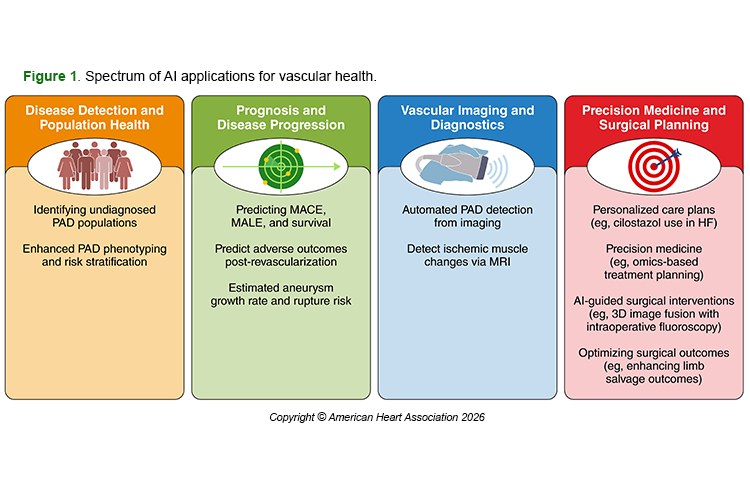
Peripheral artery disease (PAD) is a prevalent condition that often goes undetected due to many patients being asymptomatic and existing disparities in healthcare access. These significant challenges necessitate innovative solutions, such as artificial intelligence (AI), to improve the diagnosis, risk prediction, and overall management strategies for PAD, offering a transformative pathway for vascular care.
Peripheral artery disease (PAD) is a common yet frequently underdiagnosed condition, primarily because a significant number of patients do not exhibit noticeable symptoms. Furthermore, existing inequities in access to quality healthcare limit the early detection of PAD. These formidable obstacles underscore an urgent need for advanced, innovative approaches, and artificial intelligence (AI) has emerged as a crucial tool to address these issues. AI offers the potential to significantly enhance the accuracy and efficiency of PAD diagnosis, refine risk prediction models for more personalized care, and optimize management strategies to improve patient outcomes.
The rapid and ongoing advancements in artificial intelligence technology are revolutionizing the analysis of complex vascular data. AI systems can perform high-throughput analysis on various data types, including intricate arterial waveforms, detailed cardiovascular imaging scans, and a wide array of clinical variables. This sophisticated analytical capability is creating unprecedented opportunities to fundamentally transform vascular care, leading to more precise and timely diagnostics, more accurate and nuanced risk assessments, and the development of highly individualized and effective therapeutic plans for patients with peripheral artery disease.
This comprehensive science advisory serves as a vital guide for various stakeholders involved in patient care and research. It provides clear, actionable recommendations for clinicians on how to responsibly and effectively integrate AI tools into their diagnostic and management workflows for PAD. Additionally, it offers valuable insights for researchers looking to further explore AI’s potential and limitations, and critical considerations for policymakers to ensure the ethical, equitable, and evidence-based deployment of artificial intelligence technologies within the broader healthcare landscape for peripheral artery disease.
To provide further clarity and essential information, this article is supplemented by additional materials. These resources include a dedicated section titled 'Top Things to Know: Artificial Intelligence in Peripheral Artery Disease,' which offers a concise summary of the most critical aspects and key takeaways from the main advisory. This ensures that healthcare professionals and interested readers can quickly grasp the fundamental concepts and implications of AI in PAD.
For those interested in exploring related technological innovations in cardiovascular health, a curated list of recommended reading is provided. This includes articles such as 'Advancing Wearable Biosensors for Congenital Heart Disease,' which delves into patient and clinician perspectives on novel diagnostic devices; 'Harnessing Mobile Health Technology for Secondary Cardiovascular Disease Prevention in Older Adults,' focusing on digital interventions; and 'Role of Technology in Promoting Heart Healthy Behavior Change to Increase Equity in Optimal Cardiovascular Health,' examining how technology can foster healthier lifestyles and reduce health disparities in cardiovascular care.
To offer a more extensive understanding and practical application of the topics discussed, several related resources are made available. These include the 'Hub - Artificial Intelligence in Peripheral Artery Disease,' acting as a central repository for in-depth information and updates on the subject. Additionally, access to 'Recent Guidelines and Statements' from authoritative medical organizations ensures that users have the latest clinical recommendations pertinent to both PAD and the application of AI in cardiovascular medicine.