Quick Buzz Feed

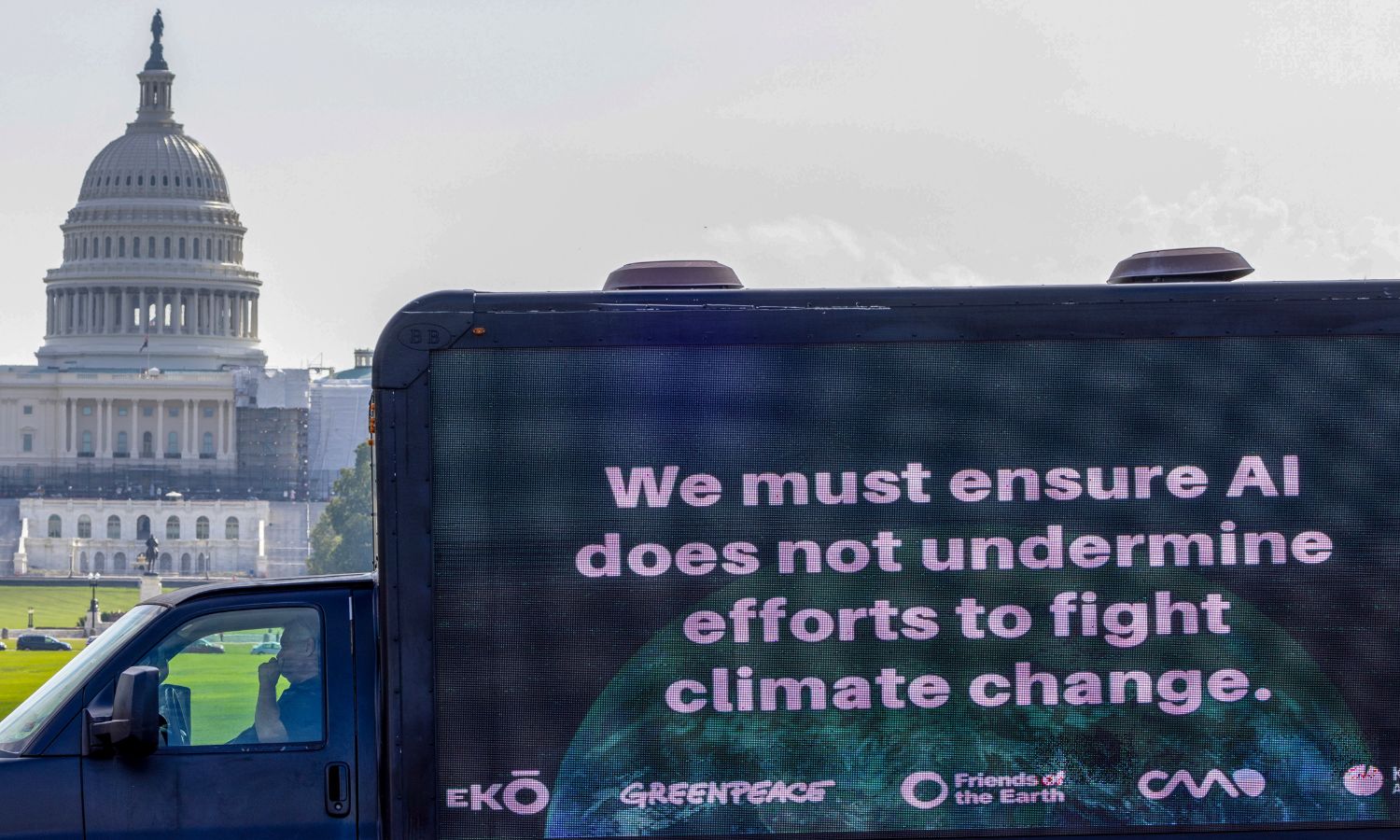
Artificial Intelligence (AI) has become ubiquitous, with individuals and businesses rapidly adopting it for various gains. However, this article questions whether AI can truly solve climate change, especially given the technology's significant environmental footprint in terms of energy, water, and material consumption. It argues that while AI offers some potential benefits, the fundamental issues hindering climate action are a lack of political will and reliance on existing, proven technologies, rather than a deficit of new solutions.
The article strongly asserts that the fundamental causes of and effective solutions to climate change have been comprehensively understood for decades. The core issue lies in the reliance on fossil fuels, and the evident solution is a global transition to clean energy sources like solar and wind, which are already rapidly growing and becoming cost-effective. The primary barriers to climate progress are not technological deficiencies but rather the influence of fossil fuel interests and a pervasive lack of political will, as extensively documented in UCS reports. Furthermore, the challenge is not a scarcity of information, white papers, or technical analyses; rather, it's the complex process of building coalitions, fostering public support, and overcoming entrenched interests within democratic systems. The article cautions against relying on large language models (LLMs) for policy design, as this can create an illusion of authority, allowing decision-makers to sidestep public concerns and avoid addressing the intricate human values inherent in climate tradeoffs (like cost, reliability, equity, and emissions). Historic examples, such as the Manhattan Project, the Apollo program, and international efforts to heal the ozone layer, demonstrate that focused governmental commitment can surmount large-scale technical challenges, a commitment currently absent for the clean energy transition.
The article emphasizes the immediate and escalating consequences of climate change, highlighting that people are already experiencing its severe effects. These include more powerful storms driven by warmer oceans, intensified and prolonged wildfires due to hotter and drier conditions, potential destabilization of the polar vortex leading to extreme winter storms, and an increasingly severe and extended “danger season.” These impacts translate into billions of dollars in damages and thousands of preventable deaths each year. For individuals, this means reduced quality of life due to poor air quality, deadly heat, rising insurance premiums, and increased electricity costs for cooling. The author argues that even if advanced AI systems could somehow deliver a "silver-bullet" energy solution, the pollution emitted today locks in future warming. Given the finite carbon budget to avoid critical warming thresholds (1.5-2˚C), delaying substantial action, even for a hypothetical AI-driven breakthrough, would result in significantly greater cumulative CO2 emissions – potentially more than four times higher. Therefore, immediate and rapid emission reductions are paramount to minimize the scale of future climate damage, as every year of delay irreversibly adds to the total emissions curve.
The author clarifies a crucial distinction: while specific applications of artificial intelligence can genuinely assist in climate change solutions—such as improving weather forecasting, enhancing extreme event detection, refining climate models, and potentially accelerating breakthroughs in molecular science or engineering for clean energy deployment—these are highly specialized tools. These targeted contributions, though valuable, do not address the overarching political and informational deficits that hinder climate action. Critically, the massive infrastructure buildout currently driven by AI ambitions is primarily for consumer-level Large Language Models (LLMs), not for these narrowly tailored climate science applications. The computational energy demand from LLMs, which are increasingly used for everyday tasks by hundreds of millions globally, represents an overwhelming share of new hyperscale data center capacity. Proponents often exploit the 'AI will solve climate change' narrative to justify this emissions-heavy infrastructure, which includes new fossil fuel power plants and delayed coal plant retirements, despite having little to no connection with climate-relevant AI. This conflation is dangerous, as it diverts focus and resources, and policy must differentiate between supporting targeted scientific computing and an unchecked expansion of LLM capacity.
The article highlights the immense strain that AI, particularly Large Language Models (LLMs), places on the global electricity system. The rapid proliferation of AI data centers has made them the fastest-growing source of energy demand in the United States, with projections indicating they could account for nearly 13% of total US electricity demand by 2028—exceeding the entire state of Texas's consumption in 2024. This escalating demand creates a significant challenge for energy providers. The author points out that, under current policies, this new electricity demand is primarily being met by natural gas generation, and in some cases, by delaying the retirement of coal plants. This reliance on fossil fuels locks in further warming and exacerbates air pollution, leading to billions in public health costs. Beyond electricity, data centers consume vast amounts of water for cooling, often in already water-stressed regions, and generate significant noise and heat pollution for nearby communities. Furthermore, the necessary infrastructure development, including new transmission lines and power plants, drives up electricity costs for everyone. The article argues that these immediate, tangible environmental and economic harms, often borne by communities and ratepayers, must be factored into any claims that AI will eventually pay for itself through hypothetical climate benefits.
The article concludes by reiterating that the causes and solutions to the climate crisis are well-understood, and the costs of delaying action are profound and immediate. Instead of placing hope in a hypothetical future AI "solution," the imperative is to concentrate on overcoming existing obstacles to climate progress. This involves policymakers demonstrating a firm commitment to climate action, ensuring polluter accountability, and actively challenging entrenched vested interests. The focus should be on practical, immediate, and often difficult work: mobilizing collective action and sustaining consistent progress. Furthermore, the author stresses that policymakers must actively intervene to prevent AI from becoming a significant part of the climate problem. This includes addressing speculative demand for AI infrastructure, preventing the offloading of environmental, health, and economic risks onto communities, halting the active pursuit of fossil fuels to power AI, and holding tech companies accountable for both the promises and perils of their advancements. Ultimately, the piece asserts that AI is merely a tool, and the most potent instruments for tackling climate change are effective policies and dedicated human action, not algorithms.