Quick Buzz Feed

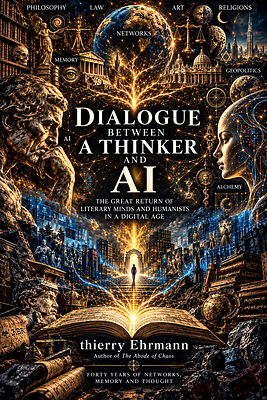
OpenAI/Astra, Perplexity, DeepSeek, Google Gemini, and xAI/Grok are confronted with the same work: a meta-reading experiment that transforms literary criticism into a comparative laboratory for artificial intelligence. This pioneering experiment gives multiple AI systems the exact same book, "Dialogue Between a Thinker and AI," to analyze, aiming to understand their distinct cognitive processes, convergences, divergences, and blind spots in interpretation.
Thierry Ehrmann's book, "Dialogue Between a Thinker and AI," emerged from hundreds of hours of dialogue, human thought, and archival research, with the writing process itself entrusted to artificial intelligence. Now available in both French and English print editions, the experiment extends beyond its creation: several leading AI systems, including OpenAI/Astra, Perplexity, DeepSeek, Google Gemini, and xAI/Grok, are provided with the complete book. The central objective is to observe whether these distinct artificial intelligences produce uniform or varied readings of the identical text, thereby establishing a unique comparative study of their interpretative capacities.
The purpose of this extensive experiment is not to foster competition among AI models, but rather to methodically observe their inherent convergences, divergences, and blind spots in literary interpretation. Researchers will meticulously analyze which core concepts each AI spontaneously identifies, which theses it prioritizes as central, how different passages are interconnected within its analysis, and precisely where their interpretations diverge. A critical and innovative phase of this project involves a 'meta-reading,' where each AI system is subsequently granted access to the analytical outputs produced by the other AIs. This process generates a layered understanding, as AI no longer merely reads the original book, but also interprets 'another AI reading the book,' transforming initial commentaries into new textual corpora for advanced comparative analysis by a third system.
For centuries, the role of human critics has been to elucidate and deepen our understanding of literature. This pioneering experiment fundamentally shifts that dynamic, proposing to use a single book not only for its content but as a tool to better understand those who read it. The shared work functions as a cognitive mirror, reflecting the distinct processing architectures of various artificial intelligences. The central inquiry is not about identifying which AI's interpretation is 'correct,' but rather, 'why' these AI systems do not perceive the text in exactly the same manner. This distinction is crucial, as the very divergences in their readings provide invaluable information about their internal workings and interpretative frameworks.
A cornerstone of this experiment is its unwavering commitment to human agency; it does not delegate human judgment but rather elevates its importance. The human participant remains the ultimate arbiter, tasked with the critical functions of comparing, scrutinizing, contextualizing, and rendering final decisions on the insights gleaned from the AI analyses. While the machines efficiently generate a multitude of readings, it is the human intellect that observes and interprets the subtle or significant gaps between these machine-generated perspectives. Consequently, "Dialogue Between a Thinker and AI" transcends being merely a book; it becomes a dynamic corpus and an open, evolving experiment that elucidates the plurality of artificial intelligences. Originally conceived for human readers, it now also serves as an unparalleled medium through which humans can observe and learn from how AIs engage with a shared text.
The meta-reading experiment is meticulously designed to provide profound insights into the comparative analytical capabilities of various AI systems. Key areas of examination include observing Google Gemini's interpretation of xAI/Grok's analysis, DeepSeek's response to the critique provided by OpenAI/Astra, and identifying the overarching convergences, divergences, and unique blind spots that emerge when these diverse AI readings are juxtaposed. The foundational principle of this project is not to solicit the AI's judgment of the book, but rather to task the AIs with reading the book and subsequently engaging with each other's interpretations, thereby creating a rich and complex dataset for understanding AI cognition and its nuances.