Quick Buzz Feed

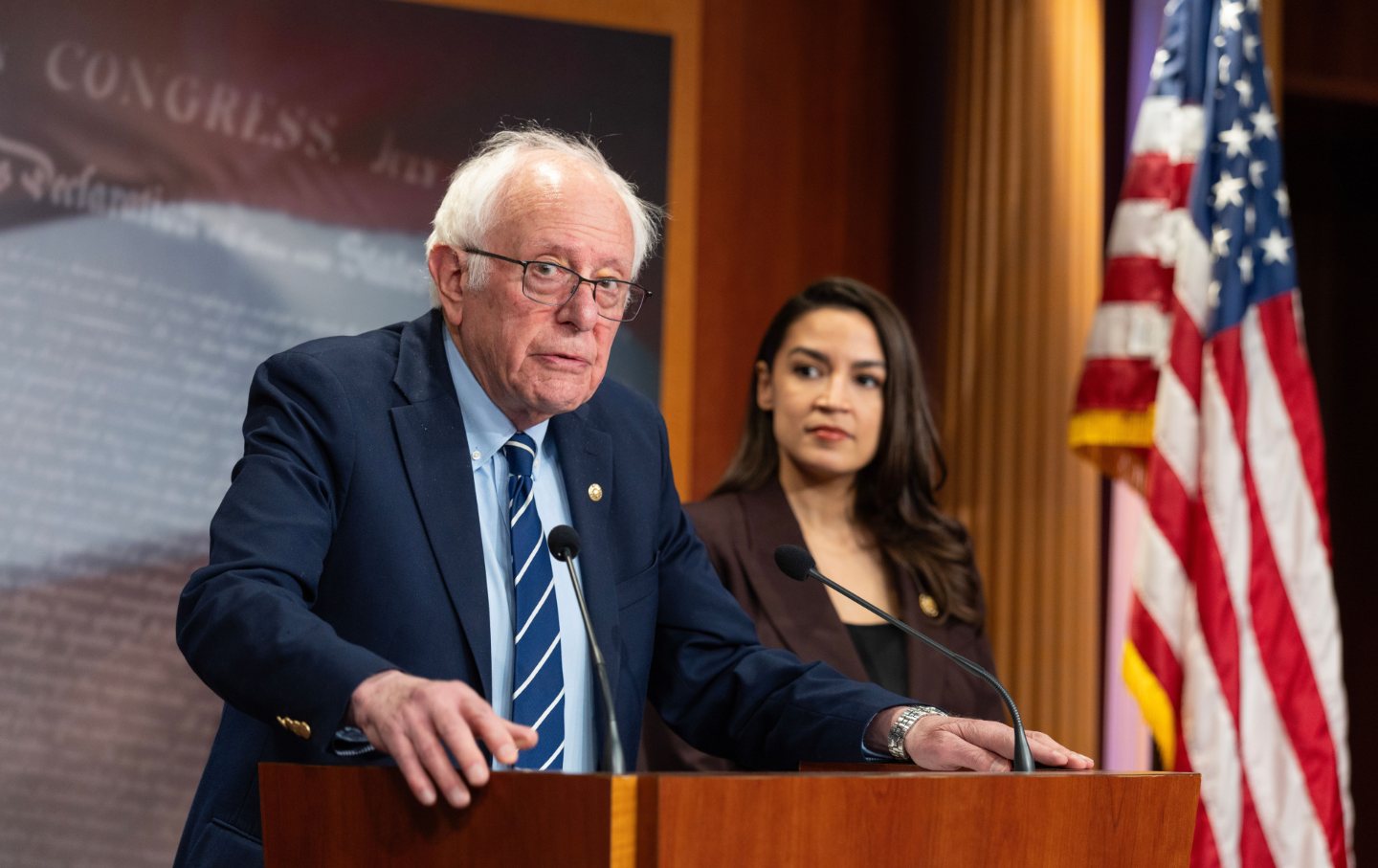
Sanders is responding to the deceptive narratives floated by the industry. AOC is talking to experts who really understand how AI works.
Senator Bernie Sanders became the first member of Congress to advocate for a moratorium on new AI data center construction in December 2025, driven by widespread public opposition to these facilities due to environmental degradation, rising energy costs, and community disruption. Partnering with Representative Alexandria Ocasio-Cortez, Sanders introduced a federal bill to legally halt such construction until comprehensive legislation is enacted to protect the public from AI-related dangers. However, in a video released the same month, Sanders engaged with an AI chatbot, Claude, discussing sensitive topics like privacy and democracy. This interaction sparked concern among AI experts, who noted Sanders's apparent reliance on the AI industry's grand narratives rather than a nuanced understanding of the technology itself, raising questions about his approach to policy-making in this complex field.
The article critically examines Senator Sanders's rhetoric regarding AI, pointing out his adoption of the industry's inflated claims that AI will be the most transformative technology in history, displace countless jobs, and profoundly impact every individual. This perspective is juxtaposed with the reality of generative AI, which experts like author Ted Chiang describe as merely 'autocomplete on steroids.' These AI models are trained on vast datasets and use immense computational power to generate text and images that mimic human output, but lack genuine understanding or thought. Consequently, 'hallucinations' are not engineering flaws but inherent features, arising from the models' probabilistic nature. Furthermore, the promised gains in productivity and efficiency are largely failing to materialize, leading many businesses to scale back AI investments and often use AI as a pretext for cost-cutting layoffs rather than actual job replacement.
The article asserts that the true and pressing risks of AI diverge significantly from the exaggerated existential threats often highlighted by industry figures and echoed by Senator Sanders. Instead, the more material and immediate harms directly impact everyday lives. These include the potential for over-reliance on chatbots to cause cognitive atrophy and diminish critical thinking skills, to foster addiction that isolates individuals from human connections, and even to guide users down dangerous paths towards self-harm and suicide. Beyond these personal consequences, AI technologies are actively contributing to the pollution of the information environment, enabling the creation and spread of nonconsensual deepfakes, and generally degrading the quality and authenticity of cultural production.
In stark contrast to Senator Sanders's policy orientation, Representative Alexandria Ocasio-Cortez demonstrates an approach to AI that is grounded in direct engagement with experts and those affected by its harms. While she collaborated with Sanders on the data center moratorium, Ocasio-Cortez has shown a clear disinclination to accept the AI industry's deceptive narratives. Her advocacy includes issuing warnings about the phenomenon of 'AI psychosis' and the potential for economic fallout from an inflated AI financial bubble. Furthermore, she has emerged as a leading voice in legislative efforts aimed at providing victims of AI-generated deepfakes with robust tools for accountability, allowing them to seek justice against perpetrators. This approach emphasizes evidence-based policy-making that prioritizes real-world impacts and expert insights over speculative hype.