Quick Buzz Feed

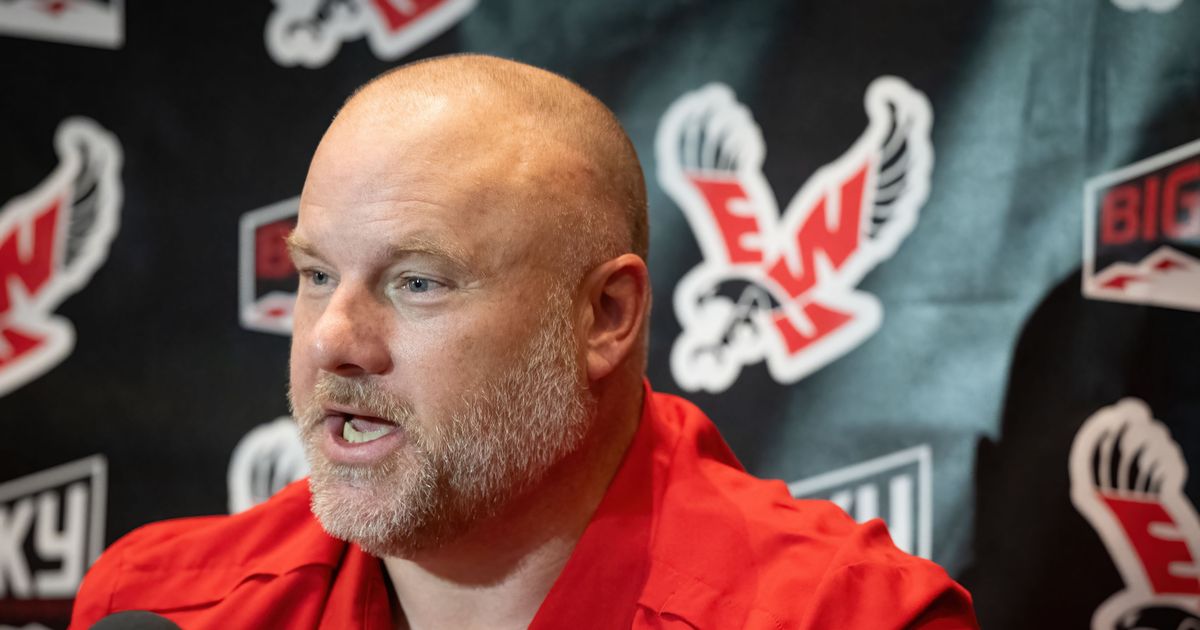
The Big Sky Conference coaches and players are approaching the integration of artificial intelligence into football with a mix of caution and strategic adaptation. Following Major League Baseball's recent memo warning teams about using dugout iPads for generative AI in pitch-calling, coaches like UC Davis's Tim Plough acknowledge AI's potential but highlight the sport's inherent complexity. While AI has already transformed back-office operations like recruiting, practice planning, and film analysis, its role in real-time game-day decisions remains contentious, with many emphasizing the irreplaceable human element of coaching and player execution on the field.
Eastern Washington offensive coordinator Marc Anderson exemplifies the current practical application of AI in college football, viewing it primarily as an internal tool to streamline repetitive tasks. He cites examples such as using AI to accurately count the number of times a specific play has been run during preseason camp, a process previously handled manually through film review or whiteboard tallying. This allows coaches to identify deficiencies and adjust practice scripts efficiently. Furthermore, AI platforms assist in storing and recalling various play variations throughout the season, which is crucial given the vast playbook. Anderson also notes that AI significantly enhances opponent scout reports, providing teams with a more advanced and detailed starting point for game preparation. Despite these benefits, Anderson firmly believes that AI should not dictate real-time decision-making during games, underscoring the necessity of human judgment. Montana linebacker Peyton Wing's confidence in his coach, Eric Sanders, who is renowned for his extensive film study, reinforces the players' trust in human expertise. The inherent complexity of football, contrasting with simpler one-on-one scenarios like baseball pitch-calling, makes direct AI play-calling a massive challenge, as it fails to account for dynamic factors like player injuries, mental and physical toughness, or fatigue, which human coaches instinctively evaluate. This highlights AI's current limitation to being a sophisticated organizational and analytical assistant rather than a game-day strategist.
Northern Colorado head coach Ed Lamb expresses strong reservations about the current efficacy of AI in dynamic, real-time football strategy, openly stating, “I wouldn’t trust it.” He describes AI's play suggestions as “absurd” from an informed football perspective, questioning its ability to accurately predict opponent tendencies while also accounting for the opponent's desire to counteract those tendencies in a complex “battle of wits.” Lamb highlights the fundamental difference between a video game, where AI might suggest a play, and real-world competition, where human intuition and adaptability are paramount. Southern Utah head coach DeLane Fitzgerald echoes this sentiment, emphatically stating his hope that AI does not “creep into playcalling.” Fitzgerald enumerates critical human elements that AI cannot replicate: understanding individual players' strengths and weaknesses, awareness of in-game injuries, and assessing players' mental and physical states (e.g., fatigue). He argues that while coaches can narrow down opponent tendencies based on extensive film study (e.g., a defensive coordinator knowing an offensive coordinator's favorite plays in specific down-and-distance situations), the ultimate challenge lies in the *execution* by 11 human players. Eastern Washington head coach Aaron Best's past directive against over-reliance on sideline iPads for instant replay, urging his staff to “coach in the moment and confirm what we saw,” further reinforces the preference for organic coaching. Ultimately, coaches across the Big Sky Conference believe that the “real art of coaching” remains in motivating, guiding, and ensuring the correct execution of plays by human athletes, a dimension that AI, for now, cannot match.