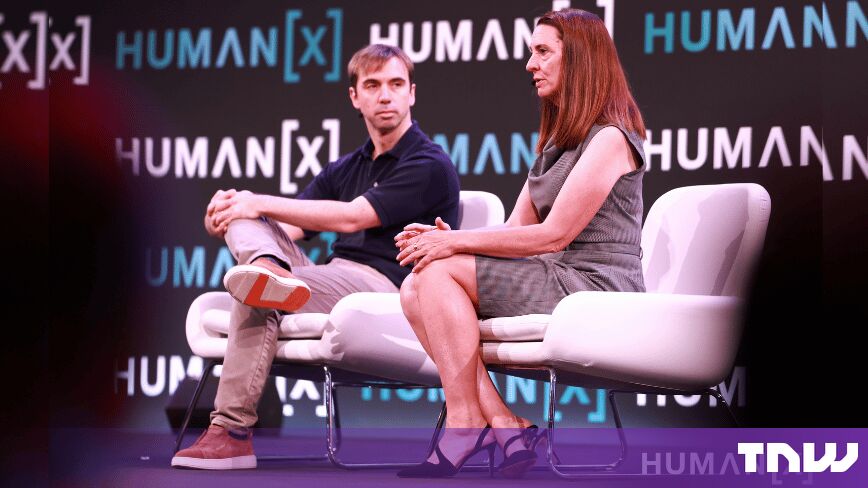
James Waters said Booking.com built AI tools it now regrets, and its research found only 6% of people trust AI to make travel decisions.
89% want AI, 6% trust it This section reveals a significant paradox in consumer perception of AI, especially within the travel industry. Booking.com's internal research indicates that a vast majority, 89% of individuals, express a desire to leverage artificial intelligence for their travel research needs. This high percentage underscores a clear demand for AI-driven innovation in how people plan and explore their travel options. However, this enthusiasm is starkly contrasted by a severe lack of trust, with only a mere 6% of respondents stating that they would trust AI to make actual travel decisions on their behalf. This discrepancy highlights a critical challenge for companies like Booking.com: while consumers are eager for the convenience and insights AI can offer, they are deeply hesitant about fully ceding control or relying on AI for high-stakes decisions. James Waters, Booking.com's chief business officer, elaborated on this, noting that despite Large Language Models (LLMs) being the fastest-growing tools for travel research, they are not yet extensively used for actual bookings. The reason, he suggests, lies in the nature of travel itself – it's an investment of significant time, money, and emotional capital. This makes it one of the last categories where consumers are likely to fully embrace "agentic commerce," where AI agents handle transactions from start to finish. Waters drew a pertinent analogy to self-driving cars, stating, "Each crash takes them all off the road, while people crash more often and nobody takes people off the road." This illustrates the extreme scrutiny and low tolerance for error when AI is involved in critical decisions. For Booking.com, such a "crash" could manifest as irrelevant content suggestions or incorrect pricing, which could severely damage consumer trust. Consequently, Booking.com adopts a cautious, incremental approach, building its AI products from specific, high-intent searches upwards toward more aspirational discovery. While they could integrate an LLM directly onto their homepage, the real challenge lies in effectively connecting it to reliable booking functionalities that maintain user trust. A pencil, not a cost cut Diageo, a global leader in alcoholic beverages with over 200 brands, approaches AI deployment with a philosophy centered on enhancing human creativity rather than merely reducing costs. Susan Jones, Diageo's chief digital officer, highlighted their most successful AI tool: a virtual content studio. This suite of tools is deployed across all countries and brands, allowing global brand teams to generate initial content, which is then adapted by regional versions of the studio for local market relevance. This decentralized yet coordinated approach ensures global brand consistency while allowing for local nuance. Jones emphasized that initially, there was a significant concern among brand teams that these AI tools would simply lead to an overwhelming influx of content, prioritizing quantity over quality. To counter this, Diageo strategically positions its content tool, aptly named "Pencil," as a "springboard for creativity." This naming choice and narrative are crucial in shifting internal perception from a cost-cutting measure to an empowerment tool for marketers. The core message is that "Pencil" enables marketers to be more creative and efficient, rather than automating their roles away. A key aspect of Diageo's responsible AI deployment is the integration of regulatory guardrails directly into the tool. This ensures that content generated or adapted adheres to strict industry regulations and brand guidelines. Furthermore, a human marketer retains the ultimate authority and makes every final decision regarding content. This blend of AI assistance and human oversight reinforces the idea that the technology is a supportive tool, enhancing human capabilities, rather than a replacement. "It’s a very apt name because it’s like giving somebody a pencil to be creative with," Jones stated, perfectly encapsulating their human-centric approach to AI adoption. Two sprints off the backlog Booking.com implemented a proactive and somewhat unconventional strategy to foster AI adoption and innovation within its workforce, recognizing that technological change often hinges on human behavior. James Waters explained that their approach acknowledged the "path of least resistance" that employees naturally follow. To overcome inertia and encourage engagement with new AI tools, Booking.com mandated that its product and tech teams pause their regular backlog work for two dedicated "sprints." During these periods, teams were explicitly tasked with exploring how artificial intelligence could fundamentally transform and improve their existing work processes. This forced immersion aimed to demonstrate the tangible benefits and ease of use of AI, thereby making it more appealing than traditional methods. To support this company-wide exploration and ensure effective integration, Booking.com established a central team of AI experts. This specialized unit is responsible for several critical functions: owning the development and maintenance of core AI tools, curating a comprehensive knowledge base, providing extensive training programs, and offering ongoing support to various teams experimenting with AI. A key performance indicator (KPI) for this central team is the "share of generative AI use cases delivered without its help." This metric serves a dual purpose: if the percentage is too high, it suggests the central team might not be innovating sufficiently or that the tools are too generic. Conversely, if it's too low, it indicates that the broader business units have not effectively internalized the AI knowledge and are still overly reliant on central support. This balanced metric encourages both innovation from the core team and self-sufficiency across the organization. Diageo shares a similar philosophy of empowering its employees. Susan Jones emphasized that they prioritize putting AI tools directly into the hands of the individuals performing the relevant jobs. This decentralized implementation fosters ownership and allows for practical, real-world application. To manage the ethical and regulatory complexities, Diageo also employs a cross-functional marketing team that continuously reviews all AI agents and tools in development. This oversight mechanism helps identify promising applications and strategize for their scalable deployment across the company. This collaborative and empowering approach ensures that AI is integrated thoughtfully and effectively, driven by the needs and insights of those who will use it most. No ROI number, and no sleep lost The discussion around the financial justification and broader impact of AI revealed a pragmatic perspective from both Booking.com and Diageo. James Waters of Booking.com stated candidly that while a precise Return on Investment (ROI) figure for AI might not be readily available, the company doesn't necessarily require one for all its AI initiatives. As a "fully digital business," Booking.com possesses the inherent advantage of being able to meticulously track the costs and revenues associated with specific product changes. This capability allows for direct measurement of AI's impact in certain areas. However, for broader AI investments, they operate with a defined "spend they are comfortable with," rather than chasing elusive exact ROI numbers. Waters also dismissed the idea of measuring the "share of code written by AI," arguing that metrics like lines of code are not directly correlated with "problems solved," thus rendering such a KPI largely meaningless in the context of business value. From Booking.com's perspective, while geopolitical instability presents temporary and localized challenges to the travel industry, the transformation driven by AI is a fundamentally irreversible and forward-moving trend. The company diligently tracks its AI spending but is not overly concerned or "losing sleep over it," indicating a strategic long-term view of AI as an integral part of its future rather than a short-term, uncertain expense. This confidence stems from their understanding that AI is not a fad but a foundational shift. Susan Jones of Diageo echoed a crucial point regarding AI implementation: early experiments within Diageo that merely "added AI on top of existing processes" ultimately failed. Her key takeaway is that companies must first "fix their processes and data" before attempting to apply AI. This highlights that AI is not a magic bullet to patch inefficient operations; rather, its true potential is unlocked when it is integrated into optimized workflows and supported by clean, structured data. Jones succinctly summarized this profound insight: "It’s not really about the technology at all. It’s about the people and the processes." This emphasizes that successful AI transformation is fundamentally a business transformation, requiring a holistic approach that prioritizes organizational readiness, human adaptation, and process re-engineering over just technological deployment.
89% want AI, 6% trust it
This section reveals a significant paradox in consumer perception of AI, especially within the travel industry. Booking.com's internal research indicates that a vast majority, 89% of individuals, express a desire to leverage artificial intelligence for their travel research needs. This high percentage underscores a clear demand for AI-driven innovation in how people plan and explore their travel options. However, this enthusiasm is starkly contrasted by a severe lack of trust, with only a mere 6% of respondents stating that they would trust AI to make actual travel decisions on their behalf. This discrepancy highlights a critical challenge for companies like Booking.com: while consumers are eager for the convenience and insights AI can offer, they are deeply hesitant about fully ceding control or relying on AI for high-stakes decisions. James Waters, Booking.com's chief business officer, elaborated on this, noting that despite Large Language Models (LLMs) being the fastest-growing tools for travel research, they are not yet extensively used for actual bookings. The reason, he suggests, lies in the nature of travel itself – it's an investment of significant time, money, and emotional capital. This makes it one of the last categories where consumers are likely to fully embrace "agentic commerce," where AI agents handle transactions from start to finish. Waters drew a pertinent analogy to self-driving cars, stating, "Each crash takes them all off the road, while people crash more often and nobody takes people off the road." This illustrates the extreme scrutiny and low tolerance for error when AI is involved in critical decisions. For Booking.com, such a "crash" could manifest as irrelevant content suggestions or incorrect pricing, which could severely damage consumer trust. Consequently, Booking.com adopts a cautious, incremental approach, building its AI products from specific, high-intent searches upwards toward more aspirational discovery. While they could integrate an LLM directly onto their homepage, the real challenge lies in effectively connecting it to reliable booking functionalities that maintain user trust.
A pencil, not a cost cut
Diageo, a global leader in alcoholic beverages with over 200 brands, approaches AI deployment with a philosophy centered on enhancing human creativity rather than merely reducing costs. Susan Jones, Diageo's chief digital officer, highlighted their most successful AI tool: a virtual content studio. This suite of tools is deployed across all countries and brands, allowing global brand teams to generate initial content, which is then adapted by regional versions of the studio for local market relevance. This decentralized yet coordinated approach ensures global brand consistency while allowing for local nuance. Jones emphasized that initially, there was a significant concern among brand teams that these AI tools would simply lead to an overwhelming influx of content, prioritizing quantity over quality. To counter this, Diageo strategically positions its content tool, aptly named "Pencil," as a "springboard for creativity." This naming choice and narrative are crucial in shifting internal perception from a cost-cutting measure to an empowerment tool for marketers. The core message is that "Pencil" enables marketers to be more creative and efficient, rather than automating their roles away. A key aspect of Diageo's responsible AI deployment is the integration of regulatory guardrails directly into the tool. This ensures that content generated or adapted adheres to strict industry regulations and brand guidelines. Furthermore, a human marketer retains the ultimate authority and makes every final decision regarding content. This blend of AI assistance and human oversight reinforces the idea that the technology is a supportive tool, enhancing human capabilities, rather than a replacement. "It’s a very apt name because it’s like giving somebody a pencil to be creative with," Jones stated, perfectly encapsulating their human-centric approach to AI adoption.
Two sprints off the backlog
Booking.com implemented a proactive and somewhat unconventional strategy to foster AI adoption and innovation within its workforce, recognizing that technological change often hinges on human behavior. James Waters explained that their approach acknowledged the "path of least resistance" that employees naturally follow. To overcome inertia and encourage engagement with new AI tools, Booking.com mandated that its product and tech teams pause their regular backlog work for two dedicated "sprints." During these periods, teams were explicitly tasked with exploring how artificial intelligence could fundamentally transform and improve their existing work processes. This forced immersion aimed to demonstrate the tangible benefits and ease of use of AI, thereby making it more appealing than traditional methods. To support this company-wide exploration and ensure effective integration, Booking.com established a central team of AI experts. This specialized unit is responsible for several critical functions: owning the development and maintenance of core AI tools, curating a comprehensive knowledge base, providing extensive training programs, and offering ongoing support to various teams experimenting with AI. A key performance indicator (KPI) for this central team is the "share of generative AI use cases delivered without its help." This metric serves a dual purpose: if the percentage is too high, it suggests the central team might not be innovating sufficiently or that the tools are too generic. Conversely, if it's too low, it indicates that the broader business units have not effectively internalized the AI knowledge and are still overly reliant on central support. This balanced metric encourages both innovation from the core team and self-sufficiency across the organization. Diageo shares a similar philosophy of empowering its employees. Susan Jones emphasized that they prioritize putting AI tools directly into the hands of the individuals performing the relevant jobs. This decentralized implementation fosters ownership and allows for practical, real-world application. To manage the ethical and regulatory complexities, Diageo also employs a cross-functional marketing team that continuously reviews all AI agents and tools in development. This oversight mechanism helps identify promising applications and strategize for their scalable deployment across the company. This collaborative and empowering approach ensures that AI is integrated thoughtfully and effectively, driven by the needs and insights of those who will use it most.
No ROI number, and no sleep lost
The discussion around the financial justification and broader impact of AI revealed a pragmatic perspective from both Booking.com and Diageo. James Waters of Booking.com stated candidly that while a precise Return on Investment (ROI) figure for AI might not be readily available, the company doesn't necessarily require one for all its AI initiatives. As a "fully digital business," Booking.com possesses the inherent advantage of being able to meticulously track the costs and revenues associated with specific product changes. This capability allows for direct measurement of AI's impact in certain areas. However, for broader AI investments, they operate with a defined "spend they are comfortable with," rather than chasing elusive exact ROI numbers. Waters also dismissed the idea of measuring the "share of code written by AI," arguing that metrics like lines of code are not directly correlated with "problems solved," thus rendering such a KPI largely meaningless in the context of business value. From Booking.com's perspective, while geopolitical instability presents temporary and localized challenges to the travel industry, the transformation driven by AI is a fundamentally irreversible and forward-moving trend. The company diligently tracks its AI spending but is not overly concerned or "losing sleep over it," indicating a strategic long-term view of AI as an integral part of its future rather than a short-term, uncertain expense. This confidence stems from their understanding that AI is not a fad but a foundational shift. Susan Jones of Diageo echoed a crucial point regarding AI implementation: early experiments within Diageo that merely "added AI on top of existing processes" ultimately failed. Her key takeaway is that companies must first "fix their processes and data" before attempting to apply AI. This highlights that AI is not a magic bullet to patch inefficient operations; rather, its true potential is unlocked when it is integrated into optimized workflows and supported by clean, structured data. Jones succinctly summarized this profound insight: "It’s not really about the technology at all. It’s about the people and the processes." This emphasizes that successful AI transformation is fundamentally a business transformation, requiring a holistic approach that prioritizes organizational readiness, human adaptation, and process re-engineering over just technological deployment.