Quick Buzz Feed

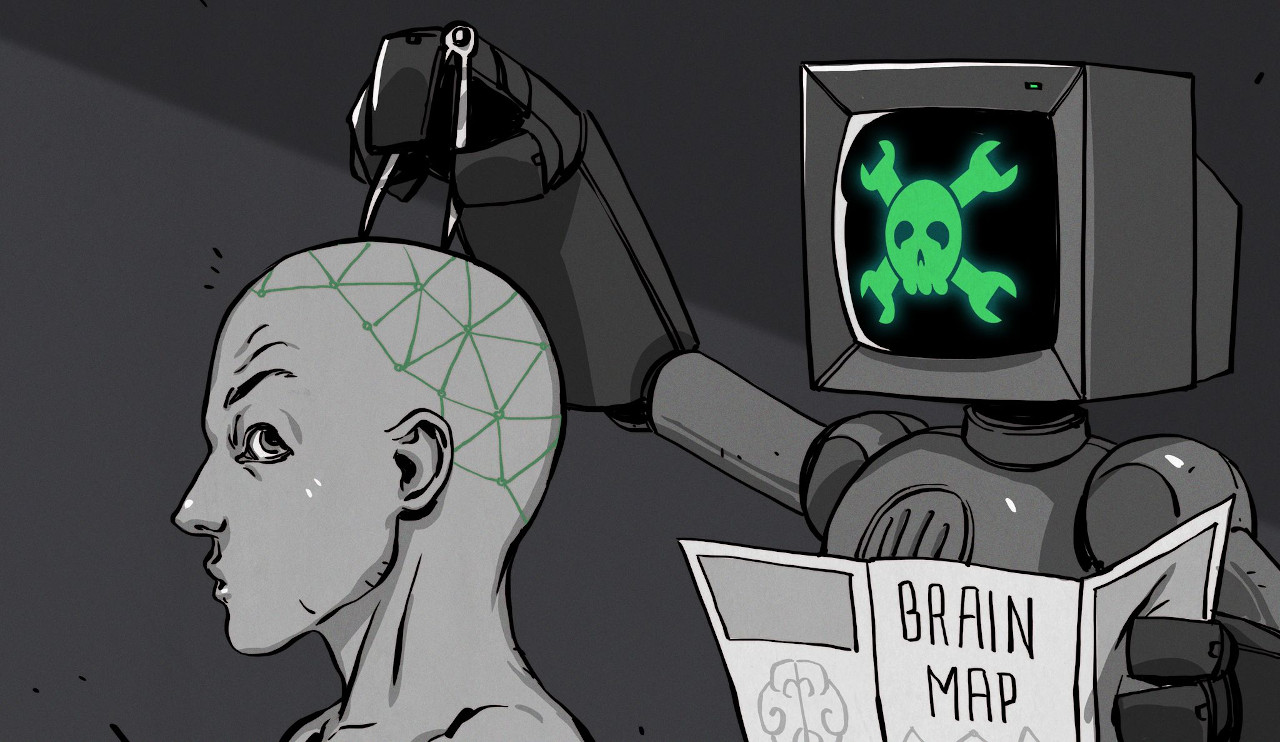
In the realm of modern buzzwords, 'AI' stands out as exceptionally prevalent. While 'smart' or 'intelligent' once sufficed for product promotion, today, artificial intelligence is marketed as a revolutionary force, enhancing efficiency, solving complex problems like cancer, and transforming everyday life. However, this widespread use often overstates its true capabilities, leading to a distorted understanding of what artificial intelligence actually entails, drawing parallels to past 'electronic brain' exaggerations. The article delves into clarifying the genuine nature of AI, distinguishing between mere automation and true intelligence, and highlighting the fascinating algorithms often obscured by this overarching 'AI' label.
This section explores the fundamental definitions of intelligence, building upon prior discussions regarding its empirical evidence and its application to animals like birds. Fluid intelligence (Gf), which encompasses reasoning, is identified as a core component, alongside memory and acquired skills. The article references the CHC intelligence model, noting its expansion to include species-centric sensory, motor, and efficiency metrics. A key point of academic contention arises from the difficulty in drawing a clear line between intelligence and cognition, enabling the broad application of 'intelligence' to systems such as machine vision. The author argues that many systems labeled 'AI' merely simulate fragments of the human cognitive process without possessing the underlying reasoning and comprehensive understanding inherent to biological intelligence, questioning the development of intelligence without fundamental in- and output mechanisms.
Machine vision (MV) is presented as a powerful tool for automating cognitive tasks, offering significant advantages over human labor by eliminating fatigue and distraction. Its applications are diverse, ranging from quality assurance on production lines (e.g., PCB assembly, food processing) where it uses visible light and infrared sensors to detect flaws, to complex systems in self-driving vehicles. In autonomous driving, MV integrates data from multiple sensors like radar and Lidar with techniques such as edge detection and convolutional neural networks (CNNs) to mimic human navigation. However, the article emphasizes that MV functions as a complement to human cognition rather than a replacement. It highlights that even advanced MV systems do not achieve Level 5 autonomy in self-driving and can still overlook seemingly obvious defects, necessitating human oversight and confirming their role as assistive technologies rather than fully intelligent entities.
Pattern recognition is identified as a critical skill in medical diagnostics, where categorizing symptoms and analyzing test results are central to diagnosis. Computer-aided diagnosis (CAD) has been pursued for decades to alleviate the cognitive workload on medical professionals. Early CAD systems utilized expert systems, built on knowledge bases and inference engines, which required continuous human maintenance. Modern approaches increasingly employ artificial neural networks, including large language models (LLMs), for easier updates. However, a significant drawback is that relying solely on statistical LLMs for diagnosis without human expert input diminishes the 'expert' component, making them prone to 'dumb mistakes.' This has led to a preference for retrieval augmented generation (RAG), which grounds LLM outputs in verified human-written documents, using LLMs primarily for natural language interfaces. Despite their utility in analyzing medical images like MRIs and X-rays, these systems cannot be unsupervised due to their fallibility, serving as aids rather than autonomous diagnosticians.
The article acknowledges the considerable progress in natural language processing, leading to chatbots that surpass earlier systems like ELIZA in conversational ability. Nevertheless, it asserts that this sophistication is largely a result of intricate human-designed chat interfaces that craft queries and manage session context for large language models (LLMs), rather than genuine inherent intelligence. The author explicitly states that emotional intelligence, which involves perceiving and feeling emotions, is beyond the capacity of such systems because they lack true feeling and reasoning. The apparent 'human-level' interaction is described as a 'semblance' or 'near-facsimile,' heavily reliant on complex programming and susceptible to human projection of emotions. Crucially, LLMs are deemed 'incapable of learning' independently and require external session information, underscoring that their impressive outputs are advanced statistical predictions rather than genuine intelligent understanding or consciousness.
The concluding section highlights the undeniable benefits of advanced systems like machine vision in automating industries, leading to increased efficiency and freeing human workers from repetitive, mindless tasks for more creative endeavors. While acknowledging the positive impact of this 'cognitive offloading,' the article strongly cautions against uncritically embracing these technologies. It underscores the importance of a thorough understanding of their inherent limitations and potential pitfalls. A significant concern raised is the risk of 'cognitive atrophy' and 'cognitive surrender' among humans, where over-reliance on AI, particularly chatbots, can lead to a degradation of critical thinking skills. Numerous studies are cited as increasingly identifying this hazard. The author's final message emphasizes that, irrespective of future advancements towards artificial general intelligence, the preservation and cultivation of human intelligence remain paramount, as it is our unique and indispensable asset, fundamental to humanity's past achievements and future progress.