Quick Buzz Feed

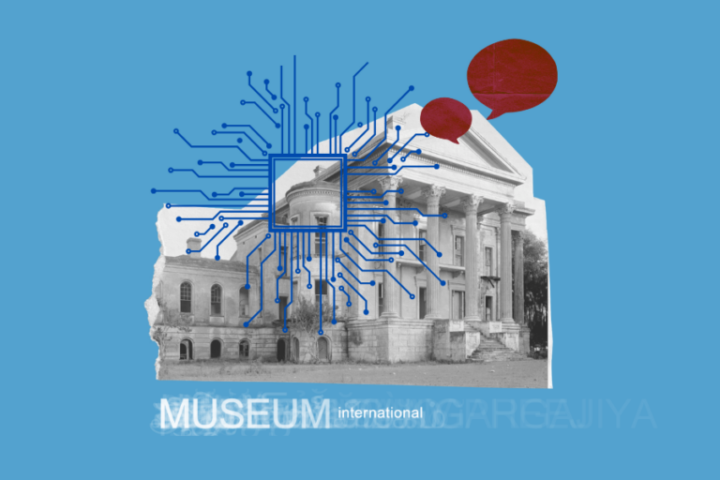
ICOM is preparing a special issue of Museum International (Vol. 79, Nº 315-316) focused on 'Artificial Intelligence in Museums'. This call invites scholars, museum professionals, technologists, artists, and policymakers to submit proposals exploring the evolving role of AI in collecting, preserving, interpreting, and communicating cultural heritage. The issue aims to examine both the new opportunities AI offers for museum management and the profound ethical, social, and professional challenges it presents, emphasizing the need for responsible governance and an understanding of AI's impact on public trust and museum expertise.
This upcoming issue of Museum International (Vol. 79, Nº 315-316) delves into the significant and rapidly growing influence of Artificial Intelligence (AI) across various facets of museum operations. AI is reshaping how cultural institutions manage collections—from automated cataloguing and machine-learning models for collection management to integrating metadata at national and continental scales. It also impacts exhibition design and visitor engagement through conversational interfaces. While AI undoubtedly provides novel opportunities for enhancing museum efficiency and outreach, it simultaneously introduces complex ethical, social, and professional challenges that require careful consideration. Museums, traditionally seen as bastions of cultural authority and public trust, are grappling with how these evolving technologies affect their core missions, raising fundamental questions about representation bias, intellectual property rights, historical accuracy, accessibility, environmental sustainability, and the future roles of museum professionals. The discussion extends to reflections on the interplay between human creativity and technology, the ethics of digital heritage, and the responsibilities of museums in a digitally evolving world. The rapid adoption of AI underscores the critical need for responsible governance and regulatory frameworks, aligning with international guidelines such as the UNESCO Recommendation on the Ethics of Artificial Intelligence (2021) and the European Union’s AI Act. This call for papers encourages interdisciplinary contributions that critically examine both the immense potential and inherent limitations of AI applications within museums and other cultural institutions.
The editors invite submissions that explore a diverse array of topics related to Artificial Intelligence in museums. These themes are not exhaustive but aim to guide prospective authors: 1. AI in cataloguing, documentation, provenance work, and collection management. 2. The use of AI to create large-scale, publicly accessible collections data across various collecting institutions. 3. Application of Generative AI in the development and interpretation of exhibitions. 4. AI's role and implications for museum education. 5. Development and deployment of AI-powered chatbots, visitor guides, and conversational interfaces. 6. Enhancing visitor experience and digital engagement through AI-assisted technologies. 7. AI for digital preservation and long-term stewardship of cultural heritage. 8. Addressing algorithmic bias, representation issues, and decolonizing digital collections. 9. Legal and ethical considerations around copyright, intellectual property, and provenance in AI-generated content. 10. The environmental sustainability and computational costs associated with AI. 11. Integration and ethical handling of Indigenous, community, and sacred knowledge within AI systems. 12. Exploring participatory approaches to AI design in museum contexts. 13. Examples of human-AI collaborations in curatorial practice or artistic works. 14. Ethical principles, transparency, and accountability in museum AI. 15. The application of AI in conservation science. 16. Critical museum studies perspectives on the intersection of museums and AI. 17. The role of museums as partners in AI research and innovation. 18. Enhancing accessibility, inclusion, and multilingual translation through AI in museum settings. 19. AI's impact on museum management, governance, and operational efficiency. 20. Case studies detailing successful or challenging AI implementations in museums and cultural institutions.
Prospective authors are required to submit abstracts ranging between 250 and 300 words. These abstracts can be written in English, French, or Spanish and must be submitted as a Word (.doc) document to publications@icom.museum. It is crucial for authors to ensure they receive a confirmation of receipt within two weeks of submission; if not, they should resubmit. Please note that all contributions are on a voluntary basis. Each abstract must include the title of the proposed paper, the full name(s) of the author(s), and their professional background. The strict deadline for abstract submission is November 9, 2026. All submitted abstracts will undergo a rigorous double-blind peer review process by a panel of subject-matter experts. While Museum International is primarily published in English, proposals in ICOM's other official languages (French and Spanish) are welcomed and will be considered. Authors whose abstracts are selected will receive detailed guidelines for preparing their full articles and will typically have approximately two months to complete their submission. Full articles may also be submitted in English, French, or Spanish.
An abstract submitted to Museum International should serve as a comprehensive yet succinct summary of the journal manuscript, strictly adhering to a word count of 250-300 words. It must be presented as a standalone document, meaning it should be intelligible without referring to the full article and should not contain any images or footnotes. The abstract should be provided in a Word document and structured to include the following essential elements: * **Introduction:** This section should comprise one or two brief sentences, setting the stage by describing the overall topic addressed in the article and providing necessary background to the study. * **Research Question(s)/Critical Issue(s):** Authors must clearly articulate the central research question(s) or critical issue(s) their paper addresses, explicitly stating the problem and highlighting any existing gaps in current research on the topic. * **Innovation:** This part requires a clear explanation of the unique approach adopted to tackle the research question or issue, emphasizing the new perspective or methodology introduced by the author(s). * **Methodology:** Authors should describe how the research was conducted, including specific methods employed (e.g., case studies, interviews) or the general means utilized to address the critical issue at hand. * **Conclusion:** The conclusion should summarize the significant impact of the research or the key outcomes derived from addressing the critical issue, explaining why these findings or outcomes hold importance within the field. * **Selected References:** A concise selection of only the main sources that will be cited within the full article must be included. * **Keywords:** A maximum of five relevant keywords should be provided to facilitate indexing and discoverability of the article.