Quick Buzz Feed

Atmospheric and radar scientists at Colorado State University (CSU) are pioneering a novel forecasting system that leverages artificial intelligence to enhance the detection and prediction of destructive hailstorms. These storms are notorious for causing significant damage to crops, roofing, and vehicles, directly impacting safety, livelihoods, and insurance costs. Unlike current models that offer hail warnings merely 30 minutes in advance, the CSU researchers aim to extend this lead time to several hours or even days across Colorado and Wyoming. This innovative project integrates a short-term 'nowcasting' model, developed in collaboration with AI industry leader NVIDIA, with an existing CSU machine learning model designed for longer-term storm prediction, promising more accurate and timely forecasts as storms rapidly evolve.
Colorado State University (CSU) is at the forefront of developing a groundbreaking artificial intelligence-driven system to significantly enhance the accuracy and lead time of destructive hailstorm predictions. This initiative by atmospheric and radar scientists seeks to overcome the limitations of current forecasting models, which typically provide only 30-minute warnings, by extending prediction capabilities to several hours or even days in advance for regions like Colorado and Wyoming. The project, backed by the National Science Foundation, combines a recently developed short-term 'nowcasting' model, created in partnership with AI industry leader NVIDIA, with an existing CSU machine learning model focused on longer-term storm prediction. Kristen Rasmussen, an associate professor involved in the project, highlights that this system will synthesize regional radar data with nine years of historical weather observations from across the U.S. This endeavor is particularly critical given the escalating homeowners' insurance costs, partly attributed to the increased risks associated with hailstorms, making advanced forecasting an essential tool for public safety, agricultural protection, and economic stability.
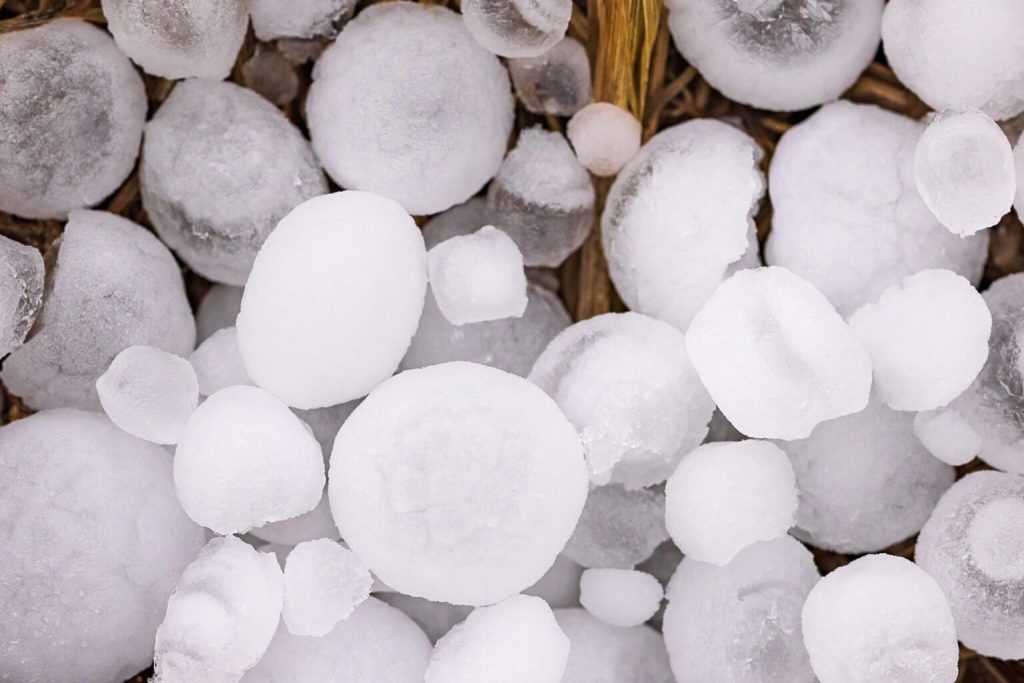
Hail forms when powerful updrafts carry raindrops high into the atmosphere where they freeze, eventually falling back to Earth as damaging hailstones. Colorado and its surrounding areas are considered a 'hail hotspot' due to their elevation and atmospheric conditions, frequently experiencing storms that inflict billions of dollars in damage to residential properties, agricultural yields, and commercial establishments. This widespread destruction has prompted insurance providers to increase rates across the state, even in historically less prone areas, to balance risk and account for potential shifts in weather patterns possibly linked to climate change. Professor Rasmussen notes a worrying trend: the season for major hail events is expanding, occurring earlier in spring and later in fall, accompanied by an increase in both the intensity and frequency of these storms. She cited a June 2023 storm near Morrison, Colorado, which caused injuries to nearly 100 people at an outdoor venue, emphasizing the urgent need for improved prediction capabilities beyond the current 30-60 minute window. The integration of AI is seen as a vital step to significantly enhance the accuracy and responsiveness of storm predictions.
The NSF ASCEND project encompasses another crucial component led by Russ Schumacher, a professor in CSU's Department of Atmospheric Science. For an extended period, Schumacher's team has been advancing machine learning techniques to aid in forecasting, focusing on a one- to eight-day prediction window across the entire United States. Their approach involves analyzing detailed historical data from past severe weather events to identify significant patterns. The model, named 'Colorado State University-Machine Learning Probabilities (CSU-MLP),' prioritizes key atmospheric variables like temperature and wind speed that are critical to storm formation and intensification. By comparing these past observations with data from simulated severe-storm environments and human-generated forecasts, the system can develop medium-range probability predictions, which then serve as guidance for human forecasters. Initially developed for heavy rain prediction, the team's recent efforts have concentrated on understanding which atmospheric inputs are most vital to the model's predictive power. Pinpointing these variables is expected not only to refine the model's overall accuracy but also to foster greater trust among human forecasters by offering transparency into how the system reaches its conclusions. A significant challenge for the NSF ASCEND project is the integration of NVIDIA's short-term 'nowcasting' model with the CSU-MLP's longer-term, ingredients-based approach. The team is currently evaluating whether to merge these distinct architectures into a unified system or to provide users with both types of information, allowing them to utilize the varied insights as part of their forecasting process.
The research conducted at CSU is poised to revolutionize hailstorm forecasting, offering substantial improvements in timeliness and accuracy through the application of artificial intelligence. This endeavor is profoundly significant given the discernible increase in both the frequency and severity of hailstorms, which have become the leading determinant of homeowners' insurance premiums in Colorado. A core strength of these advancements lies in the university's robust foundation of high-quality radar data, which underpins the entire project. Looking ahead, the CSU team plans to deploy RM60 sensors, a cutting-edge technology from Vaisala, in spring 2027. These sensors will measure accumulation, intensity, precipitation type, and drop size distribution, providing critical ground-level data to validate the forecasts generated by the new generative AI model against actual weather events. Initial results from the project have shown considerable promise, highlighting the potential for groundbreaking discoveries and substantial progress in improving severe weather prediction.