Quick Buzz Feed

There is a simple proposition at the heart of the debate over artificial intelligence in military sustainment, and it is easy to lose sight of amid the excitement about new tools. Data precedes AI. The quality of what an AI system concludes can never rise above the quality of what it is given to reason over, or above the ability of the enterprise to act on what it concludes. That proposition matters now because a familiar instinct is shaping how the Pentagon approaches maintenance. AI is treated as a tool, and tools can be dropped into workplaces. Buy the software, hand it to the maintenance department, and readiness will follow. A recent NAVAIR draft request reflects that approach. The motive is sound, but the approach starts in the wrong place.
At its core, an AI system functions as a logic system, processing inputs through rules or learned patterns to generate conclusions. A critical lesson from logic dictates that even a valid argument, if built upon flawed premises, will lead to perfectly formed yet entirely incorrect conclusions. In the realm of maintenance, these premises are derived from data. If the foundational data is incomplete, inconsistent, outdated, or siloed in incompatible systems, the AI will dutifully process it at speed and scale, lending an air of authority to potentially flawed outputs. This results not in enhanced decision-making, but in the rapid management of poor data. Therefore, high-quality data is paramount; it must be accurate, traceable to specific, serial-numbered parts on individual aircraft, and captured at the point of work by personnel who trust and utilize it effectively.
Artificial intelligence in sustainment aims to address two distinct, yet interconnected, objectives. The first target is the aircraft itself, where advanced techniques like condition-based maintenance, fatigue damage monitoring, and the digital twin replace traditional statistical estimations. Instead of adhering to fixed maintenance schedules, these systems enable parts to be replaced based on their actual condition and historical performance. The second target is the broader industrial base, encompassing suppliers, lead times, demand signals, and inventory management, all of which dictate the timely availability of parts. Tools like Sikorsky’s Ariel, for example, work with entities such as the Defense Logistics Agency to optimize the supply chain for thousands of spare parts. These two applications are not mutually exclusive; predicting a component's failure without knowing if a replacement is available with a 14-month lead time offers only a partial solution. One half identifies the need, while the other determines the enterprise's capacity to meet it. Without both, a force operates with incomplete answers.
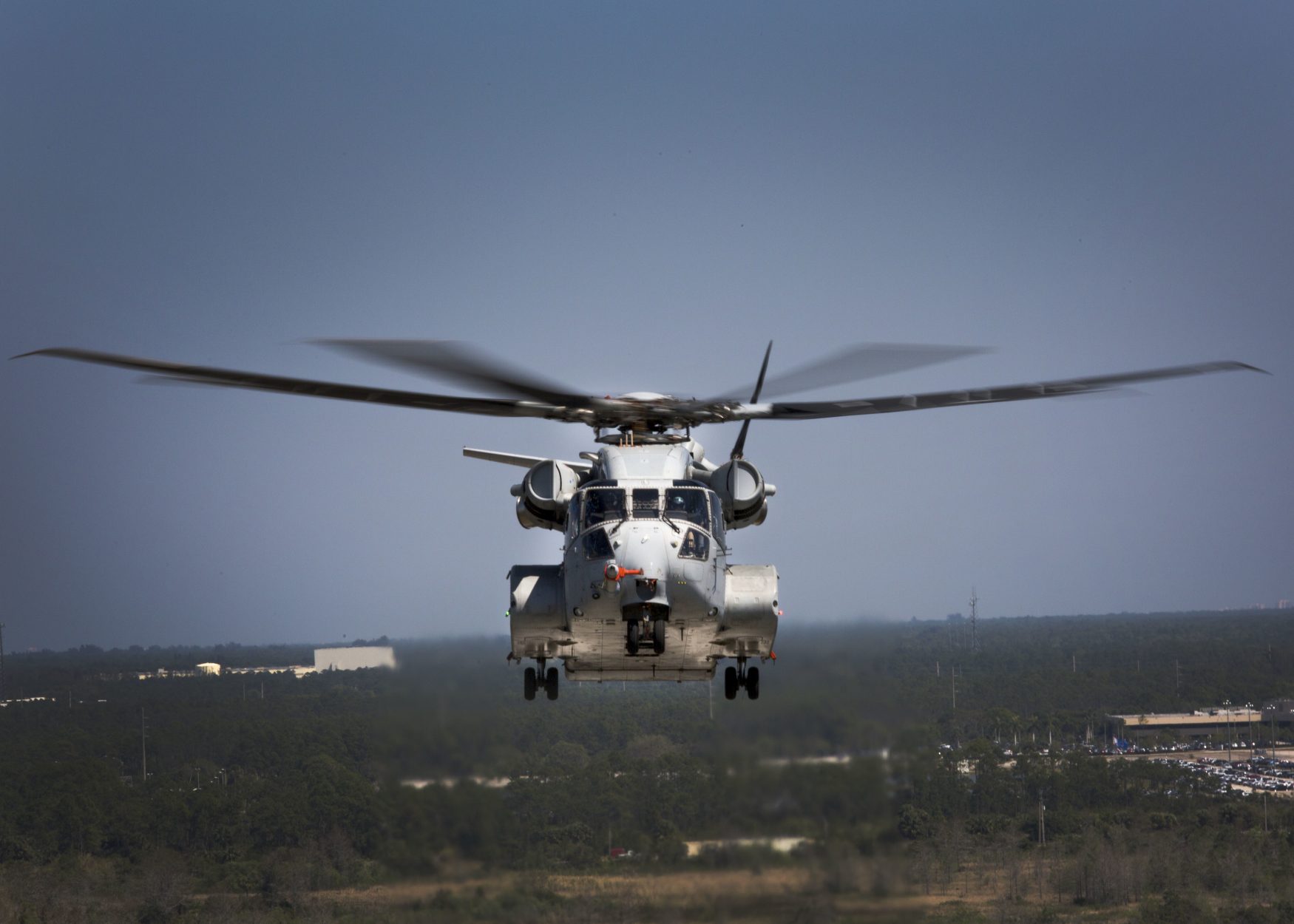
The critical link between the two facets of sustainment AI is the 'digital thread' – a continuous, unbroken record tracking a part from its design and manufacture through operation, repair, and eventual retirement. This is coupled with a contract structure that incentivizes desirable outcomes. The experience with the CH-53E offers a salient example: a performance-based logistics award to Sikorsky in 2018 shifted focus from mere parts delivery to aircraft availability. This contractual change, supported by a robust data environment like the Fleet Common Operating Environment, allowed a direct correlation between parts changes and measurable improvements in aircraft readiness. Such a connection is indispensable for AI to effectively learn and optimize. The essential sequence is thus: enterprise capability, followed by robust data infrastructure, and finally, the implementation of AI – not the reverse. A cautionary tale emerges from a 2021 Department of Defense Inspector General audit of DLA's contracts, revealing unvalidated estimated savings and a contract where on-time delivery plummeted to 53% against a 90% target, due to a lack of performance metrics. In such a scenario, AI would either highlight the accountability deficit or, more dangerously, obscure its existence, underscoring that a performance-based system without reliable data is an act of faith.
The Marine Corps is strategically developing a distributed force designed to operate for extended periods in contested environments, far from conventional logistical support. The CH-53K, a sophisticated, digital aircraft, is fundamental to this force. However, pairing such advanced technology with an underdeveloped enterprise is inherently inefficient. For a unit tasked with sustaining operations over a defined timeframe, meticulous planning is required: identifying components nearing their operational limits, pinpointing those with lengthy lead times, and recognizing dependencies on single suppliers. Effectively answering these questions demands both high-quality data and an agile enterprise capable of action. When decisions about part placement are based on flawed data and accelerated by an error-prone system, they create hidden vulnerabilities within the force. This highlights why sustainment is not merely a logistical function but a critical combat function, demanding answers to fundamental questions: Is the data reliable for reasoning? Is the enterprise structured for effective action? Are these two elements seamlessly integrated? And crucially, how will success be measured and validated? The fundamental choice in integrating AI into sustainment is whether to first establish the necessary data and enterprise foundations, or to acquire the technology with the hope that the other elements will somehow fall into place.