Quick Buzz Feed

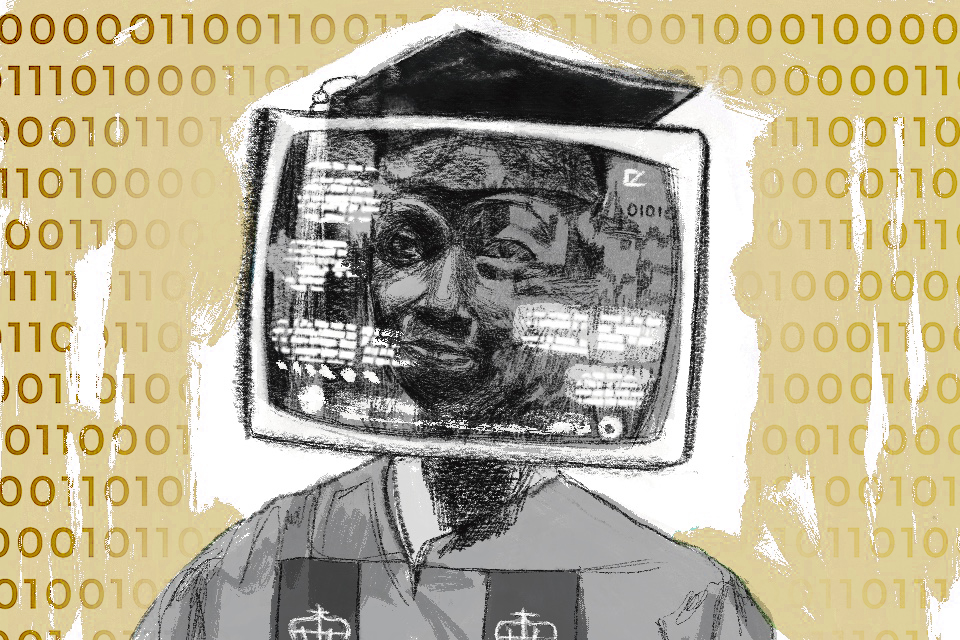
When the launch of ChatGPT in 2022 made generative artificial intelligence widely available, the value and purpose of education were thrown into question. Since then, academic institutions have increasingly moved to integrate AI products into school curricula, often through partnerships with major tech corporations. In response to this trend, researchers have warned of possible damage to young people’s development and critical thinking, while teachers have scrambled to identify how to best combat widespread AI-assisted cheating.
The introduction of generative artificial intelligence, particularly with ChatGPT in 2022, initiated a profound questioning of education's fundamental value and purpose. Academic institutions globally are progressively integrating AI into their curricula, frequently collaborating with major technology corporations. This trend has raised alarms among researchers regarding potential adverse effects on young people's development and critical thinking skills. Concurrently, educators are actively seeking strategies to counteract widespread AI-assisted academic dishonesty.
On a national scale, companies exhibit diverse approaches to AI; many have broadly adopted these technologies, while others have enforced strict bans on their use. At an individual level, professionals entering AI-exposed fields face a dynamic job market characterized by a prospective decrease in entry-level positions and an escalating expectation of AI fluency. This necessitates a strategic adaptation for students and job seekers alike to remain competitive.
In response to this rapidly evolving technological landscape, Columbia University has launched several initiatives aimed at preparing its students for an AI-integrated future. These efforts include educational programs for faculty and administrators, the establishment of a Master of Science in Artificial Intelligence program, and the introduction of an AI minor for undergraduates. Both Columbia and Barnard colleges are developing chatbots for student and faculty support, and Columbia recommends that faculty establish course-specific AI policies.
Chris Wiggins, an associate professor at Columbia, emphasizes that his teaching philosophy is rooted in ensuring students gain a practical understanding of their education's value for sustained careers. Shaped by his experiences in the New York City media industry post-2008, he advocates for an education that prepares students for diverse paths, particularly in data science and machine learning. He believes that teaching values should align with these real-world career trajectories, rather than creating tension with them.
Wiggins argues that faculty can no longer ignore AI in their teaching, given the immense industrial investment and widespread adoption of generative AI. He identifies the core challenge as a misalignment in practice, specifically the outdated assumption that a digital document submitted by a student is a faithful representation of their original thought processes. This is no longer inherently true, as AI enables document creation without genuine human learning. He points out that education historically existed for millennia without relying on this specific assessment assumption.
While assessment is crucial, Wiggins stresses that teaching is an equally vital responsibility. He believes students attend university to learn and refine their understanding, not merely to submit assignments. Faculty's role is to guide students in developing their best selves and deepening their inquiry. He views technological disruptions, such as AI, as valuable opportunities to revisit and reaffirm education's core mission: to impart truth and equip students with enduring skills that will serve them for decades.
As a graduate of Columbia College's Core Curriculum, Wiggins attests to its effectiveness in building critical capacities like making and defending difficult decisions, and communicating clearly. He asserts that these fundamental skills are indispensable for active participation in communities, classrooms, and professional environments. Wiggins concludes that despite the advancements of artificial intelligence, these enduring human skills will remain central to a valuable education and effective societal engagement.