Quick Buzz Feed

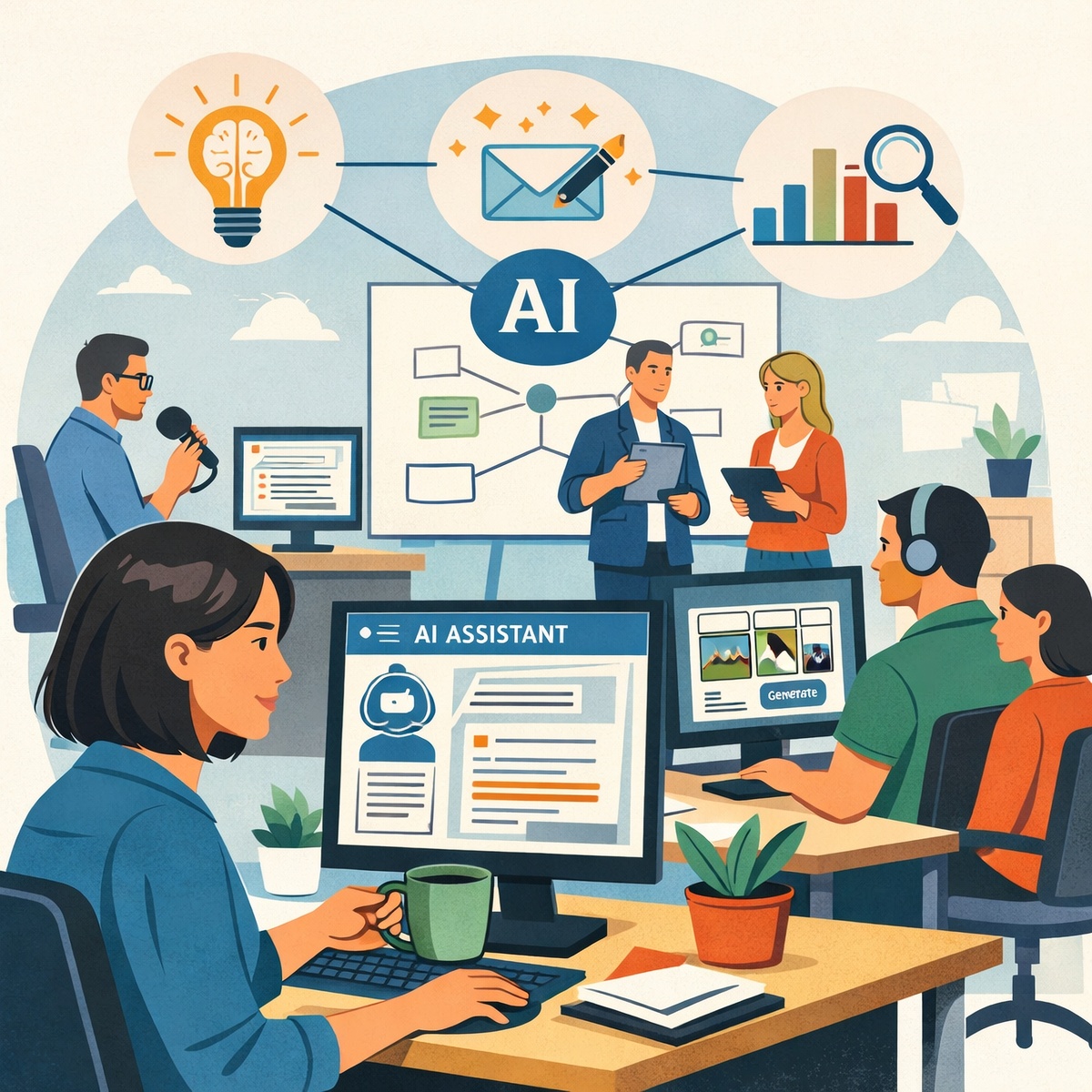
While there’s been widespread fear that AI will eliminate jobs, Kass Moore, director of Career Services and Workforce Development at UNLV, said that fear hasn’t played out for many roles. Experts confirm AI is primarily an assistive tool, helping with tasks like ideas and strategy, rather than fully automating work.
Despite widespread apprehension, experts like Kass Moore, director of Career Services and Workforce Development at UNLV, assert that AI is not yet a direct threat to job security. Google’s new AI & Economy ATLAS report supports this, indicating that AI predominantly serves an assistive function in the workplace—aiding with idea generation, strategy, and similar tasks. Full automation of work remains infrequent, with AI being adopted across all industry sectors and 68% of occupations, but only for about 21% of tasks. Employers are increasingly looking for candidates familiar with AI tools, emphasizing strategic and judicious use rather than over-reliance.
Andy Boettcher, chief innovation officer at DoubleTrack, clarifies that it's not AI itself that's coming for jobs, but rather individuals who master AI to enhance their work efficiency. A DoubleTrack report highlights a significant AI talent gap in Nevada, with only 7.1 AI specialists per 1,000 jobs, despite nearly 26% of businesses utilizing AI. This presents a 'once-in-a-generation' opportunity for people to acquire AI skills, often without needing multi-year degrees. Many businesses are addressing this by having existing staff integrate AI or by hiring consultants, rather than formally trained AI specialists.
Boettcher encourages people to engage with AI platforms interactively, treating them as collaborative partners to challenge thinking and improve problem-solving. He advises against viewing AI merely as a tool but as a co-worker to have conversations with, which can lead to elevated output. UNLV is proactively integrating AI training and resources into its courses and operations, ensuring students are well-prepared for the evolving job market. This includes using AI collaboratively in job searches, such as getting tips for a cover letter based on a job description, rather than letting AI compose it entirely, emphasizing smart and strategic application.
Steve Miller, professor of economics at UNLV’s Lee Business School, points out that the fear of new technology rendering jobs obsolete is a recurring theme throughout history, seen previously during the computerization era. He notes that it takes time for the benefits of technological changes, like AI, to manifest in terms of productivity and output within the economy. The key economic question is whether increased productivity from AI will lead to a decrease in labor or if the savings are reinvested, creating new demand for human workers. Southern Nevada's major industries, such as hospitality and entertainment, are also increasingly adopting AI in their operations.