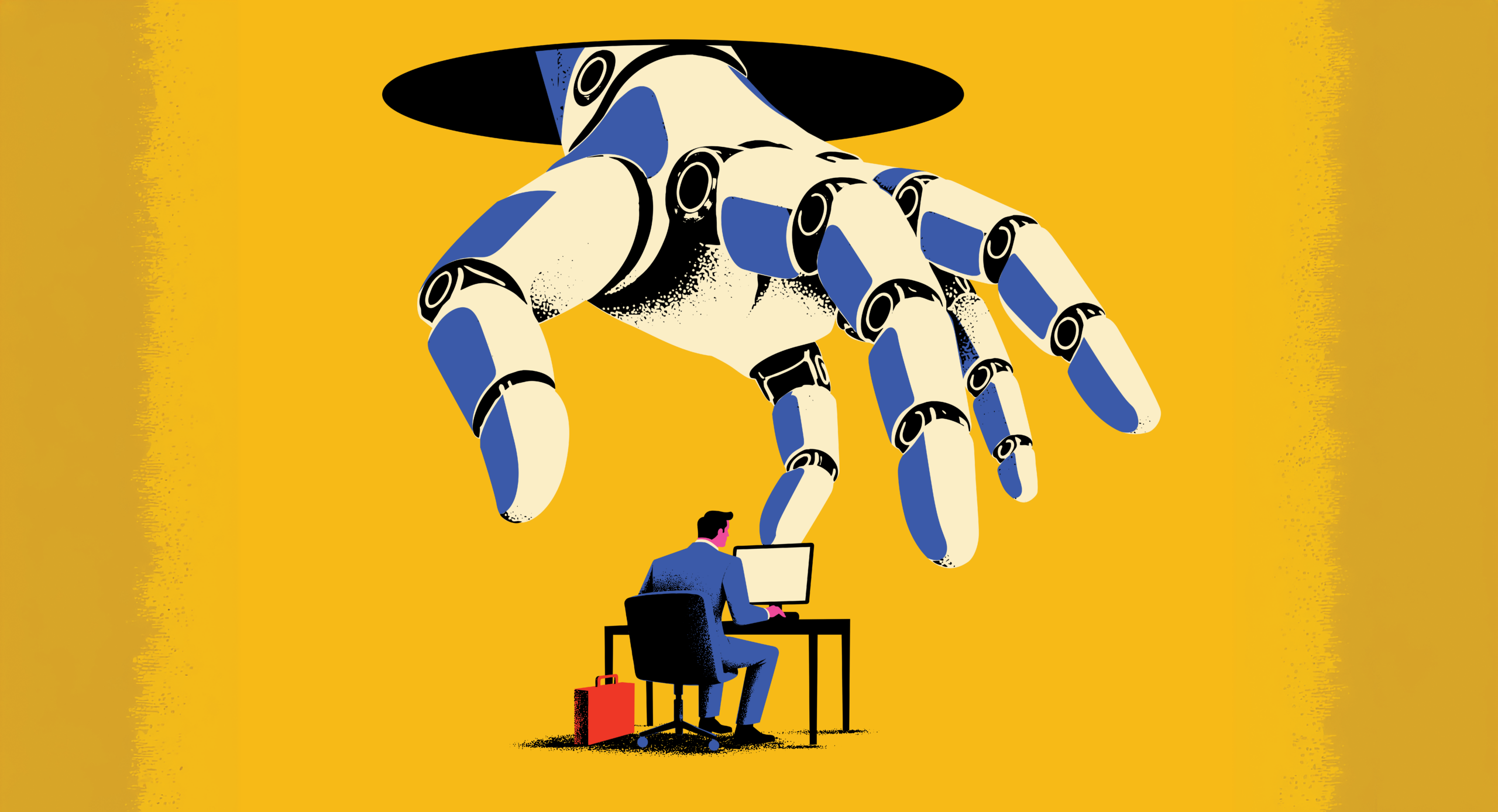
The pace and magnitude of AI-induced job dislocation is uncertain, but that uncertainty is no excuse for failing to enact policies that can assist workers today.
Key takeaways Policymakers must prepare the U.S. workforce for potential AI-induced job dislocation immediately. Policies should offer universal support for all displaced workers, including job search assistance and income support during transitions, rather than narrowly targeting only AI-caused job loss. This involves investing in successful workforce development strategies, fostering innovation, improving data collection, expanding wage insurance, implementing 'automatic scaling-up' mechanisms for policy responses, and discouraging layoffs through redeployment and shorter workweeks. These measures, alongside strengthening worker power and creating good jobs, aim to ensure economic dignity and equitably share productivity gains. Overview and summary The rapid advancement of artificial intelligence presents a significant policy challenge due to the uncertain but potentially widespread job dislocation it may cause. The U.S. currently lacks sufficient worker adjustment policies compared to other developed nations. This report advocates for an immediate and substantial expansion of worker support policies. Key proposals include universal eligibility for programs, increased investment in evidence-based training, new strategies to prevent layoffs, and funding these initiatives through taxation on capital and corporate profits. The goal is to provide workers with greater agency and build robust institutions to adapt to AI's evolving impact on the labor market. The most effective strategy for assisting workers harmed by AI will be to provide universal support to all displaced workers, not just those who can show AI was responsible for their job loss Targeting assistance solely to workers who can prove AI-caused job loss has historically proven ineffective, as demonstrated by past trade adjustment policies. This approach creates difficulties in causal determination, delays in delivering aid, and raises issues of horizontal equity. A universal strategy, providing support to all displaced workers regardless of the reason for job loss, is more effective and efficient. The report proposes implementing universal worker adjustment assistance and universal job-search assistance to achieve this. Universal worker adjustment assistance would provide financial support for all displaced workers as they pursue new workforce training This proposal expands upon the Trade Adjustment Assistance (TAA) model, rectifying its flaws by offering universal financial support and covering training costs for any displaced worker. It includes up to 104 weeks of additional unemployment insurance payments for those participating in training. The TAA program, despite benefiting recipients, often excluded many due to complex eligibility processes. A universal, adequately funded program, integrated with and reforming the existing Unemployment Insurance (UI) infrastructure, would streamline aid and serve a broader population, ensuring successful transitions through outreach, coaching, wraparound services, and relocation assistance. Universal job-search assistance would stand up 25,000 new counselors and navigators Despite its proven cost-effectiveness and positive impact on employment and wages, the U.S. significantly underinvests in job search assistance compared to other OECD nations. The increasing disruption caused by AI further complicates job seeking and career planning. This proposal guarantees high-quality job search assistance for all Americans, delivered by a new cohort of 25,000 trained counselors and navigators. These professionals would operate through American Job Centers and other intermediaries, offering personalized guidance, utilizing AI tools, and prioritizing support for disadvantaged workers while also assisting college-educated job seekers. Past policy failures require a major investment in evidence-based success, data, and accountability, not a defeatist nihilism about workforce development Dismissing the value of job training programs due to past disappointing federal results is unfounded, especially given the threats of AI-induced job dislocation. While the overall U.S. public workforce training system has weaknesses, a growing body of research identifies successful programs, such as sectoral training and registered apprenticeships, that significantly boost employment and income. The core issue is the system's lack of resources to consistently scale up these effective, often higher-cost, evidence-based approaches. Policymakers must address these failures by expanding access to proven training models, improving data collection, and ensuring accountability for results. $15 billion in Invest-in-Success funding to states To counteract the severe, inflation-adjusted decline in job training funding (halved since 2000), this proposal allocates $15 billion over five years to states. This funding is earmarked for data-driven approaches, developed in collaboration with employers, worker organizations, and community colleges, to assist displaced workers. It would enable states to expand proven models like sectoral training and apprenticeships, and provide crucial wraparound services such as childcare and transportation support. As a condition, states must guarantee access to high-quality training for eligible displaced workers and implement robust data and evidence collection for accountability. $10 billion in new innovation grants In addition to scaling proven training methods, the U.S. Department of Labor would receive $10 billion over five years for competitive innovation grants. These grants are designed to support cutting-edge retraining efforts for AI-displaced workers and address novel challenges. Funds would be available to various entities (states, colleges, unions, etc.) to pilot new models, particularly for populations less traditionally served by the public workforce system, such as college-educated workers. The grants aim to foster experimentation, support transitions into 'double dignity' jobs, and improve training programs using AI-enabled technology, while building a data-driven evidence base for new approaches. New data and new accountability for results The proposed workforce training funds will be subject to stringent standards to ensure demonstrable results. This requires significant investments in data collection to accurately measure program success and provide trainers with up-to-date information on employer skill demands. Administrative data collection will be revamped to offer granular insights into worker outcomes across industries, occupations, and locations. States will be mandated to hold training providers accountable by reporting real-time participant outcomes and allocating future funding to programs with proven positive impacts. Emerging tools like 'digital twins' will also be leveraged to enhance evidence gathering and program refinement. Broader support for workers who lose their jobs beyond workforce training, including through expanded and progressive wage insurance The U.S. unemployment safety net is weaker than in other major economies, with insufficient Unemployment Insurance and health insurance tied to employment. While comprehensive UI reforms are critical, this report proposes expanded, progressive wage insurance as a complementary policy. Wage insurance would provide a subsidy to cover a portion of the difference between a worker's previous and new pay, encouraging quicker re-entry into the workforce while cushioning the financial impact of lower-wage jobs. This approach is particularly relevant for the millions of workers who may face challenges transitioning into new careers. Expanded benefits for displaced workers with incomes up to $150,000 regardless of what caused their layoffs This proposal extends wage insurance eligibility beyond older, trade-displaced workers with low-income caps. It would cover displaced workers over the age of 35 with at least three years of tenure in their prior roles, irrespective of the cause of their layoff. Benefits would be more generous than previous proposals, offering up to $20,000 annually for two years, and available to those earning up to $150,000 in their former positions. The structure is progressive, covering 60% of lost wages below $50,000, 45% for incomes between $50,000 and $100,000, and 30% for incomes between $100,000 and $150,000. Mortgage, rental and health care assistance for displaced workers To mitigate the severe consequences of job loss, the report suggests pairing universal worker adjustment assistance and wage insurance with housing and healthcare support. This includes mandating or incentivizing banks to offer mortgage forbearance for laid-off workers, providing mediation services to prevent unnecessary evictions, and expanding health care assistance for unemployed individuals. A crucial first step would be to reverse the work requirements for Medicaid and the Supplemental Nutrition Assistance Program (SNAP) enacted in the 2025 One Big Beautiful Bill Act. Establish not only automatic stabilizers but automatic scaling up to meet the job challenges presented by AI as it evolves The U.S. must prepare for AI's uncertain impacts by building policy infrastructure and flexibility to rapidly scale worker assistance. This involves establishing institutional mechanisms for quick relief and designing programs to automatically adjust to the scope of displacement without new legislation. This preparation is essential because AI could cause concentrated job losses in specific sectors, even when the overall economy is strong, necessitating swift, targeted responses that traditional automatic stabilizers might not adequately address. Proactive implementation of these programs is key to mitigating future disruptions. Programs to automatically scale when displacement increases Beyond traditional automatic stabilizers that respond to general economic downturns, AI necessitates 'automatic scaling-up' policies for targeted job displacements. These policies would expand eligibility and/or benefits for programs like wage insurance and short-time compensation, and increase training funding for states, if job losses accelerate in specific occupations or industries, even without a broader recession. This ensures a quicker, more effective response to AI-driven labor market changes. Aggressive investments in the capacity to monitor U.S. labor market conditions Effective response to AI-induced job displacement requires major investments to enhance the federal government's real-time labor market analysis capabilities. A proposed $1 billion investment over five years for the Bureau of Labor Statistics and other agencies would boost data collection, revamp administrative records to track workers across industries, occupations, and locations, and integrate data from private-sector AI labs. This granular data is vital for precisely identifying where displacements are occurring, designing targeted interventions, and triggering automatic scaling-up policies. A new labor emergency designation that unlocks funds for workers facing acute job displacements To address situations where automatic scaling mechanisms might be insufficient due to data lags or uneven AI diffusion, the report proposes a new 'labor emergency' authority for the U.S. Department of Labor. Similar to FEMA disaster declarations, this authority would unlock up to $1 billion annually for quick, flexible, and targeted responses to acute job displacement in specific industries, occupations, or regions. This funding could be used for outreach, deploying specialized job navigators, and piloting fast-track reskilling programs, offering an initial mechanism for response before long-term assistance. Experimenting with efforts to discourage layoffs through a proposed Redeployment and Retention Innovation Fund While assisting laid-off workers is important, preventing avoidable layoffs is a superior solution. Acknowledging that policies to prevent layoffs in the AI era are novel, this report proposes a $20 billion Redeployment and Retention Innovation Fund over five years. This fund would incentivize firms to experiment with strategies like sharing productivity gains through shorter workweeks or redeploying workers into new internal roles, rather than resorting to layoffs. The goal is to develop models for employers to emulate and inform longer-term policies, encouraging innovation in worker retention. Experiments with sharing productivity gains through shorter work weeks Drawing on historical predictions and contemporary corporate discussions that AI could lead to shorter workweeks, this proposal advocates for funding experiments where workers maintain their pay while reducing hours. It builds on the concept of work-sharing (short-time compensation) but applies it to AI-driven productivity gains rather than economic downturns. Firms applying to the Redeployment and Retention Innovation Fund would receive support to transition to, for example, a 32-hour workweek with 40 hours of pay. Applications prioritizing union collaboration and including clawback provisions for sustained commitment would be favored. Experiments with redeploying workers rather than laying them off Citing historical examples and international models (like IKEA and Singaporean banks), this proposal encourages U.S. firms to retrain and redeploy workers whose roles are affected by AI, instead of resorting to layoffs. The Redeployment and Retention Innovation Fund would cover part of the training and wages for workers transitioning to new, equally well-paying roles within the firm. Clawback clauses would deter firms from using the subsidy for short-term gains before eventual layoffs. The aim is to shift corporate behavior away from prioritizing AI-induced layoffs to boost valuations. The Redeployment and Retention Innovation Fund This fund, totaling $20 billion over five years and financed by new corporate tax revenues, aims to prevent layoffs by supporting innovative approaches like work-sharing and redeployment. Applications will be rigorously evaluated based on evidence of AI's impact on labor demand, a clear plan for worker well-being, demonstrated necessity of the government subsidy, and collaboration with workers and unions. The goal is to maximize the impact of public investment, establish best practices, and provide proofs of concept for firm-level strategies to retain employees, with robust safeguards against corporate windfalls. Conclusion Despite the uncertain pace and magnitude of AI-induced job dislocation, immediate policy action is essential to assist workers, alleviate anxiety, and build a framework for potential future displacement. These measures must be complemented by broader policies promoting economic dignity and shared prosperity, including strengthening worker power and ensuring the creation of good jobs. Crucially, reforms to appropriately tax the beneficiaries of AI-driven productivity growth—such as corporate profits and capital returns—are necessary to fund these policies and counteract rising inequality. The agenda outlined herein represents a foundational step, demanding ongoing experimentation, refinement, and adaptation as the U.S. economy evolves.
Key takeaways
Policymakers must prepare the U.S. workforce for potential AI-induced job dislocation immediately. Policies should offer universal support for all displaced workers, including job search assistance and income support during transitions, rather than narrowly targeting only AI-caused job loss. This involves investing in successful workforce development strategies, fostering innovation, improving data collection, expanding wage insurance, implementing 'automatic scaling-up' mechanisms for policy responses, and discouraging layoffs through redeployment and shorter workweeks. These measures, alongside strengthening worker power and creating good jobs, aim to ensure economic dignity and equitably share productivity gains.
Overview and summary
The rapid advancement of artificial intelligence presents a significant policy challenge due to the uncertain but potentially widespread job dislocation it may cause. The U.S. currently lacks sufficient worker adjustment policies compared to other developed nations. This report advocates for an immediate and substantial expansion of worker support policies. Key proposals include universal eligibility for programs, increased investment in evidence-based training, new strategies to prevent layoffs, and funding these initiatives through taxation on capital and corporate profits. The goal is to provide workers with greater agency and build robust institutions to adapt to AI's evolving impact on the labor market.
The most effective strategy for assisting workers harmed by AI will be to provide universal support to all displaced workers, not just those who can show AI was responsible for their job loss
Targeting assistance solely to workers who can prove AI-caused job loss has historically proven ineffective, as demonstrated by past trade adjustment policies. This approach creates difficulties in causal determination, delays in delivering aid, and raises issues of horizontal equity. A universal strategy, providing support to all displaced workers regardless of the reason for job loss, is more effective and efficient. The report proposes implementing universal worker adjustment assistance and universal job-search assistance to achieve this.
Universal worker adjustment assistance would provide financial support for all displaced workers as they pursue new workforce training
This proposal expands upon the Trade Adjustment Assistance (TAA) model, rectifying its flaws by offering universal financial support and covering training costs for any displaced worker. It includes up to 104 weeks of additional unemployment insurance payments for those participating in training. The TAA program, despite benefiting recipients, often excluded many due to complex eligibility processes. A universal, adequately funded program, integrated with and reforming the existing Unemployment Insurance (UI) infrastructure, would streamline aid and serve a broader population, ensuring successful transitions through outreach, coaching, wraparound services, and relocation assistance.
Universal job-search assistance would stand up 25,000 new counselors and navigators
Despite its proven cost-effectiveness and positive impact on employment and wages, the U.S. significantly underinvests in job search assistance compared to other OECD nations. The increasing disruption caused by AI further complicates job seeking and career planning. This proposal guarantees high-quality job search assistance for all Americans, delivered by a new cohort of 25,000 trained counselors and navigators. These professionals would operate through American Job Centers and other intermediaries, offering personalized guidance, utilizing AI tools, and prioritizing support for disadvantaged workers while also assisting college-educated job seekers.
Past policy failures require a major investment in evidence-based success, data, and accountability, not a defeatist nihilism about workforce development
Dismissing the value of job training programs due to past disappointing federal results is unfounded, especially given the threats of AI-induced job dislocation. While the overall U.S. public workforce training system has weaknesses, a growing body of research identifies successful programs, such as sectoral training and registered apprenticeships, that significantly boost employment and income. The core issue is the system's lack of resources to consistently scale up these effective, often higher-cost, evidence-based approaches. Policymakers must address these failures by expanding access to proven training models, improving data collection, and ensuring accountability for results.
$15 billion in Invest-in-Success funding to states
To counteract the severe, inflation-adjusted decline in job training funding (halved since 2000), this proposal allocates $15 billion over five years to states. This funding is earmarked for data-driven approaches, developed in collaboration with employers, worker organizations, and community colleges, to assist displaced workers. It would enable states to expand proven models like sectoral training and apprenticeships, and provide crucial wraparound services such as childcare and transportation support. As a condition, states must guarantee access to high-quality training for eligible displaced workers and implement robust data and evidence collection for accountability.
$10 billion in new innovation grants
In addition to scaling proven training methods, the U.S. Department of Labor would receive $10 billion over five years for competitive innovation grants. These grants are designed to support cutting-edge retraining efforts for AI-displaced workers and address novel challenges. Funds would be available to various entities (states, colleges, unions, etc.) to pilot new models, particularly for populations less traditionally served by the public workforce system, such as college-educated workers. The grants aim to foster experimentation, support transitions into 'double dignity' jobs, and improve training programs using AI-enabled technology, while building a data-driven evidence base for new approaches.
New data and new accountability for results
The proposed workforce training funds will be subject to stringent standards to ensure demonstrable results. This requires significant investments in data collection to accurately measure program success and provide trainers with up-to-date information on employer skill demands. Administrative data collection will be revamped to offer granular insights into worker outcomes across industries, occupations, and locations. States will be mandated to hold training providers accountable by reporting real-time participant outcomes and allocating future funding to programs with proven positive impacts. Emerging tools like 'digital twins' will also be leveraged to enhance evidence gathering and program refinement.
Broader support for workers who lose their jobs beyond workforce training, including through expanded and progressive wage insurance
The U.S. unemployment safety net is weaker than in other major economies, with insufficient Unemployment Insurance and health insurance tied to employment. While comprehensive UI reforms are critical, this report proposes expanded, progressive wage insurance as a complementary policy. Wage insurance would provide a subsidy to cover a portion of the difference between a worker's previous and new pay, encouraging quicker re-entry into the workforce while cushioning the financial impact of lower-wage jobs. This approach is particularly relevant for the millions of workers who may face challenges transitioning into new careers.
Expanded benefits for displaced workers with incomes up to $150,000 regardless of what caused their layoffs
This proposal extends wage insurance eligibility beyond older, trade-displaced workers with low-income caps. It would cover displaced workers over the age of 35 with at least three years of tenure in their prior roles, irrespective of the cause of their layoff. Benefits would be more generous than previous proposals, offering up to $20,000 annually for two years, and available to those earning up to $150,000 in their former positions. The structure is progressive, covering 60% of lost wages below $50,000, 45% for incomes between $50,000 and $100,000, and 30% for incomes between $100,000 and $150,000.
Mortgage, rental and health care assistance for displaced workers
To mitigate the severe consequences of job loss, the report suggests pairing universal worker adjustment assistance and wage insurance with housing and healthcare support. This includes mandating or incentivizing banks to offer mortgage forbearance for laid-off workers, providing mediation services to prevent unnecessary evictions, and expanding health care assistance for unemployed individuals. A crucial first step would be to reverse the work requirements for Medicaid and the Supplemental Nutrition Assistance Program (SNAP) enacted in the 2025 One Big Beautiful Bill Act.
Establish not only automatic stabilizers but automatic scaling up to meet the job challenges presented by AI as it evolves
The U.S. must prepare for AI's uncertain impacts by building policy infrastructure and flexibility to rapidly scale worker assistance. This involves establishing institutional mechanisms for quick relief and designing programs to automatically adjust to the scope of displacement without new legislation. This preparation is essential because AI could cause concentrated job losses in specific sectors, even when the overall economy is strong, necessitating swift, targeted responses that traditional automatic stabilizers might not adequately address. Proactive implementation of these programs is key to mitigating future disruptions.
Programs to automatically scale when displacement increases
Beyond traditional automatic stabilizers that respond to general economic downturns, AI necessitates 'automatic scaling-up' policies for targeted job displacements. These policies would expand eligibility and/or benefits for programs like wage insurance and short-time compensation, and increase training funding for states, if job losses accelerate in specific occupations or industries, even without a broader recession. This ensures a quicker, more effective response to AI-driven labor market changes.
Aggressive investments in the capacity to monitor U.S. labor market conditions
Effective response to AI-induced job displacement requires major investments to enhance the federal government's real-time labor market analysis capabilities. A proposed $1 billion investment over five years for the Bureau of Labor Statistics and other agencies would boost data collection, revamp administrative records to track workers across industries, occupations, and locations, and integrate data from private-sector AI labs. This granular data is vital for precisely identifying where displacements are occurring, designing targeted interventions, and triggering automatic scaling-up policies.
A new labor emergency designation that unlocks funds for workers facing acute job displacements
To address situations where automatic scaling mechanisms might be insufficient due to data lags or uneven AI diffusion, the report proposes a new 'labor emergency' authority for the U.S. Department of Labor. Similar to FEMA disaster declarations, this authority would unlock up to $1 billion annually for quick, flexible, and targeted responses to acute job displacement in specific industries, occupations, or regions. This funding could be used for outreach, deploying specialized job navigators, and piloting fast-track reskilling programs, offering an initial mechanism for response before long-term assistance.
Experimenting with efforts to discourage layoffs through a proposed Redeployment and Retention Innovation Fund
While assisting laid-off workers is important, preventing avoidable layoffs is a superior solution. Acknowledging that policies to prevent layoffs in the AI era are novel, this report proposes a $20 billion Redeployment and Retention Innovation Fund over five years. This fund would incentivize firms to experiment with strategies like sharing productivity gains through shorter workweeks or redeploying workers into new internal roles, rather than resorting to layoffs. The goal is to develop models for employers to emulate and inform longer-term policies, encouraging innovation in worker retention.
Experiments with sharing productivity gains through shorter work weeks
Drawing on historical predictions and contemporary corporate discussions that AI could lead to shorter workweeks, this proposal advocates for funding experiments where workers maintain their pay while reducing hours. It builds on the concept of work-sharing (short-time compensation) but applies it to AI-driven productivity gains rather than economic downturns. Firms applying to the Redeployment and Retention Innovation Fund would receive support to transition to, for example, a 32-hour workweek with 40 hours of pay. Applications prioritizing union collaboration and including clawback provisions for sustained commitment would be favored.
Experiments with redeploying workers rather than laying them off
Citing historical examples and international models (like IKEA and Singaporean banks), this proposal encourages U.S. firms to retrain and redeploy workers whose roles are affected by AI, instead of resorting to layoffs. The Redeployment and Retention Innovation Fund would cover part of the training and wages for workers transitioning to new, equally well-paying roles within the firm. Clawback clauses would deter firms from using the subsidy for short-term gains before eventual layoffs. The aim is to shift corporate behavior away from prioritizing AI-induced layoffs to boost valuations.
The Redeployment and Retention Innovation Fund
This fund, totaling $20 billion over five years and financed by new corporate tax revenues, aims to prevent layoffs by supporting innovative approaches like work-sharing and redeployment. Applications will be rigorously evaluated based on evidence of AI's impact on labor demand, a clear plan for worker well-being, demonstrated necessity of the government subsidy, and collaboration with workers and unions. The goal is to maximize the impact of public investment, establish best practices, and provide proofs of concept for firm-level strategies to retain employees, with robust safeguards against corporate windfalls.
Conclusion
Despite the uncertain pace and magnitude of AI-induced job dislocation, immediate policy action is essential to assist workers, alleviate anxiety, and build a framework for potential future displacement. These measures must be complemented by broader policies promoting economic dignity and shared prosperity, including strengthening worker power and ensuring the creation of good jobs. Crucially, reforms to appropriately tax the beneficiaries of AI-driven productivity growth—such as corporate profits and capital returns—are necessary to fund these policies and counteract rising inequality. The agenda outlined herein represents a foundational step, demanding ongoing experimentation, refinement, and adaptation as the U.S. economy evolves.