Quick Buzz Feed

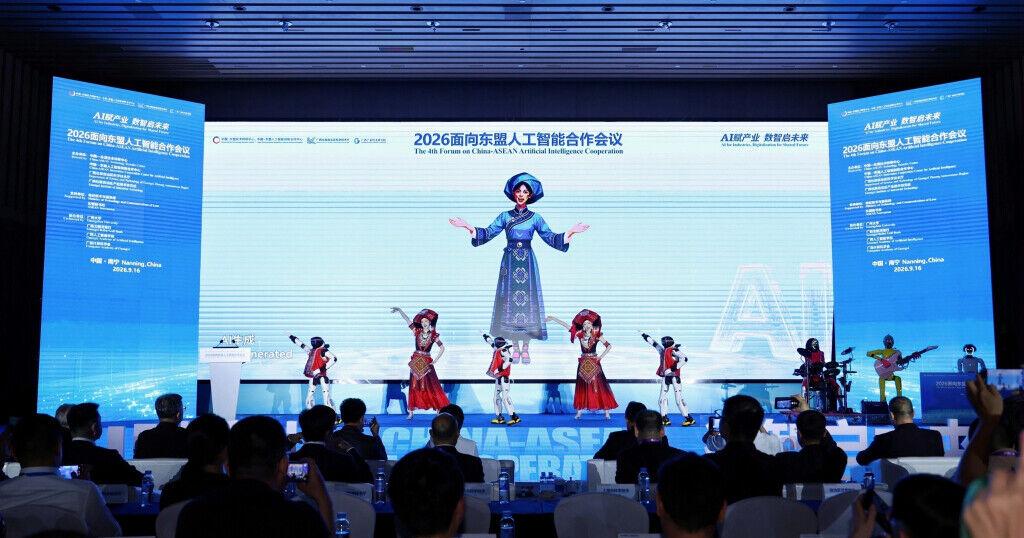
NANNING, CHINA – Media OutReach Newswire – 20 September 2026 – On September 16, the Fourth Forum on China-ASEAN Artificial Intelligence Cooperation successfully convened in Nanning, Guangxi, as an international science and technology exchange platform included in the list of cooperation initiatives for the series of leaders' meetings on East Asia cooperation. Themed "AI for Industries, Digitalization for Shared Future", this forum was co-hosted by the China-ASEAN Technology Transfer Center, the China-ASEAN Innovation Cooperation Center for Artificial Intelligence, the Department of Science and Technology of Guangxi Zhuang Autonomous Region, and the Guangxi Institute of Industrial Technology. More than 700 government representatives, research scholars, tech entrepreneurs, and venture capital representatives from China and ASEAN countries gathered on site, focusing on three major directions, namely embodied intelligence, AI finance, and data circulation, discussing collaborative technological innovation, jointly pursuing industrial digital transformation, and comprehensively deepening pragmatic cooperation between China and ASEAN in the field of artificial intelligence.
Coinciding with the historic milestone of the Pinglu Canal being completed and navigable, a canal opens up a physical trade corridor between China and ASEAN, opening a new chapter of digital economy collaboration. "Goods Flow Across Rivers and Seas, Digital Intelligence Connects ASEAN" has become the most distinctive symbol of the era at this forum. The forum closely follows the differentiated development path of "R&D in Beijing, Shanghai, and Guangzhou + Integration in Guangxi + Application in ASEAN", solving problems through technological breakthroughs, gathering momentum through industry-finance linkage, and promoting effectiveness through scenario implementation, to deepen and solidify China-ASEAN AI cooperation.
The forum kicked off with Guangxi's classic ethnic song "Folk Songs like the Spring River", where human dancers, dancing robots, accompaniment robots, and a digital crowd performing the folk song collaborated across disciplines to perform group collaborations. Relying on millisecond-level cluster scheduling technology, ethnic culture and embodied intelligence were deeply integrated to create an immersive technological audiovisual feast. This forum innovatively adopted a three-party collaborative hosting model of "human host + digital human avatar + intelligent robot". Yang Yanqing, Professor of ShanghaiTech University, coordinated with her digital human avatar and AGIBOT Lingxi X2 to jointly host the forum, empowering the forum scene through technology, which became a major highlight of the event. Dr. Padapxay SAYAKHOT, Director-General, Institute of Information and Communication Technology, Ministry of Technology and Communications, Lao PDR, Sun Ruijun, Director-General, China-ASEAN Technology Transfer Center, Secretary of the Party Leadership Group and Director-General, Department of Science and Technology of Guangxi Zhuang Autonomous Region, Secretary of the Party Committee, Guangxi Institute of Industrial Technology, delivered speeches in succession. Both sides stated that they will use this forum as a link to deepen the connection of scientific research and innovation, the implementation of industrial scenarios, and the coordination of policies and mechanisms, gather synergy for digital and intelligent development, and serve the building of a closer China-ASEAN community with a shared future.
The speakers at the forum combined international breadth and professional depth, bringing together industry experts, academic and cutting-edge research forces, industrial technology, and cross-border implementation capabilities from ASEAN countries, forming a core high ground for intellectual exchange and gathering top intellectuals for China-ASEAN AI innovation and development. These included industry experts from ASEAN countries such as Dr. Wasan Pattara-atikom (Thailand) and Li Haizhou (Singapore), as well as academic forces like Professor Yang Chao (Peking University) and Cui Peng (Tsinghua University). Industry and cross-border implementation leaders included Li Nan (Maimai Technology Group) and Yao Yuan (AGIBOT Innovation). The guests focused on three major directions: embodied intelligence, AI finance, and data circulation, exploring feasible paths for technological breakthroughs, ecosystem co-construction, and joint innovation. They covered key stages of artificial intelligence from source research and development and technology transfer to industrial implementation and cross-border cooperation, achieving a two-way dialogue between cutting-edge academic theories and practical industry needs, and providing diverse perspectives and action ideas to bridge the regional digital divide and unlock the inclusive value of AI.
At the forum, five scientific and technological innovation achievements were released together, constructing an AI innovation supply system oriented toward ASEAN from multiple dimensions including technology products, platform carriers, talent systems, and decision-making support. These achievements include: 1. The China-ASEAN Cross-Border Industrial Large Language Model, which covers multilingual capabilities and an industry knowledge graph for ASEAN, integrating six major agents to collaboratively analyze business scenarios, serving as a professional intelligent partner for Chinese enterprises expanding into the ASEAN market. 2. Achievements in AI Talent Development for ASEAN, relying on the Guangxi Academy of Artificial Intelligence, which created a talent training model of "a dual-mentor system, dual-integrated teaching, dual training tracks, and an integrated master-doctoral program," achieving an international education pattern to strengthen talent support for cross-border AI cooperation. 3. "Guikerong" Sci-Tech Finance Digital-Intelligent Foundation Platform, developed under the guidance of the Department of Science and Technology of Guangxi Zhuang Autonomous Region, which uses data-driven technology credit evaluation to open the value transformation chain of "technology, industry, and finance", supporting the innovative development of technology-based enterprises. 4. Lao-Language Large Language Model (LLM) for the Energy and Power Sector, China's first AI overseas project in the power industry, implemented on Electricite du Laos, exploring a new model of "Retaining Computing Power in Guangxi, Exporting Services Globally" for compliant token going global. 5. "2026 China-ASEAN Artificial Intelligence Industry Development Study Report", providing a panoramic overview of regional industrial policy environment, market scale, and application patterns, analyzing core industry development trends, and providing decision-making references for China-ASEAN AI industry cooperation.
The forum adhered to the principles of "promoting research through exhibitions, cooperation through meetings, and implementation through business matchmaking," simultaneously hosting the Special Session on AI: Bank-Enterprise Matchmaking and the Industry Supply-Demand Matchmaking and Technology Achievement Exhibition. This approach achieved precise coordination between exhibition displays and business negotiations, building a cross-border cooperation ecosystem deeply integrating industry, academia, research, and application. The Technology Achievement Exhibition showcased high-tech products such as the General Embodied Intelligent Robot, Fingertip 3D Force Sensors, Integrated Land-Sea-Air Inspection Equipment, Smart Wall-Climbing Industrial Robot, and AI + Embodied Intelligence Teaching and Experiment Platform, covering key tracks like humanoid robots, industrial intelligent equipment, and education and training. The venue also set up an immersive AI experience zone, where interactive projects such as coffee-making robots, agile robotic arms, AI customized cultural products, and unmanned retail attracted attendees to stop and experience the vivid effects of AI empowering people's services up close, highlighting the development philosophy of technology for good and digital intelligence benefiting the people.
As an international platform for scientific and technological exchange aimed at ASEAN, the Forum on China-ASEAN Artificial Intelligence Cooperation has been held consecutively for four sessions, bringing together more than 4,300 guests from China, foreign government, industry, academia, and research, facilitating the connection of over a hundred industrial projects. It has become an important platform for the exchange of ideas, interconnection of technologies, and mutual industrial support between China and ASEAN in the field of artificial intelligence. Looking to the future, China and ASEAN will continue to deepen cross-border joint innovation, promote the orderly flow of AI innovation elements, cultivate a vibrant and inclusive regional digital innovation ecosystem, facilitate digital intelligence benefiting regional industrial upgrading and livelihood development, and jointly build a new mutually beneficial and win-win pattern of China-ASEAN digital economy. This forum was supported by the Ministry of Technology and Communications of Laos and the ASEAN Secretariat, and co-hosted by Guangzhou University, Guangxi Beibu Gulf Bank, Guangxi Academy of Artificial Intelligence, and Computer Academy of Guangxi.