Quick Buzz Feed

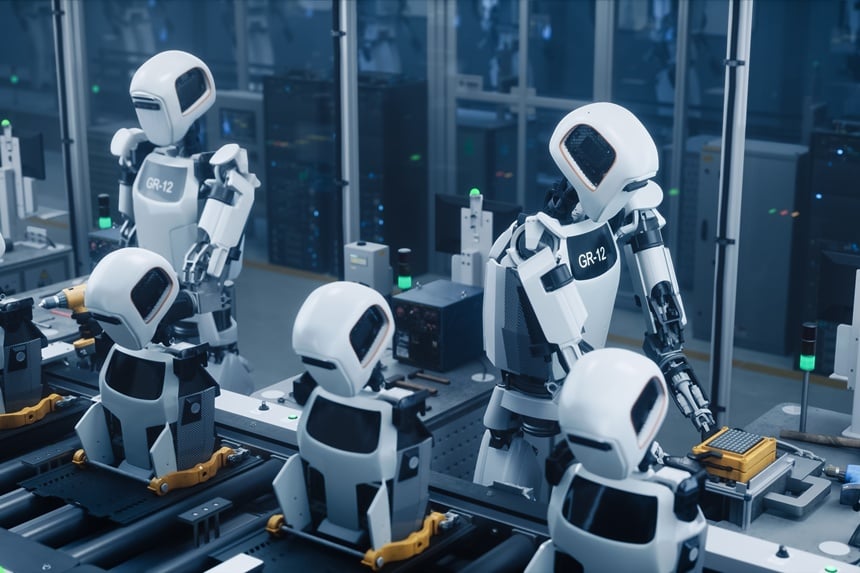
Does what Henry Ford said about automation in 1929 still apply today, or does artificial intelligence introduce a whole other level of complexity?
In 1929, Henry Ford challenged the common fears that automation would lead to widespread job losses. He maintained that critics, whom he called "prophets," failed to grasp the dynamic nature of industrial progress. Ford, a pioneer of the moving assembly line, openly embraced machine-driven efficiency, stating his company displaced human workers with machines "as rapidly as we have known how." He exemplified this with the Model T production, where automation drastically reduced manufacturing time from 12 hours to 90 minutes. Despite these advancements, Ford argued that automation ultimately created more jobs by improving product quality, lowering prices (from $825 to $360 for the Model T), and thus stimulating increased demand. This expanded demand, in turn, necessitated a larger workforce; his employee count grew from three to over 100,000, illustrating his belief that machines enabled tasks beyond human capability and fostered economic growth rather than hindering employment.
The current landscape of automation presents a more nuanced reality than Ford's 1929 assessment. Modern automation introduces multiple effects, causing some jobs to be eliminated while others are profoundly transformed. Employees often find themselves shifting into roles requiring either higher or lower expertise. A National Bureau of Economic Research paper indicates that companies automating low-expertise jobs might reduce overall employee numbers but compensate retained workers with higher wages. Conversely, businesses automating high-expertise tasks could experience increased employment, albeit with potentially lower pay. Research also suggests that automation can create opportunities for workers who receive specialized training to operate and maintain new automated systems, such as machinists, specialist welders, and robotics technicians, replacing limited-skill workers on assembly lines. This highlights a critical need for workforce adaptation and upskilling to align with evolving industrial demands.
Artificial Intelligence (AI) stands as the most transformative form of automation in the modern era, introducing novel complexities to the job market. A working paper highlights a 13 percent decline in entry-level employment across certain occupations due to AI, with Goldman Sachs estimating a loss of 16,000 jobs per month. McKinsey & Company projects that AI-driven automation could handle up to 70 percent of current employee tasks, potentially displacing 12 million workers in Europe and the U.S. who will need to transition into new roles. Despite these concerns, there's a strong counter-argument that AI will be a significant job creator. Forbes predicts millions of new jobs, surpassing the World Economic Forum's estimate of 78 million, paralleling the employment booms seen with the advent of automobiles and computers. These new roles are expected in AI development, support, and user integration, emphasizing the technology's dual capacity for disruption and creation.
The future impact of AI on jobs remains largely uncertain, particularly regarding the timeline for these changes and the re-employment pathways for displaced workers. Studies reveal a mixed performance, where AI alone can outperform humans in some jobs, humans outperform AI in others, and in many cases, humans augmented by AI achieve superior results. An MIT study identified human strengths in contextual understanding and emotional intelligence, contrasting with AI's proficiency in repetitive, high-volume, and data-driven tasks. However, defining the optimal division of labor without extensive trial and error is challenging. One undeniable certainty is the absolute necessity of training for employees to effectively integrate AI into their work. The quality and availability of this training will be the primary determinant of success for new AI systems and the overall adaptability of the workforce. As Henry Ford wisely stated regarding earlier forms of modernization, "The only thing worse than training your employees and having them leave is not training them and having them stay," a sentiment that resonates powerfully in the age of AI.