Quick Buzz Feed

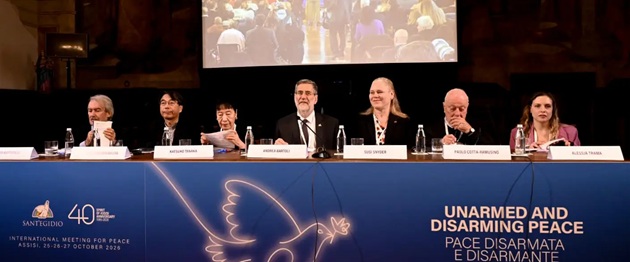
This article explores the critical ethical and existential questions raised by powerful technologies like nuclear weapons and artificial intelligence. An interfaith gathering in Assisi brought together nuclear survivors, scientists, and religious leaders to confront a central dilemma: Can humanity effectively control the destructive forces it continues to unleash? The discussion focused on the increasingly dangerous shift of decisions involving human life from human hands to autonomous machines, examining whether societies retain the judgment and restraint necessary to prevent catastrophic misuse of these advancements.
At a forum dedicated to disarmament and proliferation, the profound human consequences of nuclear warfare were vividly presented. Katsuko Tanaka, a survivor of the Hiroshima atomic bombing, recounted her harrowing experience as a six-year-old, illustrating the indiscriminate destruction and long-lasting physical and psychological trauma inflicted by such weapons. Archbishop Peter Michiaki Nakamura of Nagasaki further enriched this perspective by invoking the legacy of physician and atomic bomb survivor Takashi Nagai, whose life was devoted to peace. These testimonies collectively challenged the conventional discourse of nuclear deterrence, emphasizing the immense cost in human lives over military capabilities. Concurrently, Susi Snyder of the International Campaign to Abolish Nuclear Weapons (ICAN) drew attention to the escalating dangers posed by the ongoing modernization of nuclear arsenals and the alarming erosion of critical arms control agreements, exacerbated by the expiration of the New START treaty and the failure of the 2026 Nuclear Non-Proliferation Treaty Review Conference. A key concern remains that nuclear-weapon states largely operate outside the framework of the Treaty on the Prohibition of Nuclear Weapons, making its upcoming review conference crucial yet challenging.
Recognizing the critical need to preserve the memory and lessons of past conflicts, the Italian Soka Gakkai, a Buddhist organization actively involved in nuclear abolition campaigns, has prioritized education as a vital response. Alessja Trama, representing the Be The Hope Foundation, detailed the extensive work of Senzatomica, an initiative that organizes exhibitions and educational programs across Italy to inform communities about the devastating realities of nuclear weapons. This campaign draws its inspiration from a powerful 1957 declaration by Josei Toda, the second president of the Soka Gakkai, which passionately called for the complete abolition of nuclear weapons. The fundamental premise of this educational effort is to transform the remembrance of Hiroshima and Nagasaki into a profound sense of public responsibility, particularly among younger generations who lack direct personal experience of these historical wartime events, thereby ensuring that the urgent call for peace and disarmament resonates with contemporary society.
In a forum addressing "Humanity in the Age of Technology," Archbishop Vincenzo Paglia voiced a significant concern: the rapid advancements in technological capabilities are outstripping the development of robust institutional frameworks designed to govern them effectively. Italian artificial intelligence researcher Tiziana Catarci introduced a crucial distinction, highlighting that merely including a human in a decision-making loop does not guarantee meaningful control. An operator might formally approve an AI-generated recommendation without truly comprehending its underlying logic, algorithms, or the data used to produce it, nor possessing the capacity to critically challenge its output. This gap, she warned, could have catastrophic implications in military operations, leading to unintended and potentially lethal consequences. Consequently, Catarci strongly advocated for more rigorous oversight of AI systems and called for an outright prohibition on autonomous weapons systems that are capable of making lethal decisions independently, without genuine human supervision and intervention. Complementing this, Yoshiyuki Nagaoka, executive director of the Office of Public Affairs of Soka Gakkai, framed the issue through the lens of Buddhist teachings on the inherent dignity of life. Nagaoka observed the increasing reliance on AI for personal guidance in Japan, even for profound life decisions, citing an instance of an elderly woman seeking AI advice for her terminally ill husband's medical treatment. He emphasized that while AI offers useful information, excessive reliance risks weakening human capacity for complex moral judgment, urging international regulations to explicitly ban autonomous weapons that select and attack human targets.
Despite the significant ethical concerns surrounding advanced technologies, several participants at the Assisi gathering underscored the transformative positive potential of artificial intelligence. Matt Vasey from the Gates Foundation highlighted how AI could dramatically enhance access to essential services such as healthcare, education, and agricultural knowledge, particularly benefiting communities in the Global South that have historically been marginalized by technological progress. However, Vasey also issued a critical warning: the convenience offered by AI systems might inadvertently lead individuals to voluntarily relinquish their moral responsibility, allowing machines to make decisions that should inherently remain within the human domain. Echoing this sentiment, Cisco executive Gianpaolo Barozzi emphasized the imperative to consciously redesign work processes to complement and augment human capabilities, rather than replacing them, ensuring that technology serves humanity's best interests. Rabbi Noam Marans of the American Jewish Committee further elaborated on this by drawing a clear distinction between the mere accumulation of information, which AI excels at, and the nuanced exercise of wisdom, a uniquely human attribute essential for ethical decision-making. While the speakers did not propose a singular, definitive regulatory blueprint, a consistent theme emerged: the urgent need for enhanced accountability, transparency, and the unwavering preservation of human judgment in all applications of advanced technology. The gathering concluded with a powerful Peace Appeal, directly linking these concerns to a broader global agenda by advocating for the reallocation of military resources towards fundamental human needs like food security, clean water, education, healthcare, and dignified work. It specifically identified nuclear threats, global rearmament, and artificial intelligence as pressing challenges that necessitate concerted international cooperation. The overarching message from Assisi reinforced a growing dilemma: humanity has developed technologies of unparalleled power, but the moral commitments and institutional frameworks required to restrain their destructive potential have yet to catch up, emphasizing that true security is measured not just by what we build, but by what we are prepared to refuse to use.