Quick Buzz Feed

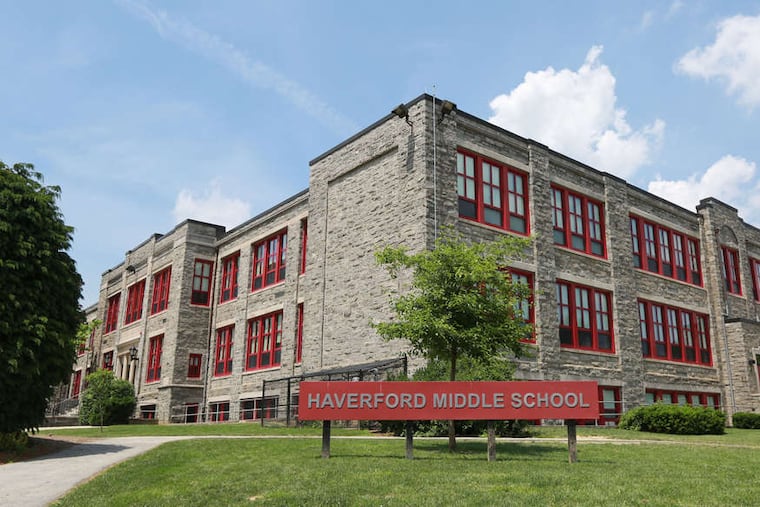
The Haverford school board voted to approve contracts with School AI and Brisk, two artificial intelligence tools for students and teachers. This decision has been met with significant parental pushback, reflecting a broader growing movement against unmoderated technology in classrooms.
The Haverford Township School District recently voted 5-3 to integrate artificial intelligence tools, specifically School AI and Brisk, into its classrooms for both students and teachers. This decision has ignited a significant backlash from parents within the district who are deeply concerned that the widespread adoption of such technology will fundamentally undermine traditional learning processes and could be easily misused, leading to a degradation of educational quality and student engagement. This introduction sets the stage for a contentious debate about the role of AI in K-12 education.
Parental opposition centers on the fear that AI tools will make it easier for students to avoid genuine academic effort. Christine Seewagen, a parent of two district students, vividly expressed her "disgust" at the idea of introducing chatbots, regardless of age. She recounted observations from her older child, who saw peers using AI for math problems on phones, and an instance where her younger child's teacher encouraged uploading essays to an AI for feedback, without proper guidance. Seewagen argues that the district already struggles with managing existing classroom technology, and adding AI without robust controls is a recipe for inappropriate use. Another parent, Patrick Burland, sarcastically highlighted the perceived irony that minor school activities like end-of-year celebrations require parental signatures, while the "cognitively rewiring" impact of AI does not, indicating a perceived lack of transparency and necessary parental consent for such a significant shift in educational methodology.
District administrators have presented several reasons for implementing AI. Robert Anderson, the technology director, explained that teachers are already using various free AI versions, and the district aims to streamline this by providing official, vetted tools to "eliminate free roaming around platforms." Superintendent Matthew Hayes emphasized that the School AI contract is part of a strategic plan to teach AI "thoughtfully, responsibly, ethically" to prepare students for the future, and, somewhat paradoxically, also to "reduce screen time." This local controversy in Haverford is not isolated; it mirrors a larger trend in the region. Parents in nearby Lower Merion have vigorously advocated for opting their children out of district-issued laptops and tablets, pushing for policies to reduce screen time. Similarly, other districts are grappling with concerns over excessive Chromebook usage, illustrating a widespread parental apprehension regarding the unchecked proliferation of technology in K-12 education.
The school board's vote revealed a division in perspectives regarding AI. Board member LaTonia Lee advocated for the adoption of AI tools, asserting that failing to acknowledge and incorporate AI would leave students at a disadvantage in a rapidly evolving technological landscape. Conversely, other board members, like Dave Schwartz, expressed reservations, stating he would support teaching *about* AI but could not vote for the current proposal due to vague implementation plans and a lack of clear understanding of how the tools would be managed. Furthermore, board member Chris Shelton raised critical questions about the accuracy of School AI's "historical figure" chatbots, referencing a past incident where the tool provided inaccurate information about Anne Frank and the Holocaust. While Anderson described this as "unfortunate," he assured the board that the district would have the option to disable such features, highlighting ongoing concerns about content reliability.
Administrators provided further details on the intended use of the AI tools. Meridith Herne, the district's technology integration coordinator, clarified that Brisk would not be used for grading student work but rather for providing "first-level feedback," such as identifying a missing topic sentence. English teacher John Flagler, however, countered that delegating grading to AI, even for initial feedback, diminishes a teacher's essential role in understanding students' learning processes and insults both educators and learners. Superintendent Hayes reiterated that Brisk is merely "an option" for interested teachers, emphasizing that AI is not intended to replace human educators, especially since 97 district teachers already use a free version. Both contracts, Brisk for $22,260 and School AI for $12,999, are limited to a single year to allow for evaluation. Training will be provided for teachers on the School AI platform, and its use is anticipated primarily in high school and potentially middle school, with no current plans for elementary-level implementation.
Despite the administration's detailed explanations and assurances, parents like Patrick Burland and Christine Seewagen remain largely unpersuaded. Burland expressed ongoing skepticism, feeling that the district has failed to establish adequate "guardrails" for AI usage and suggesting that some of the district's concessions, like the option to disable certain chatbots, only came after public questioning. Seewagen confirmed that the district's AI plans have "not gone under the radar," indicating widespread awareness and dissatisfaction among the parent community. Like-minded parents are actively organizing on social media, suggesting that the debate over AI in Haverford classrooms is far from over and continues to be a contentious issue within the community.