Quick Buzz Feed

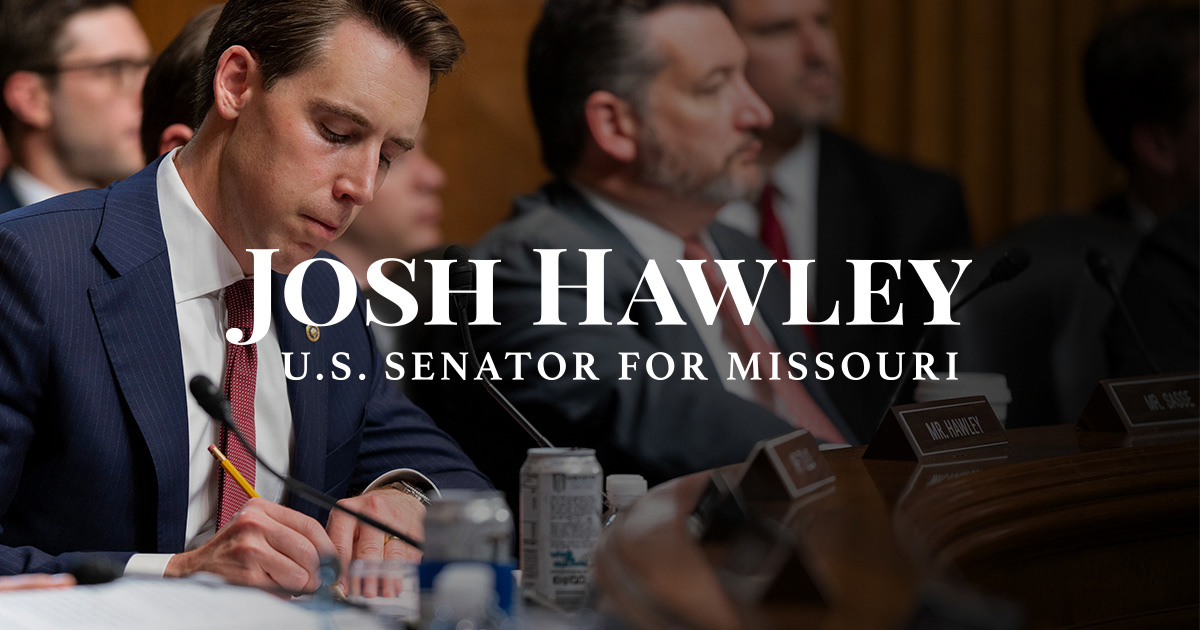
U.S. Senator Josh Hawley (R-Mo.) delivered the keynote address at the American Compass New World Gala, presenting on the foundation of our country and its moral covenant. He contrasted our founding with the dangers of artificial intelligence that threaten to unravel the very fabric of this nation.
Senator Hawley articulated that the nation faces unprecedented challenges from emerging technologies, particularly artificial intelligence. He stressed that the choices made regarding AI are not merely economic or policy-related but delve into fundamental questions concerning labor, family, freedom, the value of human life, and the very identity and divinely-ordained nature of the American republic. These decisions, he warned, would profoundly test the country's commitment to its moral covenant, forcing a re-evaluation of national principles in the face of rapid technological advancement.
Hawley unequivocally stated that left unchecked, artificial intelligence would prioritize base desires ('the appetite') over moral liberty. He warned that this technology has the capacity to centralize power unprecedentedly, benefiting only a few while disguising this outcome as 'progress.' He equated this potential future to the 'rule of the strong over the weak' and the 'dissolution of the covenant' that defines the nation, calling it an ancient human temptation repackaged in modern silicon. He underscored that governing AI is a profound act of either renewing or surrendering the moral foundation of American society, an oath each generation must take anew to safeguard fundamental values against technological determinism.
Senator Hawley issued a direct challenge to his own Republican Party, framing its stance on artificial intelligence as a potentially defining moment for its future. He presented two divergent paths: either the party can align itself with corporate interests, prioritizing donors, share prices, and market value—essentially, 'the party of the boardroom'—or it can re-commit to being 'the party of the covenant.' This alternative path, he described, involves upholding principles of good, justice, and right, championing the worker, the family, and small towns, and remembering its foundational commitment to justice for all, the sanctity of the individual, the dignity of labor, and the priority of the poor in its policy-making.
In his concluding remarks, Senator Hawley reiterated core American values, asserting that 'license is not liberty,' 'might does not make right,' and the powerful have no inherent right to dominate the weak. He emphasized the unalienable rights endowed by a Creator and called for a renewed commitment to honoring these rights and God. He declared the national imperative to guide artificial intelligence towards the welfare of the nation, families, children, and labor. Critically, he stated that American principles must govern technology, not the other way around. This, he argued, requires the American people to consciously choose, like their forebears did, to remain a nation defined by liberty under God, rather than merely by its technological outputs and capabilities.