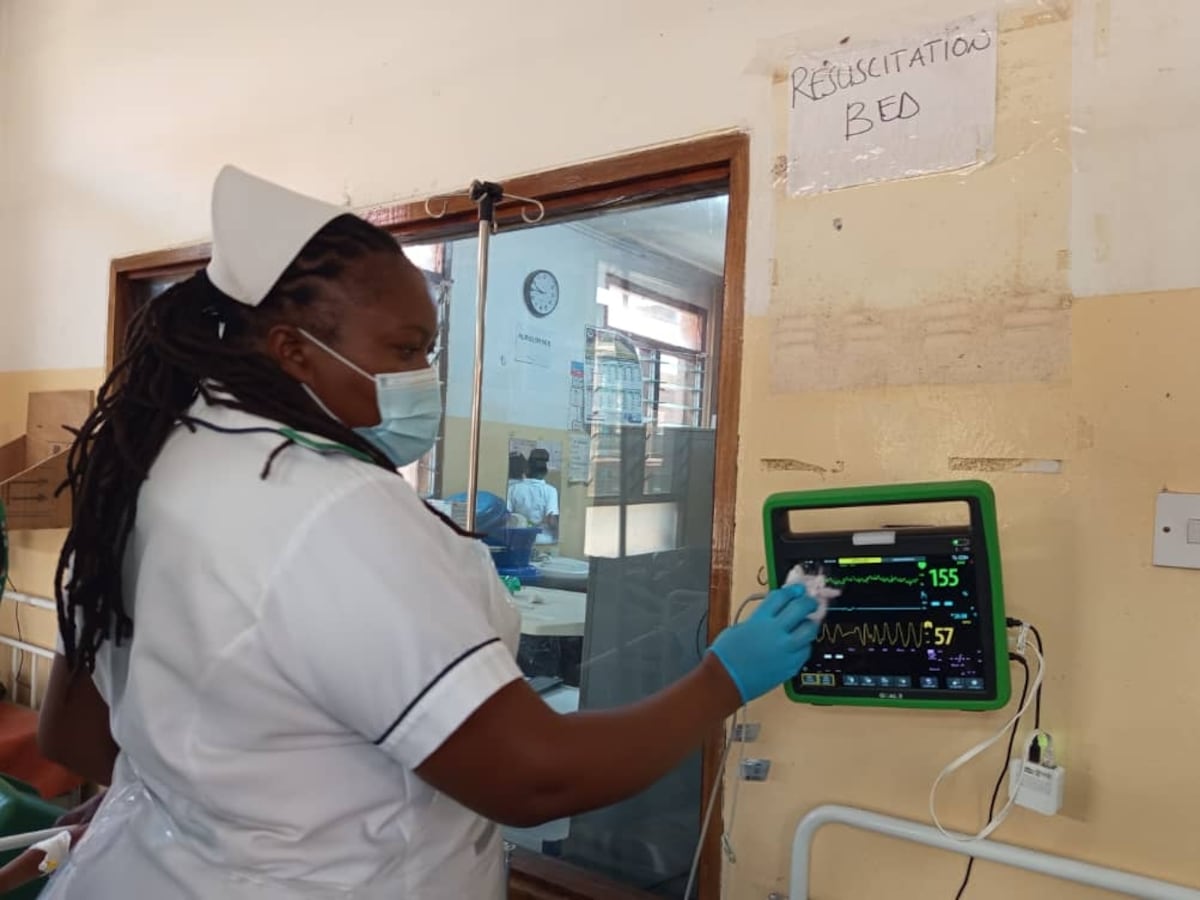
In one of the poorest countries in the world, an AI monitoring system detects early deterioration in hospitalized patients and helps overstretched medical staff intervene before it's too late
Scalability of technology
The founder and chief executive of Goal 3, Niek Versteegde, one of the companies leading the innovation, explains that the technology created in Malawi is a reproducible model elsewhere. “But to scale it up and integrate it into all other hospitals, we need the government to step in,” he says. The system also operates in Tanzania and Rwanda and the technology costs between $105 and $208 per life saved. “The investment pays off because hospitals spend less on medicines trying to fix a problem that has already worsened. And for parents, hospital stays are shorter, so they also save a considerable amount of money,” Versteegde clarifies. “When you invest in this technology, the investment is recovered in lives saved: hospital stays are shortened, facilities need less medical equipment and social costs are reduced,” adds IMPALA’s principal investigator, Dr. Job Calis, in a videoconference interview. The system is currently present in more than 20 hospitals in Malawi, with over 300 monitors installed, and generally in more than 50 hospitals across sub-Saharan Africa in countries such as Tanzania, Rwanda, Kenya, Zimbabwe and Gabon, with more than 800 monitors installed. “We are continuously expanding our installed base,” Versteegde concludes.