Quick Buzz Feed

Houston hospitals are innovating patient care with tech advances, from virtual nurses to biosensors
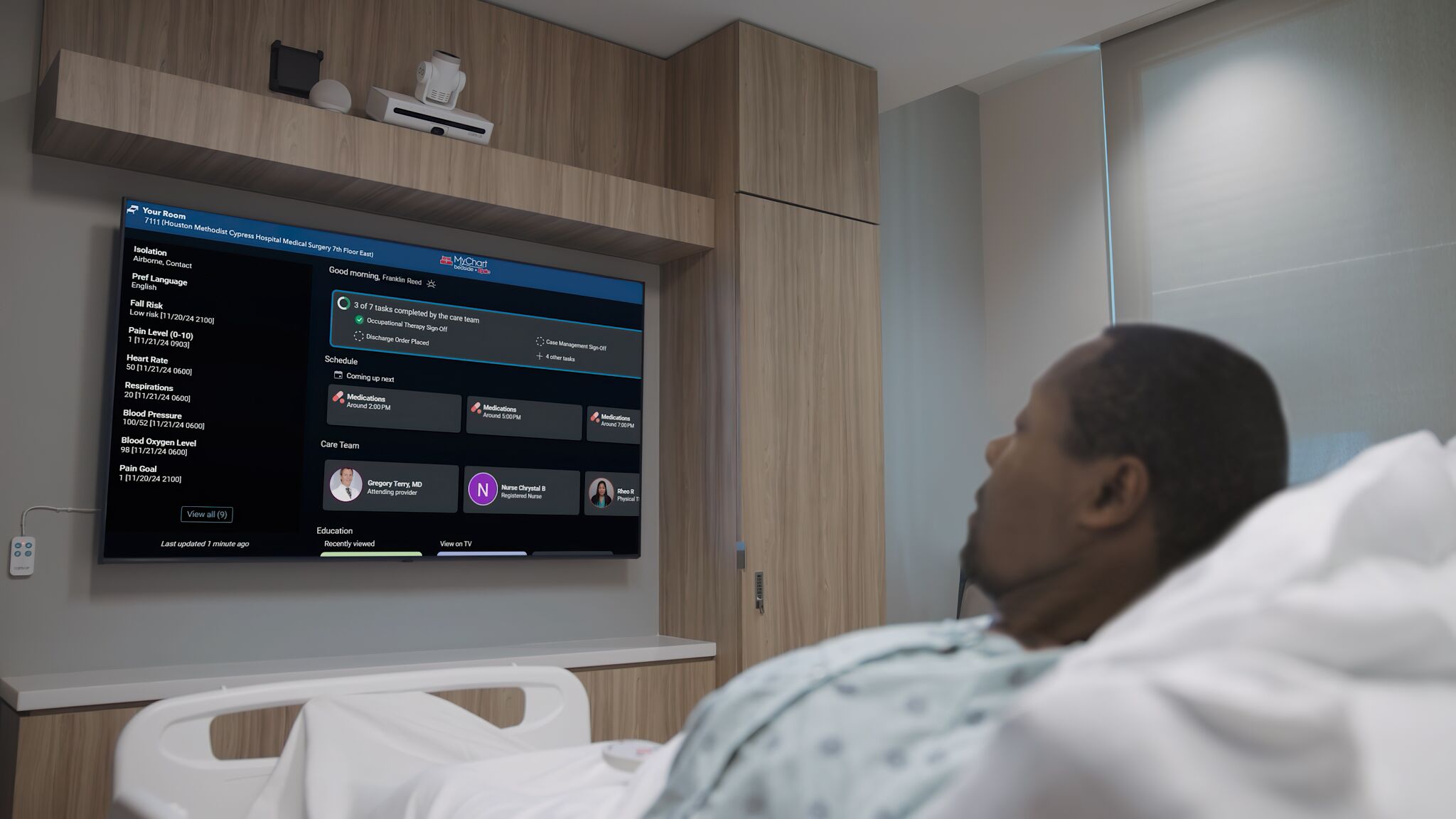
Houston Methodist is revolutionizing patient care with 'smart rooms' featuring AI-driven tools like MyChart Bedside. This technology transforms in-room TV screens into interactive digital whiteboards, providing patients with essential information about their care team and discharge progress. It also offers on-demand virtual nursing assistance for check-ins, discharges, and addressing patient queries, effectively reducing the burden on bedside nurses and ensuring patients feel adequately supported. Further technological advancements at Houston Methodist include Aidoc, an AI-powered platform that enhances radiology imaging by automatically flagging concerns, and BioButton, a wearable biosensor for continuous, real-time monitoring of vital signs. This continuous monitoring, managed centrally at Houston Methodist’s virtual operations command center, allows for earlier detection of potential health issues and enables immediate alerts to care teams, significantly improving patient safety and comfort by eliminating disruptive manual vital checks.
At Memorial Hermann Health System, Dr. James McCarthy highlights innovations aimed at streamlining hospital operations and improving patient-staff interactions. A key adoption is Ambience, an AI system that discreetly listens to doctor appointments and transcribes notes in real-time, allowing physicians to maintain focus and eye contact with patients, rather than being preoccupied with note-taking. This has led to a remarkable 36% reduction in physician documentation time and a 40% decrease in after-hour notes, enhancing physician well-being and increasing patient satisfaction. Memorial Hermann's Innovation Hub, launched in 2024, actively explores new technologies. Pilot programs are underway for Zibrio, a NASA-developed tool for assessing patient fall risks; Cognixion, which translates brain waves into communication for individuals with ALS or consciousness disorders; and Zainar, a real-time location tracking system designed to efficiently locate medical equipment and reduce staff frustration. McCarthy emphasizes that these pilot programs are crucial for evaluating both the practical feasibility and interface compatibility of new solutions, with benefits extending beyond financial returns to include reduced provider burnout and elevated patient satisfaction.
At Houston Methodist, the 3,500-square-foot Technology Hub serves as a crucial real-world testing environment for digital health innovations, allowing clinicians, patients, and tech partners to thoroughly evaluate solutions before wider adoption. Michelle Stansbury highlights how the hub, operational before the 2020 pandemic, enabled the rapid deployment of virtual care and remote patient engagement technologies. The innovation team, led by Stansbury and Roberta Schwartz, prioritizes solutions to institutional problems, sometimes finding unexpected yet impactful products like HealthLeap, an AI tool for malnutrition monitoring. The successful implementation of ambient note-taking for doctors inspired nurses to seek similar systems to alleviate their documentation burden, demonstrating a positive ripple effect. Stansbury underscores her patient-centric philosophy, aiming to ease patient stress during vulnerable hospital stays while simultaneously supporting clinicians.