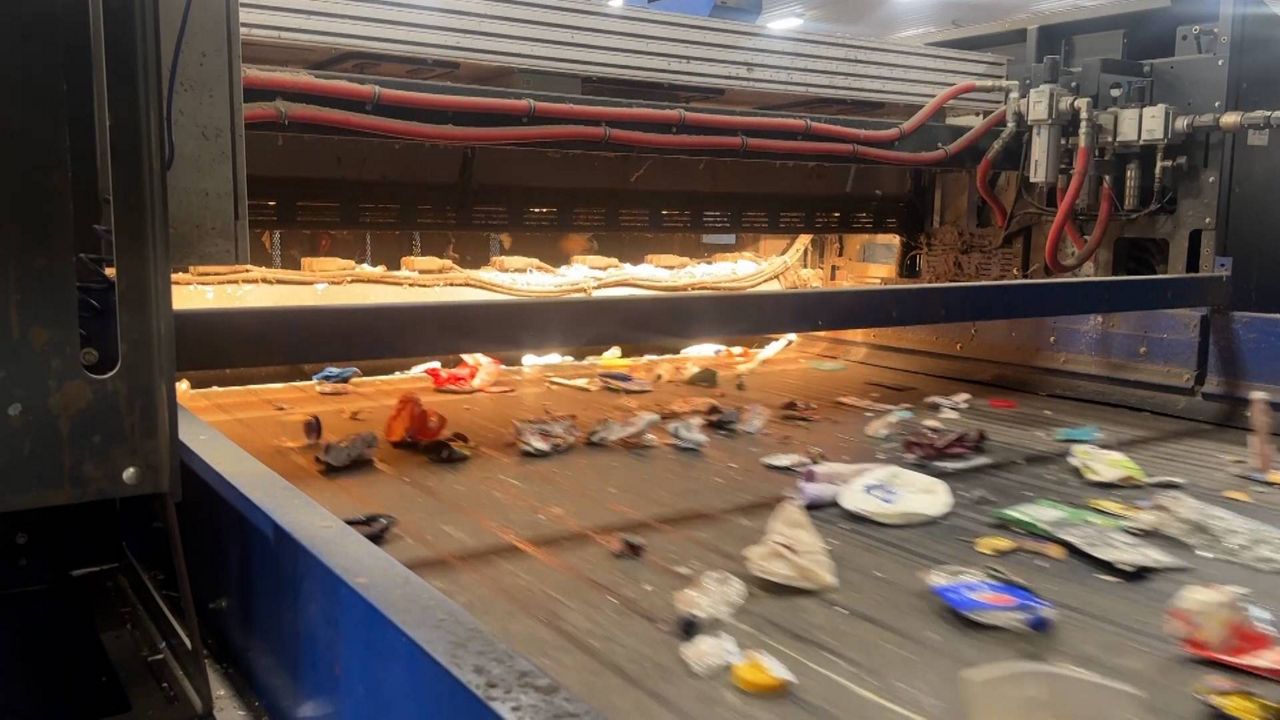
Rumpke says its Columbus facility is processing more recyclables with help from AI, but experts say the technology still has limits.
AI's Introduction and Initial Performance Boost at Rumpke The article introduces how Artificial Intelligence is being deployed at Rumpke's Columbus recycling facility, specifically within optical sorting machines, to enhance the separation of various recyclable materials. These machines utilize AI algorithms to identify desired items, which are then ejected from the stream using bursts of air. Rumpke's new, larger facility, equipped with these AI-powered systems and other upgrades, demonstrated a significant processing increase, handling 204,000 tons of material in 2025 compared to 160,551 tons in 2023, representing an approximate 27% rise. However, the report also acknowledges that this overall improvement cannot be solely attributed to AI, as other substantial equipment upgrades in the new facility also played a crucial role. This section sets the stage for AI's impact and the initial quantitative results. Specific Benefits: Automation and Enhanced Quality Despite the difficulty in isolating AI's precise impact, Leah Dietle, Rumpke's communications coordinator, confirms that AI has brought tangible benefits by automating specific segments of the sorting process. Notably, the technology has taken over the task of separating certain types of plastics, a job that previously required manual sorting by human workers. This automation not only streamlines operations but has also improved the quality of the acceptable items that Rumpke is able to capture. This higher quality of sorted materials is crucial for successfully selling them to end users in the recycling value chain, indicating a direct positive effect on the recyclables' market value and utility. Challenges and The Need for AI Retraining The implementation of AI in recycling is not without its unforeseen challenges. Dietle recounted a particular incident where the system encountered an influx of diapers entering the recycling stream. The plastic components within these diapers confused the AI's sorting algorithms, leading to an undesirable outcome: the diapers were mistakenly sorted with recyclable paper. This resulted in the contamination of the paper stream, posing a significant problem for the facility. To address this, workers were required to intervene and retrain the AI systems to accurately recognize diapers and prevent their erroneous sorting with paper, highlighting the ongoing need for human oversight and adaptation in AI deployment. Broader Recycling Issues: The Human Element and Contamination Beyond the technological challenges within recycling facilities, the article delves into the broader context of contamination and the human factor. Professor Lokendra Pal of North Carolina State University, an expert in AI in recycling, points out that while camera-based AI aids in material identification, contamination—such as food residue on paper—can still hinder accurate recognition. More fundamentally, Pal emphasizes that a significant portion of recycling challenges originates from public behavior and everyday decisions made long before items reach a sorting facility. Citing the Ohio Environmental Protection Agency, the article states that nearly 30% of materials sent to Ohio landfills could actually be recycled. Pal illustrates this with the split-second decision individuals make when discarding items, stressing that even with advanced technology, the efficiency of recycling ultimately depends on what people choose to put into the system. Future Outlook: Capacity and Projections at Rumpke Looking ahead, Rumpke's new Columbus facility is poised for increased operational capacity. The company has stated that the facility is capable of processing a substantial volume, specifically up to 250,000 tons of material annually. For the upcoming year, 2026, Rumpke has set a projection to process approximately 240,000 tons of recyclables. This projection underscores the company's confidence in its enhanced infrastructure, including the role of AI, to significantly contribute to waste management and material recovery efforts in the region.
AI's Introduction and Initial Performance Boost at Rumpke
The article introduces how Artificial Intelligence is being deployed at Rumpke's Columbus recycling facility, specifically within optical sorting machines, to enhance the separation of various recyclable materials. These machines utilize AI algorithms to identify desired items, which are then ejected from the stream using bursts of air. Rumpke's new, larger facility, equipped with these AI-powered systems and other upgrades, demonstrated a significant processing increase, handling 204,000 tons of material in 2025 compared to 160,551 tons in 2023, representing an approximate 27% rise. However, the report also acknowledges that this overall improvement cannot be solely attributed to AI, as other substantial equipment upgrades in the new facility also played a crucial role. This section sets the stage for AI's impact and the initial quantitative results.
Specific Benefits: Automation and Enhanced Quality
Despite the difficulty in isolating AI's precise impact, Leah Dietle, Rumpke's communications coordinator, confirms that AI has brought tangible benefits by automating specific segments of the sorting process. Notably, the technology has taken over the task of separating certain types of plastics, a job that previously required manual sorting by human workers. This automation not only streamlines operations but has also improved the quality of the acceptable items that Rumpke is able to capture. This higher quality of sorted materials is crucial for successfully selling them to end users in the recycling value chain, indicating a direct positive effect on the recyclables' market value and utility.
Challenges and The Need for AI Retraining
The implementation of AI in recycling is not without its unforeseen challenges. Dietle recounted a particular incident where the system encountered an influx of diapers entering the recycling stream. The plastic components within these diapers confused the AI's sorting algorithms, leading to an undesirable outcome: the diapers were mistakenly sorted with recyclable paper. This resulted in the contamination of the paper stream, posing a significant problem for the facility. To address this, workers were required to intervene and retrain the AI systems to accurately recognize diapers and prevent their erroneous sorting with paper, highlighting the ongoing need for human oversight and adaptation in AI deployment.
Broader Recycling Issues: The Human Element and Contamination
Beyond the technological challenges within recycling facilities, the article delves into the broader context of contamination and the human factor. Professor Lokendra Pal of North Carolina State University, an expert in AI in recycling, points out that while camera-based AI aids in material identification, contamination—such as food residue on paper—can still hinder accurate recognition. More fundamentally, Pal emphasizes that a significant portion of recycling challenges originates from public behavior and everyday decisions made long before items reach a sorting facility. Citing the Ohio Environmental Protection Agency, the article states that nearly 30% of materials sent to Ohio landfills could actually be recycled. Pal illustrates this with the split-second decision individuals make when discarding items, stressing that even with advanced technology, the efficiency of recycling ultimately depends on what people choose to put into the system.
Future Outlook: Capacity and Projections at Rumpke
Looking ahead, Rumpke's new Columbus facility is poised for increased operational capacity. The company has stated that the facility is capable of processing a substantial volume, specifically up to 250,000 tons of material annually. For the upcoming year, 2026, Rumpke has set a projection to process approximately 240,000 tons of recyclables. This projection underscores the company's confidence in its enhanced infrastructure, including the role of AI, to significantly contribute to waste management and material recovery efforts in the region.