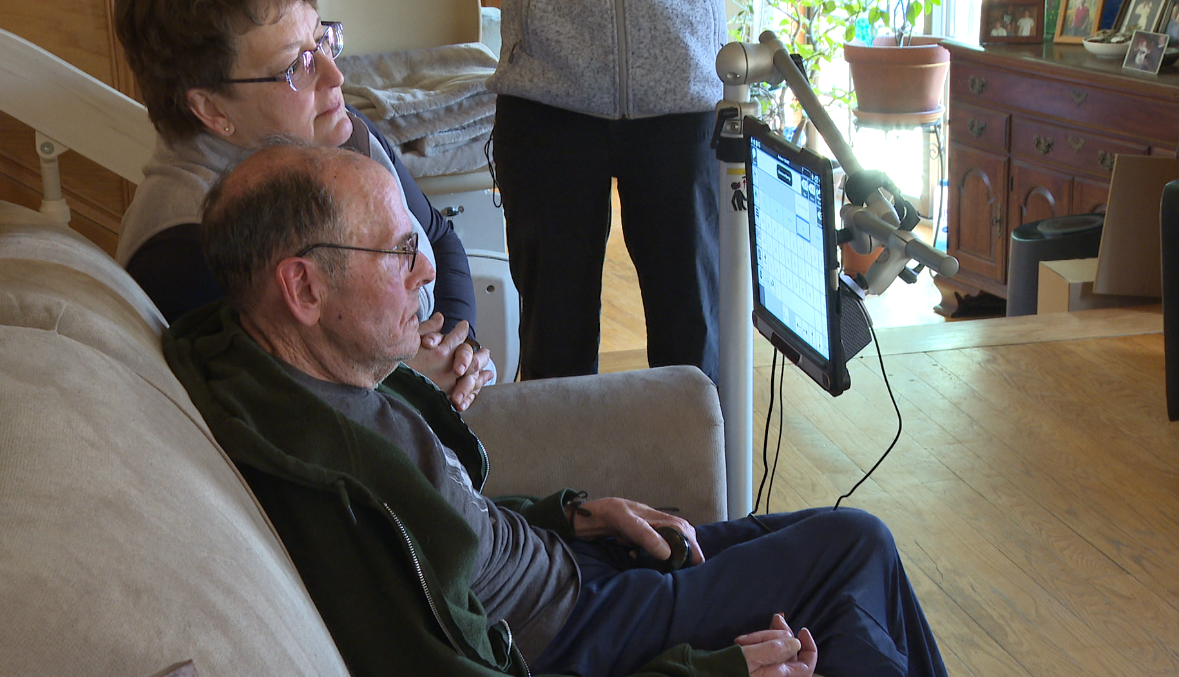
Paul Francoeur's voice was cloned using a 14-year-old news report, giving him a chance to speak again.
The Challenge of ALS and Communication Loss Amyotrophic Lateral Sclerosis (ALS), often referred to as Lou Gehrig’s disease, presents an incredibly cruel and challenging reality for patients, as it is a fatal illness with no known cure. Its progressive nature leads to a devastating loss of independence, particularly impacting the ability to communicate effectively with loved ones and medical professionals. Paul Francoeur, whose journey is highlighted in this report, was diagnosed in 2019 and, like many others, experienced severe muscle weakness and a gradual deterioration of motor skills, making clear and consistent communication increasingly difficult for him and his devoted wife, Kris. This struggle underscores a critical need for innovative solutions that can restore a semblance of normalcy to their daily lives. Limitations of Existing Assistive Technology Prior to the advent of more advanced AI solutions, Paul, like many ALS patients, relied on conventional assistive technologies such as eye-gaze systems. This technology allowed him to control a computer mouse with his eye movements, enabling him to painstakingly spell out words. The software would then convert these typed words into synthesized speech. However, a significant drawback was the unnatural sound of this generated voice. Kris Francoeur described it as 'very flat and robotic,' completely devoid of the natural intonation, emotional depth, and personal warmth that are inherent in human conversation. This limitation meant that while communication was technically possible, it lacked the quality and emotional connection vital for truly meaningful interactions. AI Voice Cloning Offers a New Hope A groundbreaking solution emerged through the innovative work of ElevenLabs, a company specializing in AI voice cloning technology. This advanced AI is capable of replicating a person's natural voice, going beyond mere speech generation to embed genuine emotional nuances into each word spoken. A primary hurdle for Paul was the necessity of having enough clear audio recordings from before his voice had been affected by ALS. Initially, finding such historical audio proved challenging. Remarkably, a 14-year-old 'Made in Vermont' news story by WCAX, which had featured Paul making spinning wheels, provided the perfect resource. Just 16 seconds of his voice from that 2012 footage were sufficient for the ElevenLabs AI to meticulously mirror his unique vocal identity, offering an unprecedented opportunity for him to reclaim his authentic voice. The Profound Impact of a Reclaimed Voice The successful cloning of Paul's voice marked a truly transformative moment, profoundly impacting his quality of life and bringing immense comfort to his family. Dr. Mark Garret, who directed the ALS clinic at Dartmouth Hitchcock Medical Center and was Paul's physician, underscored the critical importance of speech, noting that its loss is 'one of the things that most profoundly impacts quality of life' for ALS patients. He hailed Paul and Kris as inspirational for their resilience and advocacy. With his newly cloned voice, Paul's first profound act was to deliver a heartfelt thank you message and to passionately raise awareness about ALS. He expressed that the experience 'Made me feel more human,' and Kris echoed the sentiment, moved to hear his authentic voice after so long. He eagerly anticipated using it to express his love with genuine emotion to his grandchildren, who had never heard his natural voice. Legacy and Accessibility of Voice Cloning Technology Tragically, Paul Francoeur passed away seven months after the reporter, Darren Perron, last spoke with him. His life, however, leaves an enduring legacy, marked by his extraordinary resilience in confronting a terrible prognosis and a devastating disease. Paul's ability to make the best of life, even in the face of immense challenges, was truly inspirational, as acknowledged by Dr. Garret, contributing perhaps to his prolonged survival beyond typical ALS prognoses. In a testament to humanitarian application of technology, ElevenLabs provides its advanced voice cloning technology completely free of charge to ALS patients. The organization Bridging Voices plays a crucial role in facilitating connections between affected families and ElevenLabs, ensuring that this innovative solution, which offers a powerful beacon of hope for continued communication and human connection, is accessible to those who need it most.
The Challenge of ALS and Communication Loss
Amyotrophic Lateral Sclerosis (ALS), often referred to as Lou Gehrig’s disease, presents an incredibly cruel and challenging reality for patients, as it is a fatal illness with no known cure. Its progressive nature leads to a devastating loss of independence, particularly impacting the ability to communicate effectively with loved ones and medical professionals. Paul Francoeur, whose journey is highlighted in this report, was diagnosed in 2019 and, like many others, experienced severe muscle weakness and a gradual deterioration of motor skills, making clear and consistent communication increasingly difficult for him and his devoted wife, Kris. This struggle underscores a critical need for innovative solutions that can restore a semblance of normalcy to their daily lives.
Limitations of Existing Assistive Technology
Prior to the advent of more advanced AI solutions, Paul, like many ALS patients, relied on conventional assistive technologies such as eye-gaze systems. This technology allowed him to control a computer mouse with his eye movements, enabling him to painstakingly spell out words. The software would then convert these typed words into synthesized speech. However, a significant drawback was the unnatural sound of this generated voice. Kris Francoeur described it as 'very flat and robotic,' completely devoid of the natural intonation, emotional depth, and personal warmth that are inherent in human conversation. This limitation meant that while communication was technically possible, it lacked the quality and emotional connection vital for truly meaningful interactions.
AI Voice Cloning Offers a New Hope
A groundbreaking solution emerged through the innovative work of ElevenLabs, a company specializing in AI voice cloning technology. This advanced AI is capable of replicating a person's natural voice, going beyond mere speech generation to embed genuine emotional nuances into each word spoken. A primary hurdle for Paul was the necessity of having enough clear audio recordings from before his voice had been affected by ALS. Initially, finding such historical audio proved challenging. Remarkably, a 14-year-old 'Made in Vermont' news story by WCAX, which had featured Paul making spinning wheels, provided the perfect resource. Just 16 seconds of his voice from that 2012 footage were sufficient for the ElevenLabs AI to meticulously mirror his unique vocal identity, offering an unprecedented opportunity for him to reclaim his authentic voice.
The Profound Impact of a Reclaimed Voice
The successful cloning of Paul's voice marked a truly transformative moment, profoundly impacting his quality of life and bringing immense comfort to his family. Dr. Mark Garret, who directed the ALS clinic at Dartmouth Hitchcock Medical Center and was Paul's physician, underscored the critical importance of speech, noting that its loss is 'one of the things that most profoundly impacts quality of life' for ALS patients. He hailed Paul and Kris as inspirational for their resilience and advocacy. With his newly cloned voice, Paul's first profound act was to deliver a heartfelt thank you message and to passionately raise awareness about ALS. He expressed that the experience 'Made me feel more human,' and Kris echoed the sentiment, moved to hear his authentic voice after so long. He eagerly anticipated using it to express his love with genuine emotion to his grandchildren, who had never heard his natural voice.
Legacy and Accessibility of Voice Cloning Technology
Tragically, Paul Francoeur passed away seven months after the reporter, Darren Perron, last spoke with him. His life, however, leaves an enduring legacy, marked by his extraordinary resilience in confronting a terrible prognosis and a devastating disease. Paul's ability to make the best of life, even in the face of immense challenges, was truly inspirational, as acknowledged by Dr. Garret, contributing perhaps to his prolonged survival beyond typical ALS prognoses. In a testament to humanitarian application of technology, ElevenLabs provides its advanced voice cloning technology completely free of charge to ALS patients. The organization Bridging Voices plays a crucial role in facilitating connections between affected families and ElevenLabs, ensuring that this innovative solution, which offers a powerful beacon of hope for continued communication and human connection, is accessible to those who need it most.