Quick Buzz Feed

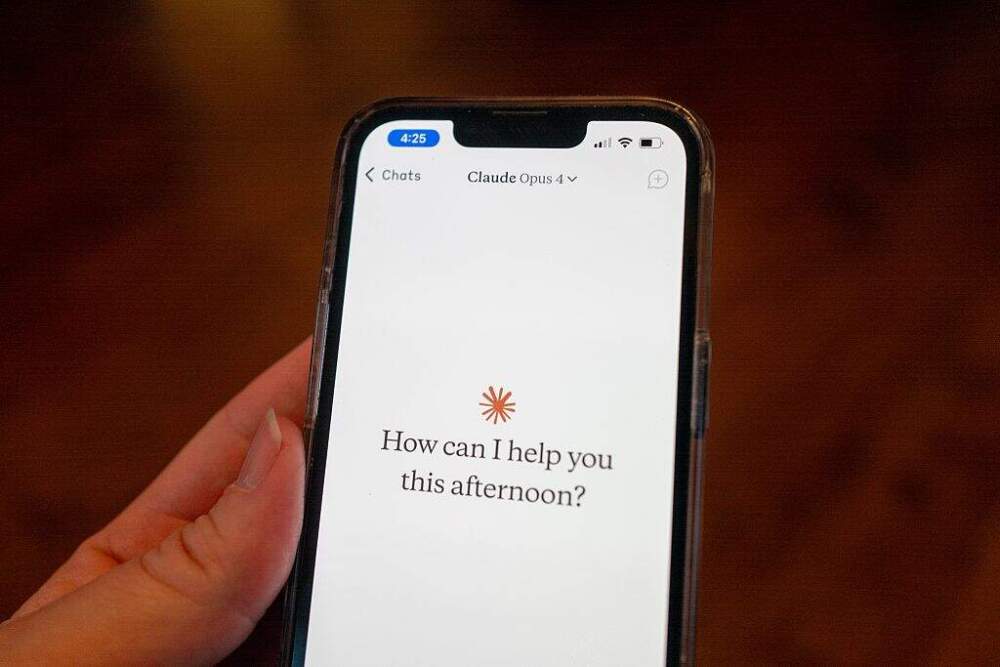
For people with disabilities, artificial intelligence tools are helping them see, hear, experience, and move through the world in profound new ways.
The discussion features Kyle Keane, a Senior Lecturer in Assistive Technologies at the University of Bristol in England, who also uses assistive technologies himself. Joining him is Tenzin Wangmo, a Senior Researcher at the Institute for Biomedical Ethics at the University of Basel, whose work focuses on gerontology and technology, bringing a critical ethical perspective to AI advancements.
The segment begins by highlighting historical milestones in assistive technology, starting with Louis Braille's invention of an alphabet for the visually impaired in 1824, and progressing through the development of the first functional electronic hearing aid in 1916 and the 'voder' for speech generation in 1939. A compelling modern example is presented through the story of Virginia Representative Jennifer Wexton. Diagnosed with progressive supranuclear palsy which caused her to lose her voice, Wexton received an AI-generated clone of her original voice from Eleven Labs. This allowed her to deliver speeches, including a historic final address on the House floor, demonstrating AI's profound potential in restoring communication for individuals with severe medical conditions. The discussion also touches upon other advancements like AI-driven visual navigation tools and highly sophisticated bionic prosthetics.
Kyle Keane, who is blind due to a degenerative retinal condition, shares his personal experience of adapting to changing vision throughout his life, emphasizing the role of a supportive social infrastructure and various assistive technologies like magnifiers, eyeglasses, and a white cane. He elaborates on the philosophical challenge of defining 'seeing' and how he processes information about his environment, highlighting the multi-sensory ways individuals interact with the world. Keane discusses his career shift from computational physics to assistive technology, including his involvement in developing the backend for systems like Apple's Siri, which provides scientifically accurate answers through spoken interfaces. He also provides current examples of AI in daily life, such as ChatGPT's video mode, which enables him to identify objects and navigate complex spaces using non-visual cues from his smartphone camera.
Looking ahead, Kyle Keane discusses his research into 'spatial reasoning' for AI, aiming to develop systems that can provide incredibly precise directional and positional information, crucial for blind individuals navigating unfamiliar environments safely. He introduces the concept of 'situational disabilities,' where temporary circumstances create a need for assistive technology, making these tools universally beneficial. However, the conversation critically examines the ethical implications. Tenzin Wangmo underscores concerns about data collection and user privacy, especially for vulnerable populations like the elderly, where AI-powered devices could share sensitive information without explicit, ongoing consent. Both experts stress the high stakes involved when individuals rely on AI for basic functions, highlighting the need for stable, trustworthy technology and ethical frameworks developed in collaboration with disability communities to prevent misuse and ensure technology empowers rather than exploits.