Quick Buzz Feed

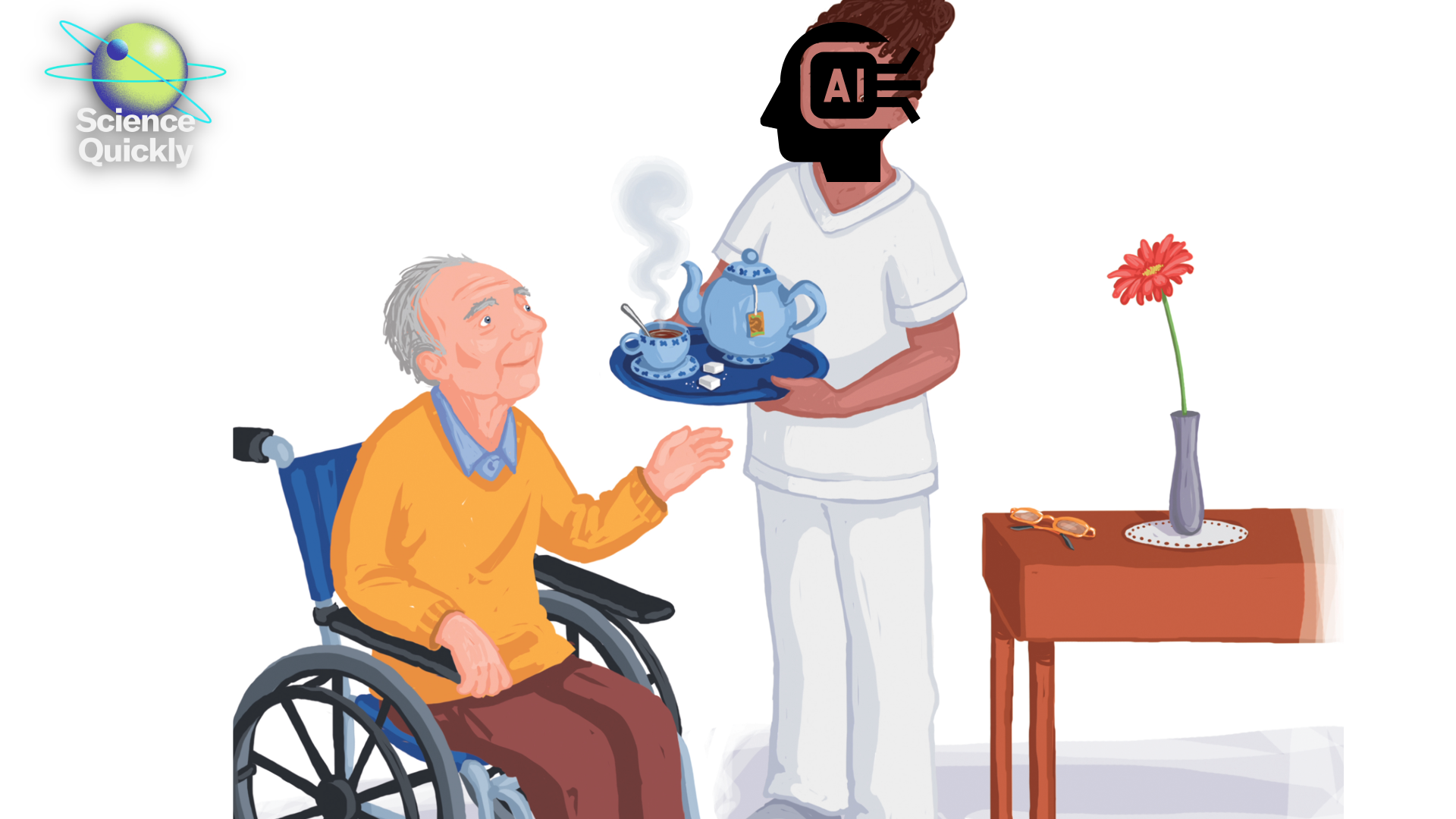
How AI‑powered “smart home” technologies could improve safety and ease caregiver burden for people with Alzheimer’s and other types of dementia
Homes, while often seen as safe havens, present significant risks for individuals with Alzheimer's and other forms of dementia, ranging from accidental falls to forgotten stoves. The traditional model of care for these conditions often involves constant human supervision, placing an immense burden on caregivers. This article explores how Artificial Intelligence (AI) and "smart home" technologies are emerging as potential solutions to mitigate these risks and alleviate caregiver strain. Researchers are actively developing and deploying AI systems that can provide continuous, unobtrusive monitoring, aiming to transform living environments into safer and more supportive spaces for older adults experiencing cognitive decline. The vision is to make homes not just living spaces but proactive partners in care, using technology to anticipate and prevent accidents, thereby enhancing the quality of life for patients and providing much-needed relief for their dedicated caregivers. The promise of AI in this context is to blend seamlessly into daily life, offering a layer of safety and support that complements, rather than replaces, human care, addressing the growing challenges of dementia care in an aging global population.
The concept of a "smart house" is not new, drawing parallels with the 1999 Disney Channel movie Smart House, which introduced the idea of a computerized home to a generation. While cinematic portrayals often leaned into futuristic fantasies of holographic assistants and advanced home automation, they also touched upon underlying fears about AI autonomy and control, as depicted by the house's virtual assistant, PAT, overstepping its programmed "maternal instincts." Today, real-life "smart homes" for people with dementia are beginning to approximate the watchful eyes of a human caregiver, operating continuously without the need for breaks. These contemporary AI systems, however, are designed with specific therapeutic goals, such as preventing falls and identifying acute health issues, rather than managing personal decisions. The article acknowledges that despite the technological advancements, the concerns about potential risks, overreach, and unforeseen consequences of AI, first popularized in fiction, remain pertinent and must be rigorously addressed in the development and implementation of these new care solutions.
Dementia poses a rapidly growing public health crisis in the United States. Currently, an estimated six to seven million Americans live with dementia, predominantly Alzheimer's disease. Projections indicate a doubling of this number to nearly 14 million by 2060 if no significant medical breakthroughs for prevention or cure occur. This escalating prevalence directly translates to a burgeoning demand for care, primarily met by unpaid family caregivers. A recent 2025 report, "Caregiving in the US," reveals that 27% of caregivers are assisting individuals with Alzheimer's or other dementia-related conditions, a nearly 50% increase over the last decade. These caregivers dedicate an average of 27 hours per week to care, often alongside their regular jobs, leading to significant financial sacrifices, including reduced work hours or leaving the workforce entirely. Beyond financial burdens, caregivers for dementia patients experience markedly higher rates of mental health issues and physical impacts. Access to affordable professional services, particularly in rural areas, remains a significant barrier, further intensifying the strain on family support systems. This dire situation underscores the urgent need for innovative solutions to ease the comprehensive burden on caregivers and ensure adequate support for dementia patients.
George Demiris, principal investigator for PennAITech (Penn Artificial Intelligence and Technology Collaboratory for Healthy Aging), highlights the expansive potential of technology to improve the quality of life and promote independence for individuals experiencing cognitive or functional decline due to Alzheimer's or broader dementia. Over the past five years, PennAITech, supported by significant grant funding, has overseen more than 50 research projects focused on AI applications for healthy aging. These innovative projects include BrainCheck, a chatbot designed to assist patients and caregivers in navigating care plans, and etectRx, a technology for remotely monitoring medication adherence. Another notable platform, Health Tequity, leverages patient health records, remote monitoring, and population data to create AI-powered "digital twins." These digital replicas can predict outcomes, such as the effects of medication dose changes, aiding clinicians in decision-making. The overarching goal is to enable older adults to "age in place," fulfilling their overwhelming preference to receive care within their own homes, supported by intelligent systems that enhance safety and well-being.
One groundbreaking intervention developed at Penn Nursing, called Sense4Safety, exemplifies the proactive potential of AI in dementia care. This system aims to prevent falls, a common and dangerous occurrence for individuals with cognitive impairment, by continuously observing residents in their homes. Utilizing depth sensors, a technology previously seen in video games, Sense4Safety captures silhouette extractions rather than actual video images, thus prioritizing privacy. The extracted data includes critical information about an individual's gait, such as stride length, speed, and overall balance. By analyzing changes in these patterns over time, the AI can detect increased fall risk. The system's intelligence lies in its ability to process these data points autonomously, rather than relying on human real-time monitoring, which would be unsustainable given the projected care burden. The goal is to allow algorithms to identify deviations from routine, like decreased activity or increased isolation, and flag potential issues *before* an adverse event occurs. In a year-long study involving 75 older adults with mild cognitive impairment, Sense4Safety's AI-mediated assessments of gait highly correlated with those of human clinical experts, demonstrating its accuracy and potential to trigger timely interventions, such as tailored exercises or environmental modifications (e.g., improving lighting or fixing rugs), thereby shifting care from reactive to proactive.
Despite the profound promise of AI in dementia care, experts like George Demiris and Tiffani J. Bright emphasize the critical need for rigorous study and multidisciplinary collaboration to address potential harms. Demiris stresses that AI solutions must be designed by diverse teams including clinicians, social scientists, engineers, computer scientists, AI experts, and ethicists, given the complex nature of patient care. Tiffani J. Bright, co-director of Cedars-Sinai Medical Center's Center for Artificial Intelligence Research and Education, highlights several core ethical concerns. Data bias is a primary worry; if AI models, such as chatbots for Alzheimer's patients, are trained on unrepresentative datasets, they risk providing inaccurate or even detrimental responses. Data privacy and transparency are also paramount, requiring clear understanding of data ownership, collection methods, and usage. Informed consent presents a unique challenge in dementia care, as a patient's cognitive abilities can decline over time, raising questions about the validity of long-term consent. Finally, access disparity is a significant ethical hurdle. Bright points out that advanced AI technologies tend to be concentrated in wealthy areas or major medical centers, potentially excluding the very populations, especially those in rural or underserved communities, who could benefit most from reduced caregiver burden. Ensuring equitable access and thoughtful, responsible implementation are crucial to realizing AI's benefits without exacerbating existing health inequalities.
While AI offers significant tools to alleviate some aspects of caregiver burden and enhance safety for individuals with dementia, experts universally agree that it cannot, and should not, replace the fundamental human elements of caregiving. Regina Shih emphatically states, "There's no way we can replace the human interaction and empathy that is required in the delivery of family caregiving. You cannot app your way out of hands-on care for people with dementia. Nothing replaces the hands-on care that is needed to help people eat and bathe and dress." This perspective underscores that AI's role is assistive, not substitutive. Its value lies in making daily life easier for both patients and human caregivers by handling routine monitoring and risk assessment, thereby freeing up human caregivers to focus on the emotional, personal, and physical aspects of care that only a human can provide. Tiffani J. Bright reinforces this, advising caregivers to explore AI tools if they offer "peace of mind" and "still honors the dignity and respect of your loved one," but acknowledging that "AI is great, but it’s not for everything." The future of dementia care envisioned by these experts is one where AI technology serves as a powerful aid, carefully integrated to augment, but never diminish, the irreplaceable human connection and compassionate support essential for well-being.