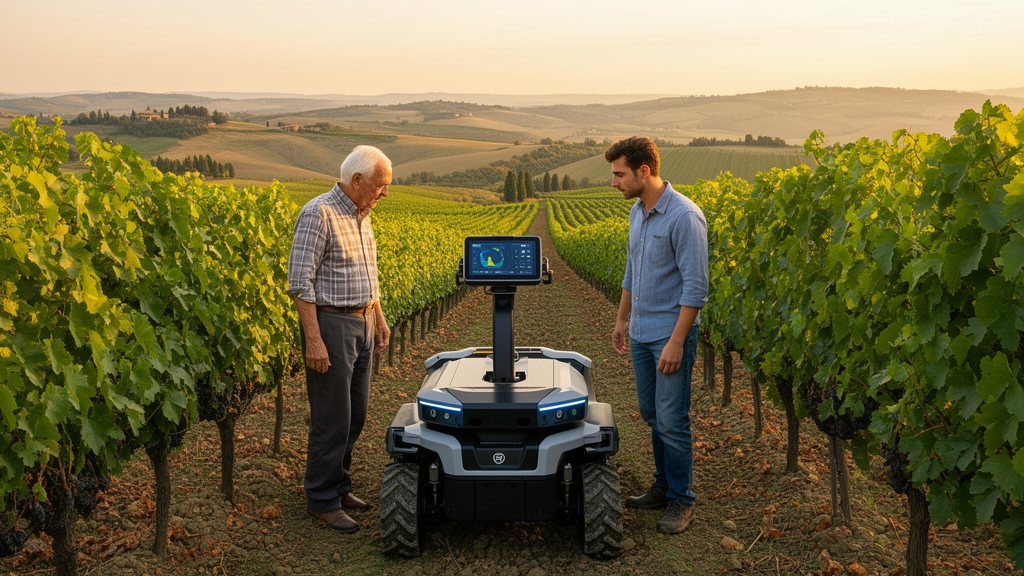
A nationwide survey of Italian citizens reveals favorable acceptance of agricultural artificial intelligence alongside substantial response uncertainty across specific technologies and demographic groups.
Initial Survey Findings: Acceptance and Uncertainty A nationwide Italian survey indicates that citizens show moderate to high acceptance of artificial intelligence applications in agriculture. However, this favorable view often coexists with considerable response uncertainty, which varies based on the specific AI technology, individual educational background, household income, and age group. The study utilized advanced statistical modeling to distinguish genuine preference from underlying hesitation. Drivers and Role of AI in Modern Agriculture The agricultural sector is facing increasing pressure to improve productivity, ensure environmental sustainability, and enhance economic resilience against climate change and market shifts. These challenges are driving digitalization in agriculture, where advanced data-driven AI systems provide crucial operational support for transitioning towards more sustainable food production methods, by managing soil, monitoring diseases, processing data, and bridging knowledge gaps. Diverse Applications of AI in Farming Artificial intelligence in agricultural practice encompasses various targeted technical interventions to optimize resource utilization. This includes autonomous systems for refining irrigation, precise chemical spraying, and labor allocation, as well as machine learning and deep learning algorithms for precision farming. These technologies enable autonomous operations like weed management and drone-based monitoring, enhancing efficiency and sustainability across the food supply chain. Survey Methodology and Design To assess public acceptance and perceived benefits among non-expert consumers, a computer-assisted web interview survey was conducted in Italy with 1,000 demographically representative adults. Participants evaluated their favorability toward eleven distinct agricultural AI technologies and their perceived benefits across four dimensions: quality, food safety, healthiness, and environmental sustainability. The CUB framework was employed to analyze preference intensity and decision uncertainty. Statistical Modeling and Overall Acceptance Levels The CUB statistical model successfully decomposed observed responses into 'feeling' (preference intensity) and 'response uncertainty'. Overall findings showed moderate to high consumer acceptance (feeling values > 0.70) across all AI tools, with response uncertainty generally below 0.50. The Internet of Things and machine learning achieved the highest acceptance scores, with IoT demonstrating significantly lower response uncertainty. Detailed Findings: Technology-Specific & Demographic Impacts Genetic algorithms recorded the lowest acceptance, while digital twins generated the highest response uncertainty. Age significantly influenced acceptance across most technologies, with respondents aged 60-70 and 18-30 showing the highest acceptance. Educational attainment and higher household income consistently correlated with greater acceptance and reduced uncertainty, particularly for machine learning and IoT tools. Gender and household composition showed no significant effects. Perceived Benefits and Technology Associations Correspondence analysis revealed associations between AI applications and perceived benefits. Computer vision, deep learning, and IoT clustered with quality and healthiness; drones and big data analytics aligned with food safety. Machine learning and cloud computing were associated with environmental sustainability. Technologies with less clear, concrete benefits, such as robotics, artificial neural networks, genetic algorithms, and digital twins, occupied central positions, indicating diffuse perceptions and higher public uncertainty. Limitations and Policy Implications The study's limitations include its cross-sectional design and focus solely on Italian citizens, restricting international generalizability. It underscores that broad acceptance figures can mask considerable underlying public hesitation. Policymakers and communicators are advised to move beyond general technological optimism, providing clear and transparent explanations of concrete operational benefits, especially for lower-income and less formally educated demographics to address pronounced response uncertainty.
Initial Survey Findings: Acceptance and Uncertainty
A nationwide Italian survey indicates that citizens show moderate to high acceptance of artificial intelligence applications in agriculture. However, this favorable view often coexists with considerable response uncertainty, which varies based on the specific AI technology, individual educational background, household income, and age group. The study utilized advanced statistical modeling to distinguish genuine preference from underlying hesitation.
Drivers and Role of AI in Modern Agriculture
The agricultural sector is facing increasing pressure to improve productivity, ensure environmental sustainability, and enhance economic resilience against climate change and market shifts. These challenges are driving digitalization in agriculture, where advanced data-driven AI systems provide crucial operational support for transitioning towards more sustainable food production methods, by managing soil, monitoring diseases, processing data, and bridging knowledge gaps.
Diverse Applications of AI in Farming
Artificial intelligence in agricultural practice encompasses various targeted technical interventions to optimize resource utilization. This includes autonomous systems for refining irrigation, precise chemical spraying, and labor allocation, as well as machine learning and deep learning algorithms for precision farming. These technologies enable autonomous operations like weed management and drone-based monitoring, enhancing efficiency and sustainability across the food supply chain.
Survey Methodology and Design
To assess public acceptance and perceived benefits among non-expert consumers, a computer-assisted web interview survey was conducted in Italy with 1,000 demographically representative adults. Participants evaluated their favorability toward eleven distinct agricultural AI technologies and their perceived benefits across four dimensions: quality, food safety, healthiness, and environmental sustainability. The CUB framework was employed to analyze preference intensity and decision uncertainty.
Statistical Modeling and Overall Acceptance Levels
The CUB statistical model successfully decomposed observed responses into 'feeling' (preference intensity) and 'response uncertainty'. Overall findings showed moderate to high consumer acceptance (feeling values > 0.70) across all AI tools, with response uncertainty generally below 0.50. The Internet of Things and machine learning achieved the highest acceptance scores, with IoT demonstrating significantly lower response uncertainty.
Detailed Findings: Technology-Specific & Demographic Impacts
Genetic algorithms recorded the lowest acceptance, while digital twins generated the highest response uncertainty. Age significantly influenced acceptance across most technologies, with respondents aged 60-70 and 18-30 showing the highest acceptance. Educational attainment and higher household income consistently correlated with greater acceptance and reduced uncertainty, particularly for machine learning and IoT tools. Gender and household composition showed no significant effects.
Perceived Benefits and Technology Associations
Correspondence analysis revealed associations between AI applications and perceived benefits. Computer vision, deep learning, and IoT clustered with quality and healthiness; drones and big data analytics aligned with food safety. Machine learning and cloud computing were associated with environmental sustainability. Technologies with less clear, concrete benefits, such as robotics, artificial neural networks, genetic algorithms, and digital twins, occupied central positions, indicating diffuse perceptions and higher public uncertainty.
Limitations and Policy Implications
The study's limitations include its cross-sectional design and focus solely on Italian citizens, restricting international generalizability. It underscores that broad acceptance figures can mask considerable underlying public hesitation. Policymakers and communicators are advised to move beyond general technological optimism, providing clear and transparent explanations of concrete operational benefits, especially for lower-income and less formally educated demographics to address pronounced response uncertainty.