Quick Buzz Feed

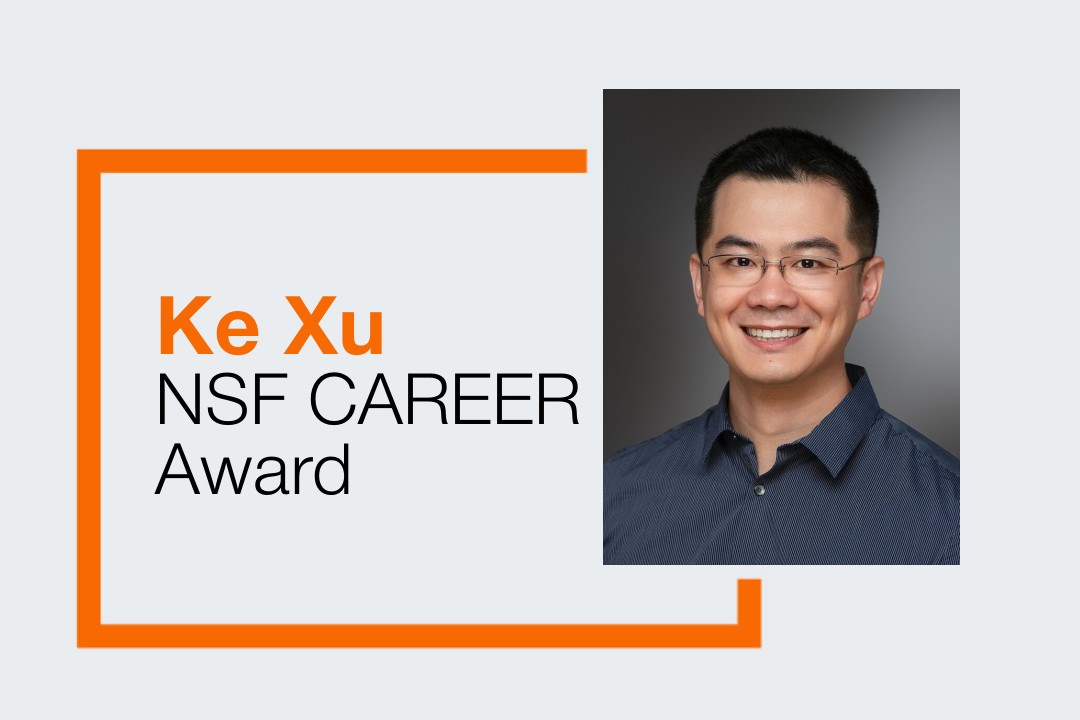
RIT assistant professor Ke Xu received a NSF CAREER Award to work with students to build AI hardware using edge computing technology.
Current AI systems typically send requests to distant cloud servers for processing. While this is a minor inconvenience for everyday tasks, losing cloud connectivity can be critical for advanced applications like wearable health monitors, autonomous sensors, and robots. This dependency highlights a significant vulnerability in systems that require continuous, real-time operation without interruption.
RIT Assistant Professor Ke Xu has been recognized with a prestigious National Science Foundation (NSF) CAREER Award for his research into edge computing for AI. This innovative approach involves processing data directly at or near the source where it's collected, rather than sending it to a remote cloud. The goal is to build AI hardware that can operate autonomously and efficiently, reducing reliance on external networks and conserving energy.
The NSF CAREER Award is considered the most distinguished honor for early-career faculty members. It acknowledges individuals who not only show exceptional potential as academic role models but are also poised to drive significant advancements within their respective fields or organizations. This particular award supports five years of integrated research and educational activities, underscoring the importance of both scientific discovery and mentorship.
Edge computing for AI offers substantial advantages, especially in terms of environmental impact and operational efficiency. By enabling devices to process information and make decisions in real-time with a minimal energy footprint, it drastically reduces the need for power-intensive, heavily cooled data centers associated with cloud computing. This localized processing means less energy consumption, less heat generation, and a smaller overall environmental footprint, addressing growing concerns about the ecological cost of AI.
A core component of the NSF CAREER Award is the integration of students into the research process. Professor Xu's project will engage both undergraduate and graduate students from diverse academic backgrounds, including physics, materials science, and electrical and computer engineering. This interdisciplinary collaboration is designed to provide students with a comprehensive understanding of AI hardware development, equipping them with valuable skills at the intersection of various scientific and engineering disciplines for their future careers. Xu, with his own diverse academic history, emphasizes the richness and innovation that arise from such varied perspectives.