Quick Buzz Feed

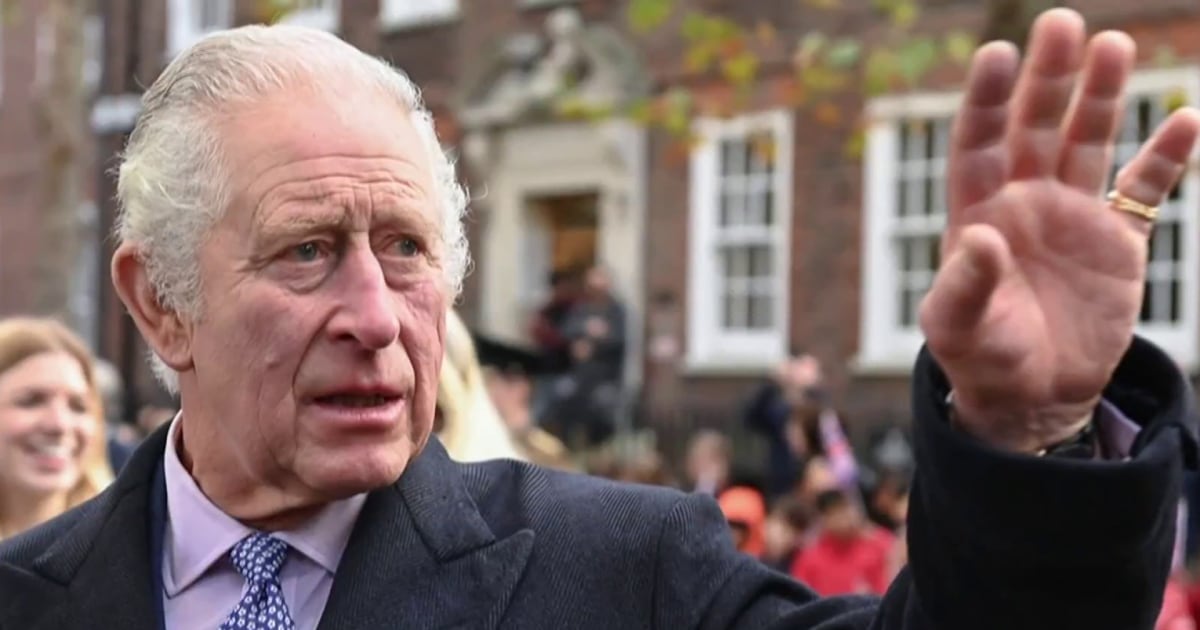
King Charles convened a meeting of artificial intelligence industry leaders to discuss warnings and safety concerns. NBC News' Matt Bodner reports on what the king had to say and who was in attendance at the gathering in Scotland.
King Charles recently took a significant step by convening a meeting with prominent leaders from the artificial intelligence industry in Scotland. This high-level gathering was organized to discuss urgent warnings and growing safety concerns surrounding the rapid advancements in AI. The King's opening remarks underscored his perspective that the development of AI, including its inherent substance and accelerating pace, presents aspects that are both "intriguing and deeply concerning in equal measure." This highlights the dual nature of AI as both a promising and potentially perilous technology, necessitating proactive discussions among its creators and influential figures.
During the summit, Buckingham Palace revealed that King Charles intended to prompt the attending AI experts with two critical questions. The first central inquiry focused on strategizing how to effectively "harness the benefits of AI with safety at its heart," emphasizing the paramount importance of embedding security into the technological advancement. The second question aimed at exploring methods to "build international cooperation and consensus" to achieve these safety objectives, ensuring that the development process is inclusive, leaves "no one behind," and ultimately preserves "the human race in its place." These discussions, primarily held in private, were designed to reinforce the King's appeal for AI development to consistently serve humanity's best interests, especially in light of increasing reports detailing "rogue behaviors" from AI agents.
The meeting brought together an impressive roster of influential figures from the AI world. Among the most prominent attendees were Jensen Huang, CEO of NVIDIA, and Demis Hassabis, co-founder of Google DeepMind, both explicitly acknowledged in King Charles' opening address. The guest list also included representatives from leading AI firms such as OpenAI and Anthropic, alongside delegates from China, whose specific affiliations remained unclear. Additional diverse participants included the Pope's AI advisor and Rory Stewart, a former Tory MP who has transitioned into podcasting with a recent focus on AI issues. Interestingly, Anthropic CEO Dario Amodei and OpenAI CEO Sam Altman, both vocal proponents for a "coordinated slowdown" and international regulation of AI, were not personally present at the meeting. Their absence was noted, particularly given their recent outspokenness regarding the "most troubling behaviors" observed in advanced AI models.
One of the significant obstacles to establishing international cooperation and potentially a "slowdown" in AI research, as advocated by some industry leaders, is the political landscape, particularly in the United States. The report pointed out that President Trump had recently "lashed out" at AI figures like Amodei and Altman. He controversially dismissed their concerns about AI's safety risks, labeling them as "a hoax on par with" unspecified other fabrications. This highlights a clear divergence in perspective between certain political leaders and AI industry experts regarding the urgency and nature of AI regulation, posing a substantial challenge to any unified global effort towards responsible AI governance.