Quick Buzz Feed

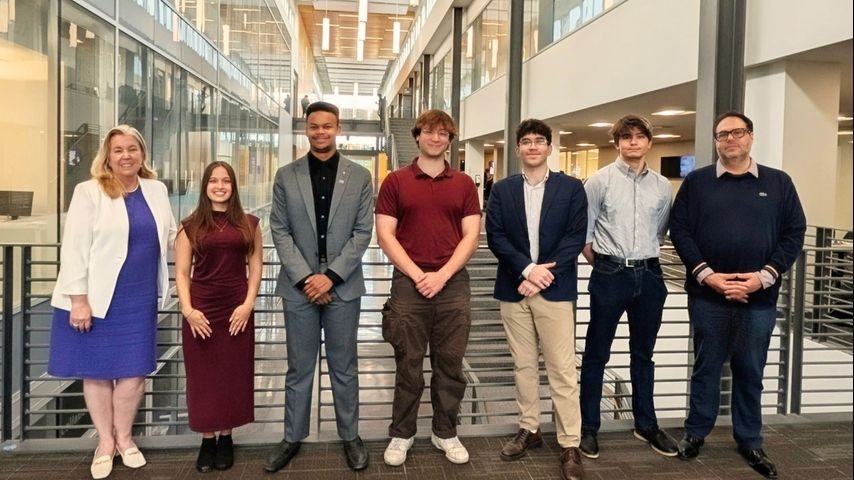
Starting in the fall of 2026, LSU will begin offering a bachelor’s degree in Artificial Intelligence, making it the first university in Louisiana to do so through its College of Engineering.
Louisiana State University is set to launch a new bachelor's degree in Artificial Intelligence starting in the fall of 2026, marking it as the first university in the state to offer such a program through its College of Engineering. This initiative underscores LSU's ongoing efforts to expand education and workforce development in AI. Dean Vicki Colvin emphasized the program's rigorous nature, designed by the computer science division to train the next generation of AI engineers, recognizing AI as a significant academic and practical field. This move positions LSU at the forefront of AI education in Louisiana, responding to the growing demand for skilled professionals in this rapidly evolving sector.
The Artificial Intelligence bachelor's degree program at LSU will encompass a broad spectrum of subjects, including core areas like mathematics and computer science, alongside critical considerations such as the ethics of AI. To establish this innovative program, LSU's computer science department has meticulously developed 20 new courses. Ibrahim Baggili, Chair of the Computer Science and Engineering Division, illustrated the program's forward-thinking approach, stating, "If you think of AI as a wave, and people are riding that wave, we are building the surfboard," highlighting its focus on both fundamental AI principles and practical system building. Assistant Professor Dr. James Ghawaly is credited as the architect of this comprehensive curriculum, ensuring it provides a robust foundation for future AI professionals.
LSU's commitment to artificial intelligence education extends beyond undergraduate studies. The university plans to introduce a master's degree in applied artificial intelligence, possibly by 2027, as mentioned by Dean Colvin. This master's program is specifically designed to cater to professionals already in the industry who seek to integrate and apply AI solutions within their respective businesses and sectors, thereby addressing the growing demand for AI expertise in the workforce. This forward-looking approach ensures that LSU will continue to provide advanced educational opportunities for a diverse range of students and industry professionals.
Current LSU students are already engaging with AI-focused courses, gaining hands-on experience in real-world applications. Chase Henderson and Samuel Vekovius, for instance, learned to analyze construction site risks in their AI and Large Language Models course. They developed a "risk engine" and detection system for a construction contractor, significantly accelerating observation processes and providing insights for achieving zero-incident operations across job sites. This practical exposure, including site visits, allows students to understand employee experiences and apply AI solutions directly, preparing them for immediate impact in various industries.
Dow Draper, another student, highlighted the dual focus of his AI course: computer science principles, particularly the application of Large Language Models (like ChatGPT and Gemini) to generate value for companies, and project management. He described working with a local Baton Rouge company, Neighbors Federal Credit Union, to implement a project idea, acting as a liaison between the company and the engineering team. This demonstrates an interdisciplinary approach, blending technical AI skills with practical business problem-solving. Olivia Martin (College of Business) and Benjamin Goldstein (College of Agriculture) also expressed gratitude for the university's forward-thinking approach, acknowledging the rapid pace of technological change and the value of learning AI across different fields.
In a further move to broaden accessibility to AI education, the College of Engineering at LSU is actively working towards offering Artificial Intelligence as a minor program in the coming years. This initiative will allow students from various disciplines to gain foundational knowledge and skills in AI, complementing their primary fields of study and preparing them for an increasingly AI-driven job market. This strategic expansion aims to embed AI literacy across a wider student body, enhancing career prospects in a world rapidly integrating artificial intelligence.