Quick Buzz Feed

Public school systems across Maryland are developing policies to determine how students and educators can use artificial intelligence in classrooms while protecting academic integrity, student privacy and the role of teachers.
Maryland's public school systems are actively formulating policies for the ethical and effective use of artificial intelligence by students and educators. This initiative is mandated by the Artificial Intelligence Ready Schools Act, which sets an October 22 deadline for all local districts to adopt policies aligning with state guidance. The primary goal is to integrate AI tools into classrooms while safeguarding academic integrity, ensuring student privacy, and preserving the essential role of teachers. Assistant State Superintendent Richard Kincaid highlights the increasing prevalence of AI in schools, workplaces, and the broader economy, emphasizing the importance of equipping students with the skills to use this technology responsibly.
The Maryland State Department of Education (MSDE) provides a framework that grants local districts flexibility in selecting appropriate AI tools, while establishing strict, non-negotiable 'guardrails.' These crucial safeguards include absolute protection of student privacy, robust data security measures, and a mandate for human oversight in all AI applications. Richard Kincaid stresses that the state's approach is designed to foster critical thinking, digital literacy, and creative problem-solving abilities among students, recognizing these as vital competencies in an AI-driven future. The MSDE's guidance allows for innovation within an ethically sound and secure educational environment.
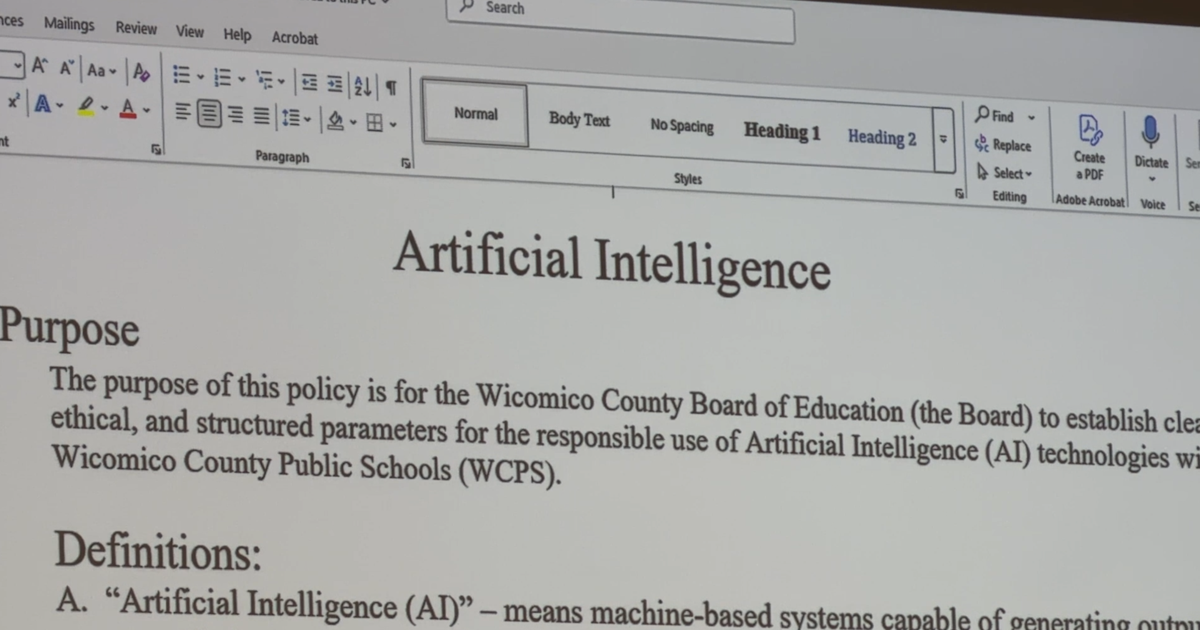
Wicomico County Public Schools is advancing with its draft AI policy, which recently received a consensus from its Board of Education, moving it closer to formal approval. Dr. Brian Raygor, the school system’s chief finance and operations officer, clarified that the policy does not aim to ban AI but rather to promote its ethical and educational application. Key elements of Wicomico’s proposed policy include requiring students to cite AI tools as they would any other source and forming a dedicated committee. This committee, composed of instructional, technology, and student/family services staff, will be tasked with reviewing potential AI tools and clearly defining the distinction between legitimate AI assistance and academic dishonesty. The draft policy is currently available for public review before a scheduled formal vote on August 11.
Worcester County Public Schools initiated its AI policy and guidance development approximately two years ago, positioning it ahead of the state's requirement. Caleb Wilson, Worcester County’s artificial intelligence coordinator, confirmed that the district’s existing framework already addresses key state priorities such as equitable access, safety, privacy, academic integrity, and human-centered decision-making. The district utilizes MagicSchool, an AI platform that allows teachers to manage student access to AI tools and monitor their interactions. Wilson emphasizes that while AI can assist students with tasks like creating outlines, checking grammar, or receiving writing feedback, it should not be used to bypass the deeper cognitive processes essential for learning; instead, it should serve to enhance rigorous thought and educational progress.
Both Wicomico and Worcester Counties are actively investing in professional development programs to prepare their educators for the evolving role of AI in classrooms. Worcester offers voluntary AI training cohorts and plans to implement mandatory foundational training for instructional staff this fall, while Wicomico has begun summer AI sessions for administrators with plans to expand professional development opportunities for all educators. The Maryland State Department of Education is developing a statewide foundational training program for approximately 120,000 educators and school employees, slated for availability by June 30, 2027. Recognizing the rapid pace of AI advancements, school leaders acknowledge the necessity for policies to remain flexible and adaptable, with frequent reviews and updates to integrate new tools and address emerging challenges.