Quick Buzz Feed

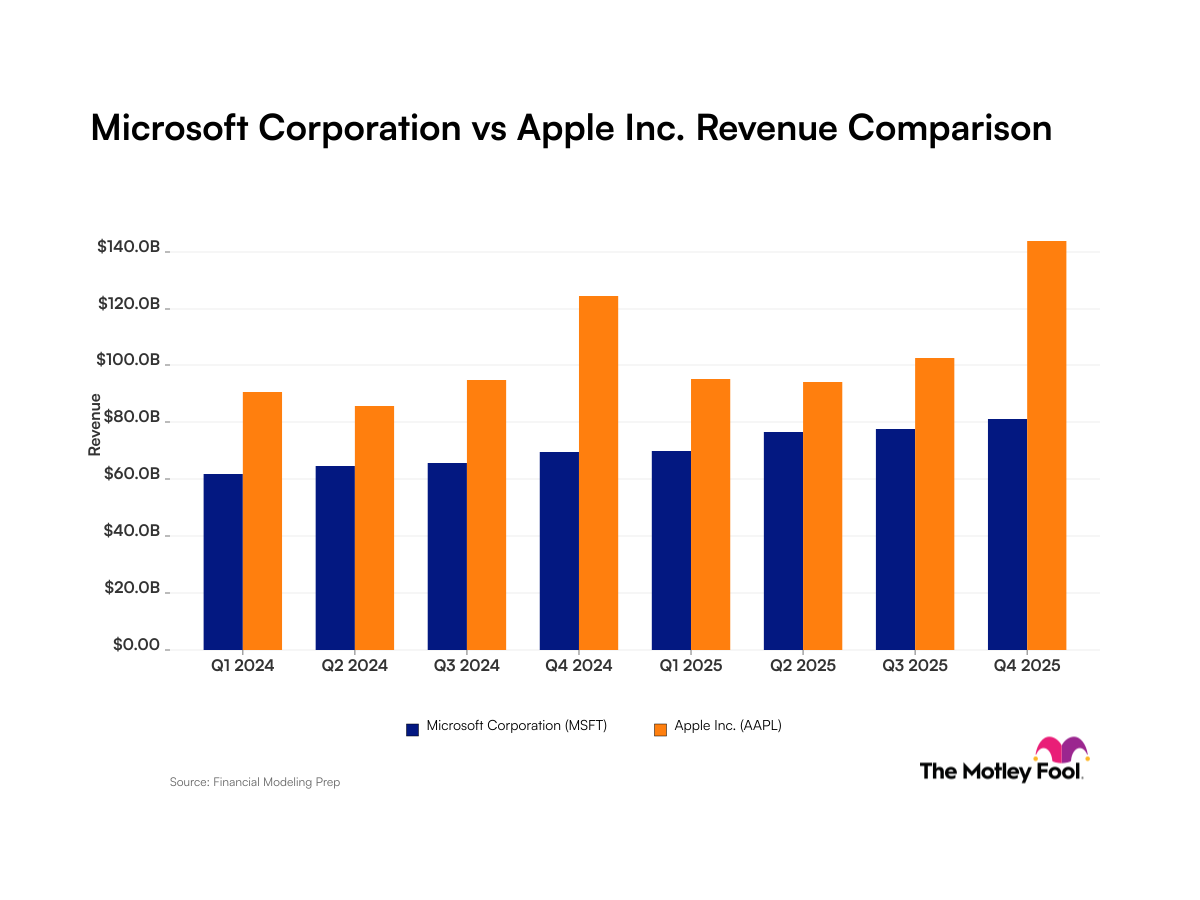
Microsoft's revenue has climbed steadily while Apple's swings wildly with the calendar — but the gap between them is narrowing.
Microsoft generates revenue through software licensing, computing device sales, and cloud infrastructure services. The company recently expanded data center agreements and reported a 40% net income margin for the quarter ending June 30, 2026.
Apple primarily earns revenue from consumer electronic devices and subscription services. It faced regulatory actions in the European Union concerning its digital storefront and reported a 27% net income margin for the quarter ending June 27, 2026.
Revenue provides a high-level view of a business's incoming funds before expenses. Tracking this metric helps investors gauge a company's overall scale and top-line growth trajectory.
This section presents a table illustrating the quarterly revenue figures for both Microsoft and Apple over eight consecutive quarters, from Q3 2024 to Q2 2026, showing their respective financial performances during these periods.
Apple's revenue is characterized by significant sales spikes during its fiscal first quarter, aligning with the holiday shopping season and its consumer product focus. In contrast, Microsoft, with its increasing reliance on cloud computing and artificial intelligence, exhibits consistent quarter-over-quarter revenue growth. Microsoft's stock surged due to strong 18% year-over-year sales growth and an increase in diluted earnings per share to $4.81, indicating profitable AI investments. Apple's stock, however, experienced a decline despite record revenue, primarily due to concerns about future supply constraints caused by memory component shortages linked to the rise of AI.