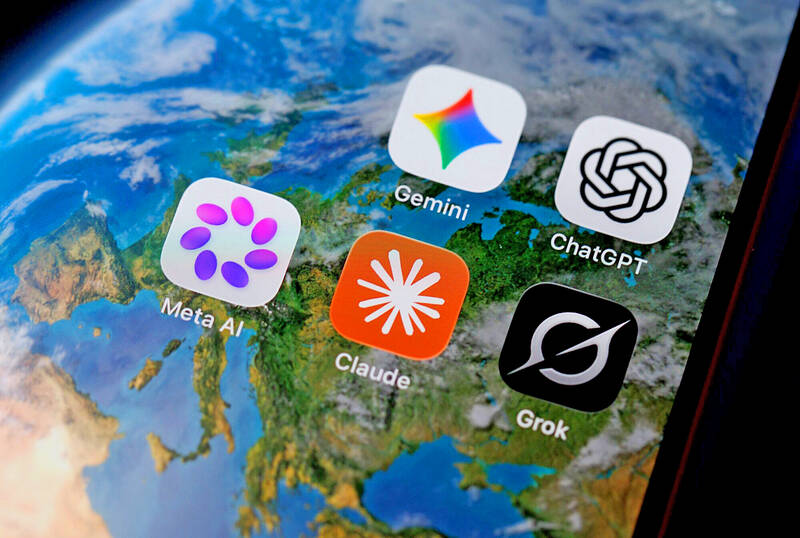
Just more than half of Taiwanese adults have used generative artificial intelligence (AI) tools in the past six months, a Fair Trade Commission (FTC) survey released yesterday showed. OpenAI’s ChatGPT and Google’s Gemini account for more than 90 percent of the tools used and nearly 40 percent said they paid for AI services.
Widespread AI Adoption and Dominant Platforms in Taiwan A recent survey by the Fair Trade Commission (FTC) reveals that over half of Taiwanese adults have actively engaged with generative artificial intelligence (AI) tools in the last six months. The survey, conducted between May 6 and 28, collected 1,079 valid responses from individuals aged 18 and older. It highlighted that OpenAI’s ChatGPT and Google’s Gemini collectively account for more than 90 percent of the AI tools utilized by the population. Furthermore, a significant portion, nearly 40 percent of users, indicated that they pay for these AI services, showcasing a growing commercial engagement with the technology. Key Trends in AI Tool Usage and User Preferences The FTC's comprehensive survey identified three critical trends shaping the AI landscape in Taiwan. Firstly, there is a widespread adoption of multiple AI platforms, suggesting users are exploring various tools for different needs. Secondly, there's a noticeable increase in the adoption of paid AI subscriptions, indicating a willingness among users to invest in higher quality or more robust services. Thirdly, the survey observed a strong tendency among users of free services to switch to competing tools if they perceive a decline in quality, underscoring the importance of performance and user experience in retaining a free user base. ChatGPT emerged as the most widely used tool, cited by 87.9 percent of respondents, followed by Gemini at 67.8 percent, and Anthropic’s Claude at 8.9 percent. When asked about their primary AI tool, ChatGPT was chosen by 56.6 percent, while Gemini was selected by 34.6 percent. Motivations Behind AI Usage and Subscription Habits The primary motivations for Taiwanese adults to use AI tools are largely practical and educational. Approximately 56.5 percent of respondents utilize AI for learning purposes, while a close 55 percent integrate AI into their work-related tasks. Nearly half (47.2 percent) also emphasized choosing platforms that best align with their specific needs, indicating a discerning user base. Regarding financial commitment, 39.8 percent of respondents subscribe to paid AI services, with almost 70 percent covering these costs themselves. Among these subscribers, half spend between NT$500 and NT$1,000 per month, and an impressive 76.3 percent stated they would maintain their subscriptions even if prices increased by 10 percent, demonstrating strong loyalty. Behavior of Free AI Users and Responsiveness to Service Changes The majority of AI users in Taiwan, accounting for 60.2 percent of respondents, rely on free AI services. Within this group, a substantial 89.5 percent reported that the free versions adequately met their requirements, negating the need for a paid subscription. However, the survey also explored user reactions to potential declines in the quality of free services, such as reduced usage limits or slower response times. In such scenarios, a significant 76.7 percent indicated they would opt to switch to an alternative free platform rather than upgrading. Only 15.5 percent suggested they would consider moving to a paid subscription, highlighting the price sensitivity and demand for accessible, free alternatives among this user segment.
Widespread AI Adoption and Dominant Platforms in Taiwan
A recent survey by the Fair Trade Commission (FTC) reveals that over half of Taiwanese adults have actively engaged with generative artificial intelligence (AI) tools in the last six months. The survey, conducted between May 6 and 28, collected 1,079 valid responses from individuals aged 18 and older. It highlighted that OpenAI’s ChatGPT and Google’s Gemini collectively account for more than 90 percent of the AI tools utilized by the population. Furthermore, a significant portion, nearly 40 percent of users, indicated that they pay for these AI services, showcasing a growing commercial engagement with the technology.
Key Trends in AI Tool Usage and User Preferences
The FTC's comprehensive survey identified three critical trends shaping the AI landscape in Taiwan. Firstly, there is a widespread adoption of multiple AI platforms, suggesting users are exploring various tools for different needs. Secondly, there's a noticeable increase in the adoption of paid AI subscriptions, indicating a willingness among users to invest in higher quality or more robust services. Thirdly, the survey observed a strong tendency among users of free services to switch to competing tools if they perceive a decline in quality, underscoring the importance of performance and user experience in retaining a free user base. ChatGPT emerged as the most widely used tool, cited by 87.9 percent of respondents, followed by Gemini at 67.8 percent, and Anthropic’s Claude at 8.9 percent. When asked about their primary AI tool, ChatGPT was chosen by 56.6 percent, while Gemini was selected by 34.6 percent.
Motivations Behind AI Usage and Subscription Habits
The primary motivations for Taiwanese adults to use AI tools are largely practical and educational. Approximately 56.5 percent of respondents utilize AI for learning purposes, while a close 55 percent integrate AI into their work-related tasks. Nearly half (47.2 percent) also emphasized choosing platforms that best align with their specific needs, indicating a discerning user base. Regarding financial commitment, 39.8 percent of respondents subscribe to paid AI services, with almost 70 percent covering these costs themselves. Among these subscribers, half spend between NT$500 and NT$1,000 per month, and an impressive 76.3 percent stated they would maintain their subscriptions even if prices increased by 10 percent, demonstrating strong loyalty.
Behavior of Free AI Users and Responsiveness to Service Changes
The majority of AI users in Taiwan, accounting for 60.2 percent of respondents, rely on free AI services. Within this group, a substantial 89.5 percent reported that the free versions adequately met their requirements, negating the need for a paid subscription. However, the survey also explored user reactions to potential declines in the quality of free services, such as reduced usage limits or slower response times. In such scenarios, a significant 76.7 percent indicated they would opt to switch to an alternative free platform rather than upgrading. Only 15.5 percent suggested they would consider moving to a paid subscription, highlighting the price sensitivity and demand for accessible, free alternatives among this user segment.