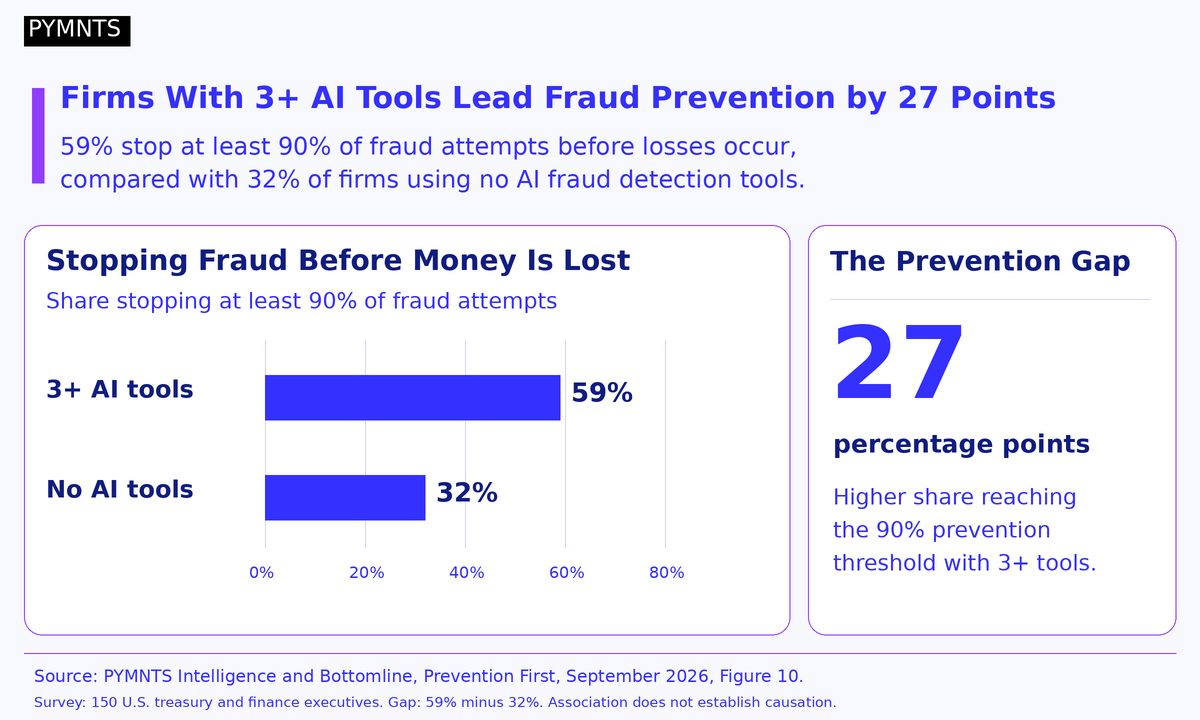
PYMNTS finds that nearly 6 in 10 firms using three or more AI tools prevent at least 90% of fraud attempts from causing losses.
Broader AI use accompanies stronger prevention. Among firms using three or more AI fraud detection tools, 59% stop at least 90% of fraud attempts before any loss occurs. Just 32% of firms without AI tools reach that threshold, a 27-percentage-point gap. The survey doesn’t establish that AI alone causes the difference. It does show that companies combining several tools report stronger results. Among AI adopters, 77% say the technology outperforms their previous methods, though the report cautions that this finding comes from a small subgroup. Basic supplier checks remain central. Before adding a vendor or changing banking details, 82% of firms require approval from more than one person and 80% compare requests with contact or banking information already on file. Those precautions address a common threat: Half of respondents reporting an AI-enabled fraud tactic identify vendor impersonation emails as the tactic they encounter most often. Verifying a payment request against trusted records gives employees a practical way to challenge a convincing message. Companies without AI defenses are preparing to adopt them. Among non-users, 58% are implementing AI fraud detection or plan to do so within 12 months. Their concerns help explain the remaining hesitation. Some 89% fear flagging legitimate payments and 74% hesitate to automate without human approval. Adoption will require confidence that new tools can protect payments while keeping routine business moving.
Broader AI use accompanies stronger prevention.
Among firms using three or more AI fraud detection tools, 59% stop at least 90% of fraud attempts before any loss occurs. Just 32% of firms without AI tools reach that threshold, a 27-percentage-point gap. The survey doesn’t establish that AI alone causes the difference. It does show that companies combining several tools report stronger results. Among AI adopters, 77% say the technology outperforms their previous methods, though the report cautions that this finding comes from a small subgroup.
Basic supplier checks remain central.
Before adding a vendor or changing banking details, 82% of firms require approval from more than one person and 80% compare requests with contact or banking information already on file. Those precautions address a common threat: Half of respondents reporting an AI-enabled fraud tactic identify vendor impersonation emails as the tactic they encounter most often. Verifying a payment request against trusted records gives employees a practical way to challenge a convincing message.
Companies without AI defenses are preparing to adopt them.
Among non-users, 58% are implementing AI fraud detection or plan to do so within 12 months. Their concerns help explain the remaining hesitation. Some 89% fear flagging legitimate payments and 74% hesitate to automate without human approval. Adoption will require confidence that new tools can protect payments while keeping routine business moving.