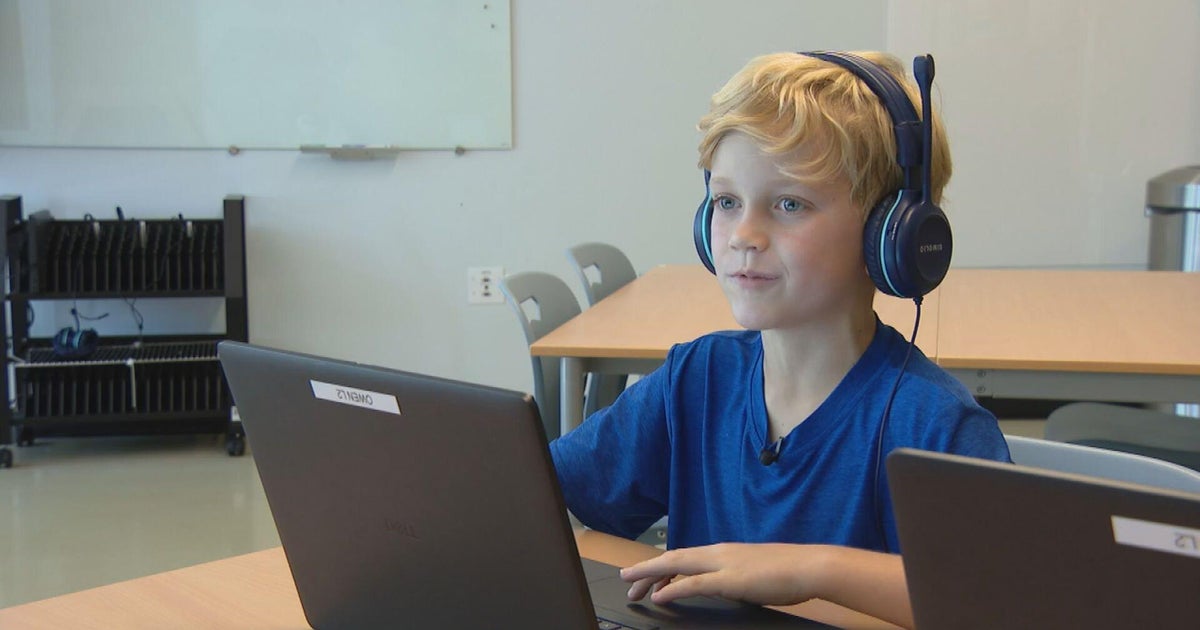
A new school in Chicago is taking a different approach to education, using what they call AI-powered software to teach core subjects like math, science, and reading.
AI-Powered Core Curriculum and Practical Skill Development Alpha Chicago, a novel private school located in the Lakeshore East neighborhood of downtown Chicago, is introducing a distinctive educational model centered around artificial intelligence. Students in this innovative institution dedicate two hours each morning to learning core subjects such as math, science, and reading through a proprietary AI-powered software program called "2 Hour Learning." This digital approach to foundational academics aims to provide a personalized and efficient learning experience. One student, Owen, expressed surprise at the effectiveness, stating it felt "so much more different" than merely using an iPad, suggesting a deeper engagement with the learning process. Beyond the AI-driven academic segment, the school places a significant emphasis on developing practical, real-world skills. The remainder of the students' day is allocated to hands-on activities, including learning to sew, cook, and navigate public transportation systems. This dual focus on advanced technology for theoretical knowledge and practical application for life skills signifies a departure from conventional educational structures. Non-Traditional Guidance and Comprehensive Life Skills Integration In a significant departure from traditional educational staffing, Alpha Schools intentionally eschews conventional teachers. Instead, student groups are overseen and guided by individuals referred to as "guides," who interact with students on a first-name basis. A notable aspect of this model is that most of these guides do not possess a background in formal education. A February analysis conducted by the National Education Policy Center at the University of Colorado, a respected nonpartisan think tank, revealed that only approximately one-third of Alpha's guides have prior education training or degrees. Carrington Haas, the lead guide at Alpha Chicago, elaborated on the school's philosophy, emphasizing that while AI is an important component, the true "magic part of Alpha" lies in its ability to effectively impart crucial life skills. These skills extend beyond basic academics and encompass vital competencies such as public speaking, fostering financial literacy, promoting teamwork, and cultivating leadership qualities. This approach highlights Alpha's commitment to holistic development, preparing students not just academically but also for the challenges and responsibilities of adult life in a practical and applied manner. Enrollment Figures, Substantial Tuition, and Future Accessibility Goals Alpha Schools operates on a national scale, boasting 50 campuses across the United States with a total enrollment of 1,500 students. The Chicago campus, situated in the Lakeshore East neighborhood, currently accommodates around 50 students, despite having a significant capacity to host up to 500. A key aspect of the Alpha School model that draws attention is its substantial tuition fee, which amounts to nearly $55,000 per student. This hefty price tag positions Alpha as an exclusive educational option. Dr. Brian Howell, the school's dean of parents and a former anthropology professor, acknowledged that the institution's unconventional educational approach is often misunderstood. He shared anecdotes of families so committed to the model that they relocated across states or from affluent suburban areas like the North Shore to secure a spot for their children in the Loop campus. Despite the current exclusivity driven by tuition costs and location, Howell articulated a broader vision for Alpha Schools. He expressed a desire to expand the model and make it more accessible, asserting a belief that this educational approach could benefit "everybody," not just those who can afford the high tuition or live nearby. This suggests a future ambition to address the current barriers to entry, potentially through various expansion strategies. Expert Scrutiny of AI and Future Expansion Prospects The innovative claims of Alpha Schools regarding its artificial intelligence component have attracted scrutiny from education experts. Charles Tocci, an associate professor of social studies education at Loyola University Chicago, expressed skepticism about the extent and nature of Alpha's AI innovation. He noted a lack of clear online information detailing precisely what artificial intelligence entails within their software program. Tocci further questioned the originality of Alpha's overall approach, drawing parallels between some of its pedagogical methods and established educational philosophies like Montessori education, suggesting that not all aspects are entirely novel. A significant point of contention raised by Tocci pertains to Alpha's long-term strategic objectives. He questioned whether the school's primary goal is genuinely to operate a network of schools or, rather, to scale its AI software platform, citing Alpha's ambitious target of serving "a billion students within 20 years." This goal, Tocci argues, implies a focus on software dissemination over school establishment. Even from a student's perspective, the AI software receives mixed reviews; Owen, while enjoying the platform, wished it "sounded more human-like," highlighting a current limitation. Currently in its inaugural year of operation in Chicago, Alpha Schools is actively pursuing expansion plans within the area, having already applied for a zoning permit to renovate an old school building in Evanston, a process that is still subject to city approval. This indicates a clear intent to grow its footprint despite expert reservations and student feedback.
AI-Powered Core Curriculum and Practical Skill Development
Alpha Chicago, a novel private school located in the Lakeshore East neighborhood of downtown Chicago, is introducing a distinctive educational model centered around artificial intelligence. Students in this innovative institution dedicate two hours each morning to learning core subjects such as math, science, and reading through a proprietary AI-powered software program called "2 Hour Learning." This digital approach to foundational academics aims to provide a personalized and efficient learning experience. One student, Owen, expressed surprise at the effectiveness, stating it felt "so much more different" than merely using an iPad, suggesting a deeper engagement with the learning process. Beyond the AI-driven academic segment, the school places a significant emphasis on developing practical, real-world skills. The remainder of the students' day is allocated to hands-on activities, including learning to sew, cook, and navigate public transportation systems. This dual focus on advanced technology for theoretical knowledge and practical application for life skills signifies a departure from conventional educational structures.
Non-Traditional Guidance and Comprehensive Life Skills Integration
In a significant departure from traditional educational staffing, Alpha Schools intentionally eschews conventional teachers. Instead, student groups are overseen and guided by individuals referred to as "guides," who interact with students on a first-name basis. A notable aspect of this model is that most of these guides do not possess a background in formal education. A February analysis conducted by the National Education Policy Center at the University of Colorado, a respected nonpartisan think tank, revealed that only approximately one-third of Alpha's guides have prior education training or degrees. Carrington Haas, the lead guide at Alpha Chicago, elaborated on the school's philosophy, emphasizing that while AI is an important component, the true "magic part of Alpha" lies in its ability to effectively impart crucial life skills. These skills extend beyond basic academics and encompass vital competencies such as public speaking, fostering financial literacy, promoting teamwork, and cultivating leadership qualities. This approach highlights Alpha's commitment to holistic development, preparing students not just academically but also for the challenges and responsibilities of adult life in a practical and applied manner.
Enrollment Figures, Substantial Tuition, and Future Accessibility Goals
Alpha Schools operates on a national scale, boasting 50 campuses across the United States with a total enrollment of 1,500 students. The Chicago campus, situated in the Lakeshore East neighborhood, currently accommodates around 50 students, despite having a significant capacity to host up to 500. A key aspect of the Alpha School model that draws attention is its substantial tuition fee, which amounts to nearly $55,000 per student. This hefty price tag positions Alpha as an exclusive educational option. Dr. Brian Howell, the school's dean of parents and a former anthropology professor, acknowledged that the institution's unconventional educational approach is often misunderstood. He shared anecdotes of families so committed to the model that they relocated across states or from affluent suburban areas like the North Shore to secure a spot for their children in the Loop campus. Despite the current exclusivity driven by tuition costs and location, Howell articulated a broader vision for Alpha Schools. He expressed a desire to expand the model and make it more accessible, asserting a belief that this educational approach could benefit "everybody," not just those who can afford the high tuition or live nearby. This suggests a future ambition to address the current barriers to entry, potentially through various expansion strategies.
Expert Scrutiny of AI and Future Expansion Prospects
The innovative claims of Alpha Schools regarding its artificial intelligence component have attracted scrutiny from education experts. Charles Tocci, an associate professor of social studies education at Loyola University Chicago, expressed skepticism about the extent and nature of Alpha's AI innovation. He noted a lack of clear online information detailing precisely what artificial intelligence entails within their software program. Tocci further questioned the originality of Alpha's overall approach, drawing parallels between some of its pedagogical methods and established educational philosophies like Montessori education, suggesting that not all aspects are entirely novel. A significant point of contention raised by Tocci pertains to Alpha's long-term strategic objectives. He questioned whether the school's primary goal is genuinely to operate a network of schools or, rather, to scale its AI software platform, citing Alpha's ambitious target of serving "a billion students within 20 years." This goal, Tocci argues, implies a focus on software dissemination over school establishment. Even from a student's perspective, the AI software receives mixed reviews; Owen, while enjoying the platform, wished it "sounded more human-like," highlighting a current limitation. Currently in its inaugural year of operation in Chicago, Alpha Schools is actively pursuing expansion plans within the area, having already applied for a zoning permit to renovate an old school building in Evanston, a process that is still subject to city approval. This indicates a clear intent to grow its footprint despite expert reservations and student feedback.