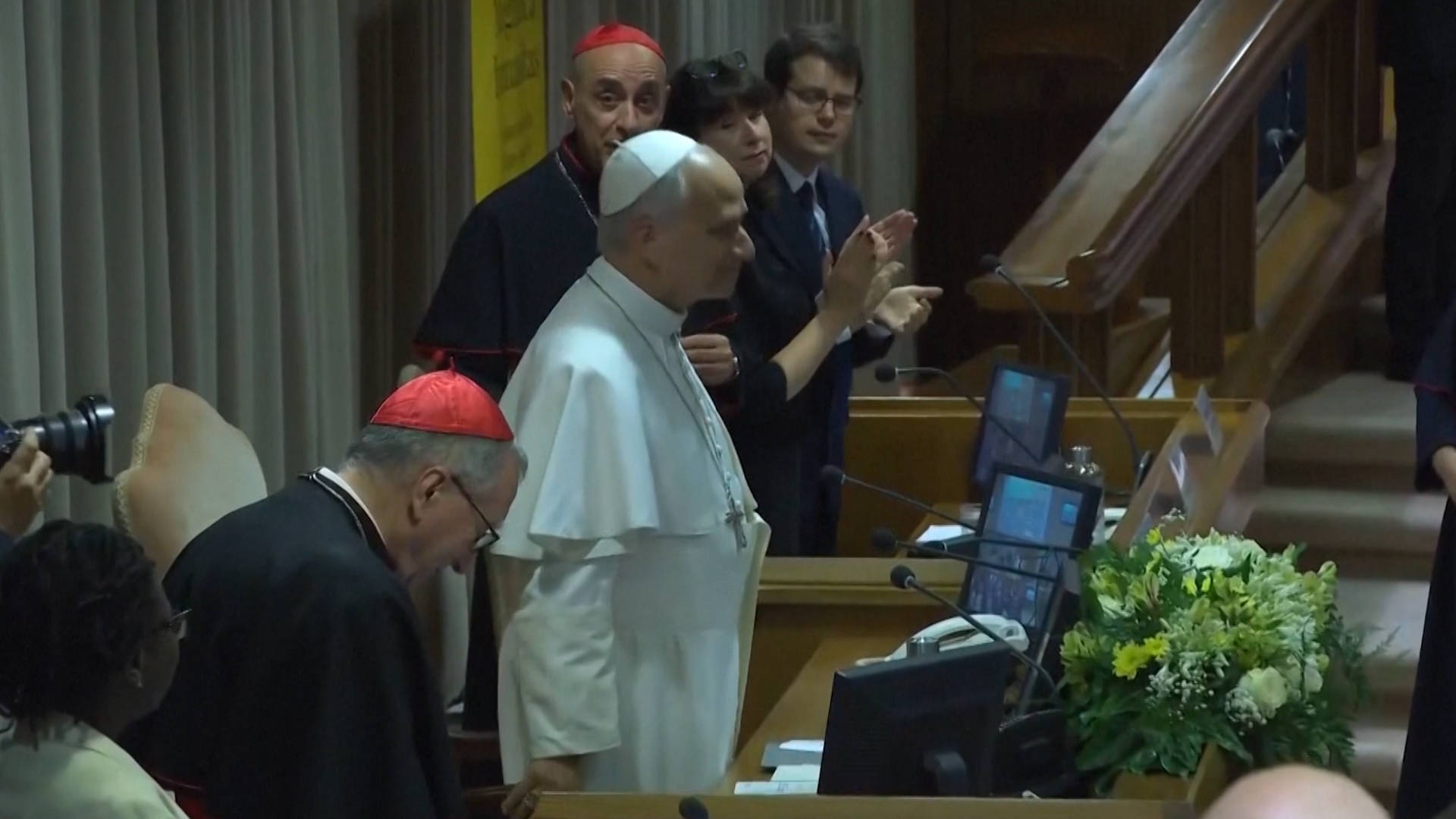
Pope Leo XIV recently issued a monumental papal encyclical, a comprehensive declaration exceeding 42,000 words, directly addressing the profound ethical and societal risks associated with advanced artificial intelligence. Presented in a joint effort with Christopher Olah, a distinguished co-founder of the AI research and safety company Anthropic, the encyclical serves as a powerful call to action. It advocates for immediate and robust government regulation of AI, comprehensive retraining programs to prepare the workforce for technological shifts, and significant improvements in educational curricula to equip students for an AI-driven future. Furthermore, the declaration champions stronger protections for children in the digital age and stresses the absolute necessity of maintaining human control over critical decisions, especially concerning the autonomous deployment of weaponry. Pope Leo emphasized that AI's influence is already deeply embedded in our daily lives, shaping human coexistence and fundamentally altering the very nature of modern warfare.
The Pope's Sweeping Call for AI Responsibility
Pope Leo XIV has made an unprecedented move by issuing a papal encyclical, typically reserved for crucial theological or moral teachings, specifically dedicated to the ramifications of artificial intelligence. This extensive document, spanning more than 42,000 words, reflects the Vatican's grave concerns and desire to provide moral and ethical guidance on a rapidly evolving technology. The release was strategically planned alongside Christopher Olah, a co-founder of Anthropic, an AI company focused on building safe and beneficial AI. This collaboration highlights a growing recognition among diverse global leaders that addressing AI's challenges requires a unified, interdisciplinary approach. The encyclical's considerable length is indicative of the multifaceted impact of AI, which touches upon nearly every aspect of human society, from individual well-being to global stability. It underscores the urgent need for a framework that ensures AI development and deployment are aligned with human values and serve the common good, rather than posing threats to humanity's future.
Essential Safeguards and Societal Adaptations for AI
The encyclical articulated by Pope Leo XIV presents a series of critical recommendations aimed at steering artificial intelligence toward a path that benefits humanity. Central to these directives is a robust demand for effective government regulation, which the Pope deems essential to manage the development and proliferation of AI technologies, preventing their misuse and ensuring they adhere to ethical guidelines. Recognizing the economic disruptions AI can cause, the declaration strongly advocates for significant investments in retraining initiatives for workers, enabling them to adapt to new job landscapes and thrive in an evolving economy. Education also receives prominent attention, with calls for reforms to better prepare students, fostering their understanding of AI's capabilities and its ethical dimensions from an early age. A crucial part of the encyclical focuses on providing enhanced protections for children, shielding them from potential negative influences or exploitative uses of AI. Perhaps most significantly, the document insists on unbreakable safeguards to guarantee that crucial decisions, particularly those involving the use of weapons systems, always remain under direct human control, unequivocally preventing autonomous AI from making life-or-death judgments. As Pope Leo XIV eloquently stated, AI's profound impact on "human coexistence" and its capacity to "dramatically chang[e] how war is waged" necessitate these comprehensive measures to ensure technology remains a servant to humanity, not its master.