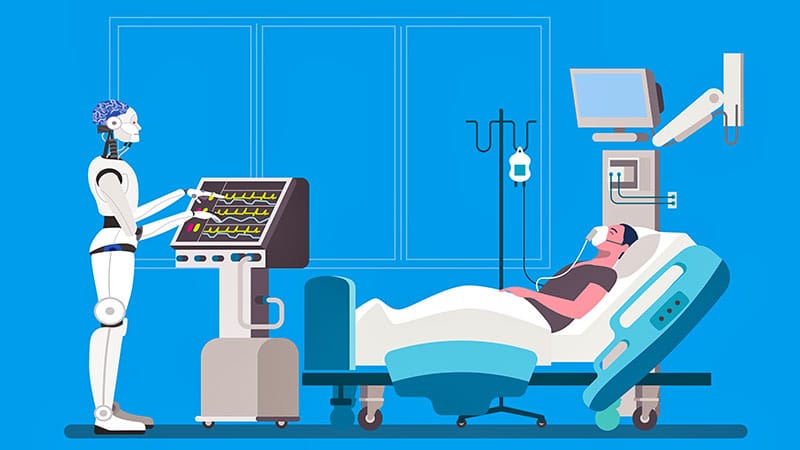
As artificial intelligence (AI) continues to rapidly advance, its integration into primary care is poised to revolutionize patient diagnosis, treatment, and overall management within the next few years. This technological shift is already making significant strides in healthcare, streamlining doctor's work lives by assisting with risk prevention, closing care gaps, triaging patient complaints, remote monitoring, and even digital health coaching, fundamentally altering the patient experience for the better.
Seeing the Doctor and His or Her AI Assistant
AI is significantly simplifying physicians' workflows by aiding in crucial areas such as risk prevention and intervention, identifying and addressing gaps in patient care, efficiently triaging patient complaints, enabling remote monitoring of health conditions, and even providing digital health coaching. This extensive support from AI helps primary care physicians to considerably cut down on the administrative burdens associated with their profession. For instance, doctors typically spend about 12 hours weekly processing prior authorization requests, a task that AI can help mitigate. Dr. Davin Lundquist, a family medicine physician and CMO at Augmedix, highlights the overwhelming nature of data management, referrals, and regulatory demands in primary care, which AI can streamline. Furthermore, Dr. Ford Parsons at Providence Hospitals developed Provaria, a generative AI tool that prioritizes patient messages, ensuring urgent cases, like mental health crises, receive immediate attention over those received earlier. Provaria also assists staff by providing relevant resources and prompts for crafting responses, such as suggesting physical therapist referrals for back pain, thereby enhancing human connection by automating routine, non-critical tasks that doctors would otherwise spend time on.
AI Helps Foster Better Person-to-Person Communication
Traditional medical practice often sees doctors engrossed in note-taking on in-room computers, which can detract from patient interaction and make patients feel unheard. However, advancements in AI technology are transforming this dynamic. Devices such as PLAUD, a compact AI voice-recognition tool that attaches to a smartphone, are designed to seamlessly record and transcribe conversations. This functionality not only automates the laborious process of note-taking but, more importantly, allows physicians to fully engage and listen attentively to their patients' concerns. By offloading the task of furiously jotting down notes, AI enables doctors to maintain direct eye contact and foster a more empathetic and effective person-to-person communication environment, thereby saving valuable time typically spent on manual data entry into electronic medical records.
AI Can’t Be a Compassionate Human
Despite the remarkable capabilities and increasing integration of AI in healthcare, one fundamental human attribute remains beyond its current grasp: compassion. The article points out that while a future "vision" might involve robots diagnosing patients based on symptoms, such a scenario presents significant ethical and emotional downsides. There is an irreplaceable need for human interaction, especially when patients receive grave health updates, such as a metastatic cancer diagnosis. In such critical moments, AI, being nonhuman, cannot convey empathy, support, or understanding in the way a human doctor can. Consequently, while AI proves invaluable in alleviating the extensive administrative workload on primary care and other medical specialists, freeing them from routine tasks, its primary role is to enable human physicians to concentrate on the essence of their profession: healing patients with the indispensable element of human care and compassion.