Quick Buzz Feed

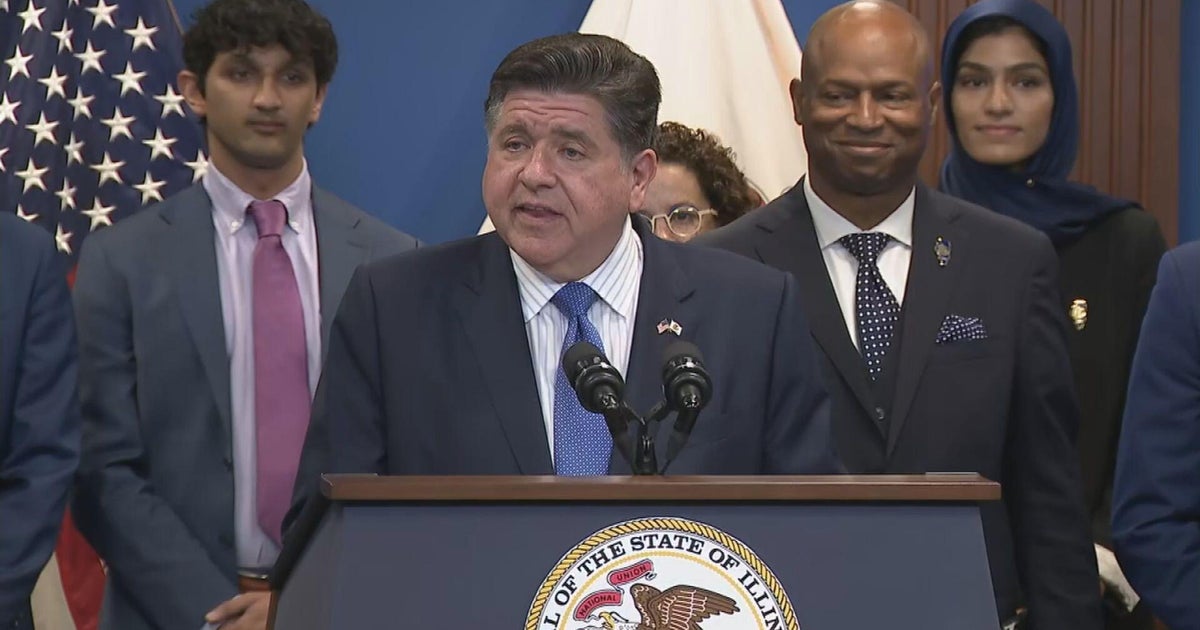
Illinois Gov. JB Pritzker on Monday signed legislation aimed at holding artificial intelligence companies accountable.
Illinois Gov. JB Pritzker signed legislation on Monday designed to hold artificial intelligence companies accountable. This bill, Senate Bill 315, passed unanimously in both the Illinois state Senate and House of Representatives in May. The legislation is particularly significant as it was modeled after 2025 laws enacted in New York and California, thereby contributing to the broader effort to establish a national standard for AI accountability. Lawmakers have highlighted the urgent need for such a standard, pointing to a perceived lack of comprehensive federal oversight in this rapidly evolving technological landscape. By drawing on existing state-level precedents, Illinois aims to further solidify a regulatory framework that addresses the complexities and potential risks associated with artificial intelligence development and deployment.
Governor Pritzker articulated a nuanced perspective on artificial intelligence, hailing it as the 'single most significant technological innovation and development of the modern age.' He acknowledged its immense potential to foster economic growth, boost productivity, drive innovation across various sectors, and significantly improve the quality of life. However, Pritzker swiftly pivoted to express profound concern over what he termed the 'catastrophic risk' that accompanies this transformative technology, much of which he noted is not yet fully understood. He critically assessed the prevailing regulatory environment, lamenting a 'glaring, but not surprising lack of leadership and foresight' from the federal government. Compounding this, he criticized the 'mindless rush to riches among private-sector tech leaders,' which he believes has fueled a 'race to the bottom.' This unchecked pursuit of profit, Pritzker warned, has resulted in inadequate protection of private and personal information, the potential for harmful model behavior, and unforeseen 'algorithm jailbreaks,' all of which he identified as serious threats to public interest and the future of society.
Senate Bill 315 introduces several crucial requirements designed to enhance accountability and transparency within the artificial intelligence industry. A cornerstone of the legislation is the mandate for AI developers to create and publicly disseminate a comprehensive transparency framework. This framework must explicitly detail the methodologies employed by companies to apply established industry standards, rigorously measure the capabilities and limitations of their AI models, and accurately assess the probability and potential impact of catastrophic risks. Furthermore, it requires developers to outline their protocols for identifying and effectively responding to safety incidents that may arise from their AI systems. In an innovative and somewhat contentious move, the bill also necessitates that developers engage independent third-party auditors. The role of these auditors is to meticulously ensure that companies are in full compliance with the transparency frameworks they have established, adding an external layer of verification to the accountability process. This auditing provision, however, has become a point of discussion and concern for some industry stakeholders, notably TechNet, a prominent coalition representing tech executives across the sector.
Senate Bill 315 is strategically designed to target the most powerful and influential players in the artificial intelligence landscape, focusing on companies developing highly capable AI models. The bill establishes specific thresholds for applicability, including a minimum of $500 million in revenue and a substantial computing measurement, ensuring its focus remains on the largest and most impactful entities in the industry. Significantly, the legislation garnered considerable support, even from within the tech sector, with major AI developers such as OpenAI and Anthropic actively backing its passage throughout the legislative process. This broad support contributed to its overwhelming approval in the state House, where it passed with an impressive 110-0 vote, and subsequently in the state Senate, with a robust 52-5 vote. Senate sponsor Sen. Mary Edly-Allen (D-Libertyville) vividly characterized the current state of AI technology as the 'wild, wild West,' emphasizing the critical lesson learned from past regulatory approaches. She cautioned against repeating the minimal, belated oversight that characterized the initial handling of social media, advocating instead for a proactive and comprehensive regulatory strategy for AI to safeguard public interests.
The official signing ceremony for Senate Bill 315 took place on Monday morning, with Illinois Gov. JB Pritzker presiding over the event. He was joined by several key state officials, underscoring the bipartisan and broad governmental support for this landmark artificial intelligence accountability legislation. Among the notable attendees were Illinois Attorney General Kwame Raoul, who plays a crucial role in legal enforcement and consumer protection within the state, and House Speaker Emanuel 'Chris' Welch (D-Westchester), a key legislative leader instrumental in the bill's passage through the state House of Representatives. The article explicitly credits Capitol News Illinois for its contribution to the report. Capitol News Illinois is identified as a nonprofit, nonpartisan news service, committed to distributing state government coverage to a wide array of news outlets across Illinois. Its operational funding is primarily derived from the Illinois Press Foundation and the Robert R. McCormick Foundation, highlighting its independent and public-service oriented mission in journalistic reporting.