The Rapid City Council voted Monday to delay a proposed artificial intelligence policy, giving city staff more time to make the rules clearer and more specific.
Policy Delay and Foundational Principles The Rapid City Council unanimously decided to postpone the vote on its proposed artificial intelligence policy during a recent Monday session. This delay was enacted to grant city staff additional time and opportunity to enhance the policy's clarity and introduce more specific guidelines and definitions. The foundational policy, which spans four pages and is meticulously divided into six distinct sections, is built upon a sextet of guiding principles. These principles encompass crucial aspects such as ensuring direct human oversight in AI operations, promoting transparency in AI's decision-making processes, establishing clear accountability for AI-driven outcomes, upholding equity and fairness across all applications, guaranteeing robust privacy and data protection, and maintaining the highest standards of security and reliability for all AI systems utilized by the city. Critique on Lack of Definitional Specificity During the public engagement segment of the council meeting, Jordan Mason, representing Launch AI Works, voiced substantial concerns regarding the policy's notable lack of definitional precision. Mason critically observed that despite the document's four-page length, it conspicuously fails to provide definitions for fundamental terms such as “AI tools,” “sensitive data,” and “appropriate review.” He emphatically argued that this absence of clear definitions renders the policy fundamentally inadequate and problematic. Mason further illustrated this flaw by stating that, as it stands, the policy is incapable of guiding an employee on how to differentiate between performing a routine internet search using Google and identifying an actual security breach, highlighting a significant and critical gap in its practical applicability. Councilwoman Meyer's Reservations on AI Autonomy Ward 5 Councilwoman Callie Meyer contributed to the discussion by expressing her profound reservations about the use and perception of artificial intelligence, which she jokingly referred to as her "AI rant." Her primary contention revolved around the misconception of AI as a thinking entity; she firmly stated, "AI does not think." Meyer articulated her concern that AI largely functions by plagiarizing "every digital thought in the world," resulting in outputs influenced by confirmation bias and perpetuating an "echo chamber" effect. She also humorously noted that the Marion-Webster Dictionary's selection of "slop" as the word of the year was attributable to generative AI. Meyer concluded her critique by asserting her disinclination to entertain or read AI-generated emails, emphasizing that if an individual cannot dedicate the effort to compose an email personally, she sees no compelling reason to engage with it. IT Director's Vision for Future Implementation In response to the expressed concerns, Rapid City IT Director Jim Gilbert offered clarification on the city's approach to AI policy development. Gilbert conveyed that the current policy document was specifically designed to serve as an initial "guidepost," a foundational framework rather than a fully exhaustive set of instructions. He further elaborated that the city intends to introduce a more comprehensive and in-depth "toolkit" in the foreseeable future. This forthcoming toolkit is expected to provide more detailed operational guidance and specific protocols for the implementation and management of AI technologies within the city's various departments. Mandate for an Enhanced AI Document Concluding the discussion, Ward 4 Councilman John B Roberts took the initiative to propose a motion, which called for a more robust and thorough document addressing artificial intelligence. This motion specifically directed city staff to undertake the task of producing a significantly more detailed and comprehensive policy. The council demonstrated unanimous support for Roberts' proposal, signaling a collective desire for a stronger regulatory framework. However, a specific timeline or target date for the drafting and subsequent review of this enhanced AI document was not established during the session.
Policy Delay and Foundational Principles
The Rapid City Council unanimously decided to postpone the vote on its proposed artificial intelligence policy during a recent Monday session. This delay was enacted to grant city staff additional time and opportunity to enhance the policy's clarity and introduce more specific guidelines and definitions. The foundational policy, which spans four pages and is meticulously divided into six distinct sections, is built upon a sextet of guiding principles. These principles encompass crucial aspects such as ensuring direct human oversight in AI operations, promoting transparency in AI's decision-making processes, establishing clear accountability for AI-driven outcomes, upholding equity and fairness across all applications, guaranteeing robust privacy and data protection, and maintaining the highest standards of security and reliability for all AI systems utilized by the city.
Critique on Lack of Definitional Specificity
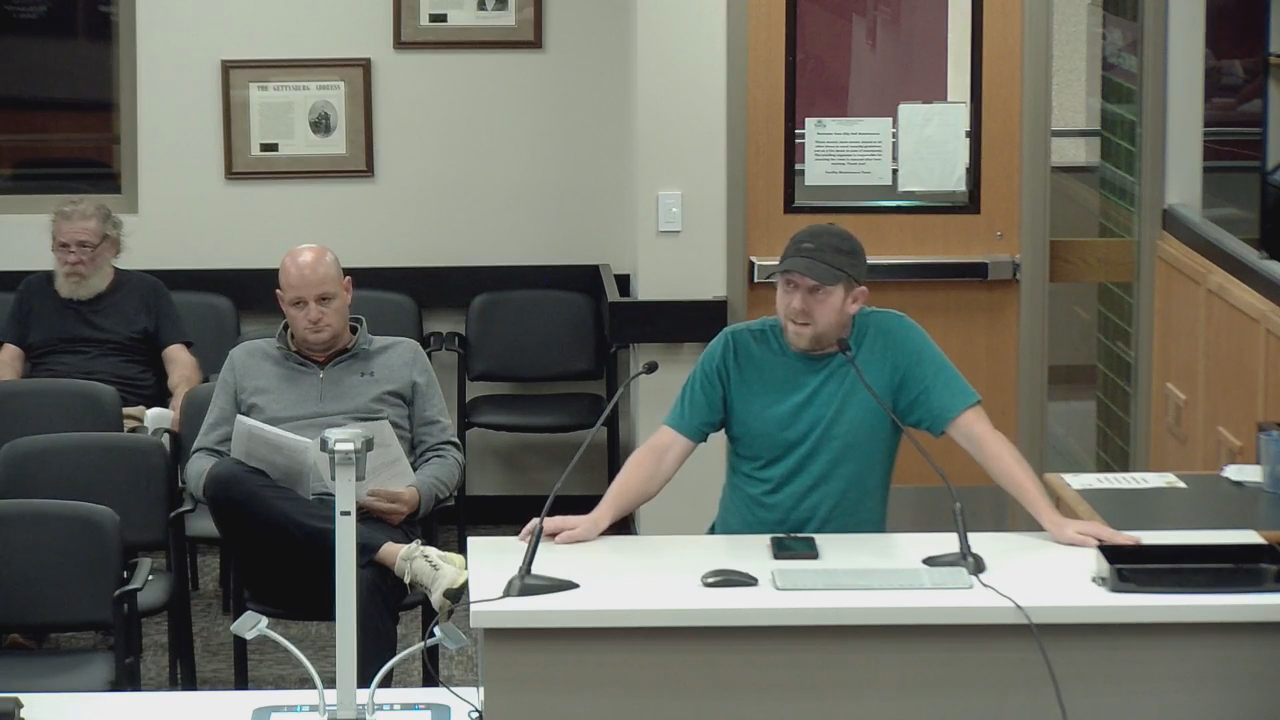
During the public engagement segment of the council meeting, Jordan Mason, representing Launch AI Works, voiced substantial concerns regarding the policy's notable lack of definitional precision. Mason critically observed that despite the document's four-page length, it conspicuously fails to provide definitions for fundamental terms such as “AI tools,” “sensitive data,” and “appropriate review.” He emphatically argued that this absence of clear definitions renders the policy fundamentally inadequate and problematic. Mason further illustrated this flaw by stating that, as it stands, the policy is incapable of guiding an employee on how to differentiate between performing a routine internet search using Google and identifying an actual security breach, highlighting a significant and critical gap in its practical applicability.
Councilwoman Meyer's Reservations on AI Autonomy
Ward 5 Councilwoman Callie Meyer contributed to the discussion by expressing her profound reservations about the use and perception of artificial intelligence, which she jokingly referred to as her "AI rant." Her primary contention revolved around the misconception of AI as a thinking entity; she firmly stated, "AI does not think." Meyer articulated her concern that AI largely functions by plagiarizing "every digital thought in the world," resulting in outputs influenced by confirmation bias and perpetuating an "echo chamber" effect. She also humorously noted that the Marion-Webster Dictionary's selection of "slop" as the word of the year was attributable to generative AI. Meyer concluded her critique by asserting her disinclination to entertain or read AI-generated emails, emphasizing that if an individual cannot dedicate the effort to compose an email personally, she sees no compelling reason to engage with it.
IT Director's Vision for Future Implementation
In response to the expressed concerns, Rapid City IT Director Jim Gilbert offered clarification on the city's approach to AI policy development. Gilbert conveyed that the current policy document was specifically designed to serve as an initial "guidepost," a foundational framework rather than a fully exhaustive set of instructions. He further elaborated that the city intends to introduce a more comprehensive and in-depth "toolkit" in the foreseeable future. This forthcoming toolkit is expected to provide more detailed operational guidance and specific protocols for the implementation and management of AI technologies within the city's various departments.
Mandate for an Enhanced AI Document
Concluding the discussion, Ward 4 Councilman John B Roberts took the initiative to propose a motion, which called for a more robust and thorough document addressing artificial intelligence. This motion specifically directed city staff to undertake the task of producing a significantly more detailed and comprehensive policy. The council demonstrated unanimous support for Roberts' proposal, signaling a collective desire for a stronger regulatory framework. However, a specific timeline or target date for the drafting and subsequent review of this enhanced AI document was not established during the session.