Quick Buzz Feed

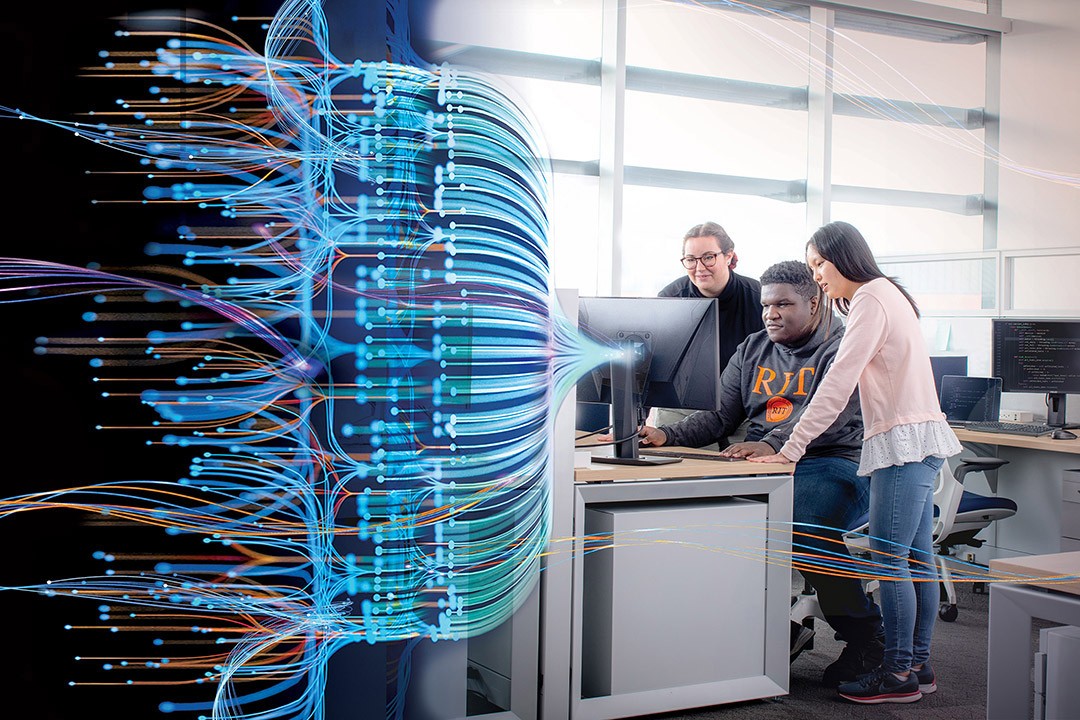
Rochester Institute of Technology is now offering a Bachelor of Science degree in artificial intelligence. The BS in AI program is tech heavy and hands on.
Rochester Institute of Technology (RIT) is at the forefront of educational innovation with the introduction of its new Bachelor of Science (BS) degree in Artificial Intelligence (AI), set to commence in the fall of 2026. This groundbreaking undergraduate program is designed to be inherently interdisciplinary, meticulously blending foundational programming expertise and core algorithmic principles with expansive opportunities for specialized study. Students will engage in high-impact, hands-on projects focused on the development, refinement, and practical application of AI technologies across various domains, equipping them to make a tangible difference. The curriculum is carefully crafted to meet the dynamic needs of the industry, ensuring that graduates possess the technical acumen and practical skills highly sought after in the rapidly evolving AI landscape. RIT's legacy in computing education is significant, having been recognized by U.S. News & World Report for its highly-ranked computer science program (No. 54 in 2026) and pioneering the nation's first undergraduate programs in information technology and software engineering. The introduction of AI courses dates back to 1986, demonstrating a long-standing commitment to this field. This new BS in AI is poised to continue RIT’s tradition of curriculum innovation, preparing students not just to utilize current AI technologies but to actively shape the next generation of AI systems. Matt Huenerfauth, dean of RIT’s Golisano College of Computing and Information Sciences (GCCIS), emphasizes that the degree is informed by comprehensive industry insights and the collective expertise within the college, upholding RIT's hallmark of hands-on, practical education. Prospective students interested in this program can reach out to the office of Undergraduate Admissions for detailed information regarding admission processes.
In parallel with the new Bachelor of Science program, RIT’s Golisano College of Computing and Information Sciences is also launching a minor in Artificial Intelligence, effective in Fall 2026. This minor offers a robust and rigorous technical foundation in the fundamental methods and computational principles that underpin contemporary AI. Comprising six distinct courses, the curriculum delves into critical areas of AI. Students pursuing this minor will gain in-depth knowledge and practical experience in supervised and unsupervised learning techniques, exploring a wide array of machine learning approaches. Furthermore, the program covers diverse applications of AI, including natural language processing (NLP), computer vision, geospatial computing, cybersecurity applications, and the principles of generative modeling. This broad exposure ensures that students understand the versatility and pervasive influence of AI across various technological sectors. The AI minor is designed to be accessible to all RIT majors, provided they fulfill specific foundational programming experience requirements. This inclusive approach allows students from a variety of academic backgrounds to integrate a strong understanding of AI into their primary fields of study, enhancing their interdisciplinary capabilities and preparing them for a future where AI literacy is increasingly essential across all professions.
The core curriculum of RIT's BS in AI program is meticulously structured to provide comprehensive and cutting-edge knowledge in advanced artificial intelligence concepts. Key areas of study include optimization algorithms, ensuring students can design efficient and effective AI solutions. A significant emphasis is placed on the security of AI systems, addressing the crucial need to protect these technologies from vulnerabilities and misuse. The program also extensively covers large language models, an area of rapidly growing importance, alongside reinforcement learning, which involves training AI agents to make decisions through trial and error, and various advanced machine learning techniques. Beyond this core, students are afforded the flexibility to personalize their educational journey by selecting elective courses. These electives allow for specialization in diverse domains of AI, such as computer vision, which focuses on enabling computers to 'see' and interpret visual data, and robotic systems, involving the design and control of intelligent robots. Other elective pathways include natural language processing, dedicated to the interaction between computers and human language, and the critical field of AI policy and law, which explores the regulatory and ethical frameworks governing AI development and deployment. A distinctive feature of the first year is the 'AI Explorations' course. This introductory module provides students with a foundational understanding of the historical trajectory of AI, crucial ethical considerations, data governance, and key algorithms that define the field. The overarching goal is to cultivate future AI professionals who possess not only technical prowess but also a profound awareness and ability to critically assess the ethical, economic, and societal impacts of AI solutions within global and environmental contexts, thereby fostering responsible innovation. Michael Yacci, senior associate dean for Academic Affairs in GCCIS, highlights that graduates will not only gain the technical expertise to build and improve AI systems but also acquire essential processes for evaluating the accuracy and validity of any AI solution they develop or encounter.
A cornerstone of RIT's educational philosophy, particularly evident in the new Bachelor of Science in AI program, is its strong emphasis on experiential learning. The 122-credit undergraduate program is typically completed over four years, during which students will undertake two distinct blocks of cooperative education (co-op). This integrated learning approach involves paid work experiences directly relevant to the student’s field of study, providing invaluable real-world exposure and professional development before graduation. Co-op placements are a hallmark of an RIT education, ensuring that students apply their theoretical knowledge in practical industry settings and gain professional competencies. In addition to the undergraduate offerings, RIT has been progressively expanding its AI education ecosystem. In 2023, the university successfully launched a Master’s degree in AI, catering to graduate students seeking advanced specialization in the field. Furthermore, RIT actively integrates AI studies across a multitude of its existing degree programs, minors, and immersions. This pervasive integration allows a broad spectrum of students, regardless of their primary major, to engage with and apply AI concepts, reflecting the university’s commitment to preparing its entire student body for a future increasingly influenced by artificial intelligence. For more detailed information about the Bachelor of Science in AI, prospective students are encouraged to visit the dedicated artificial intelligence Bachelor of Science degree webpage.