Quick Buzz Feed

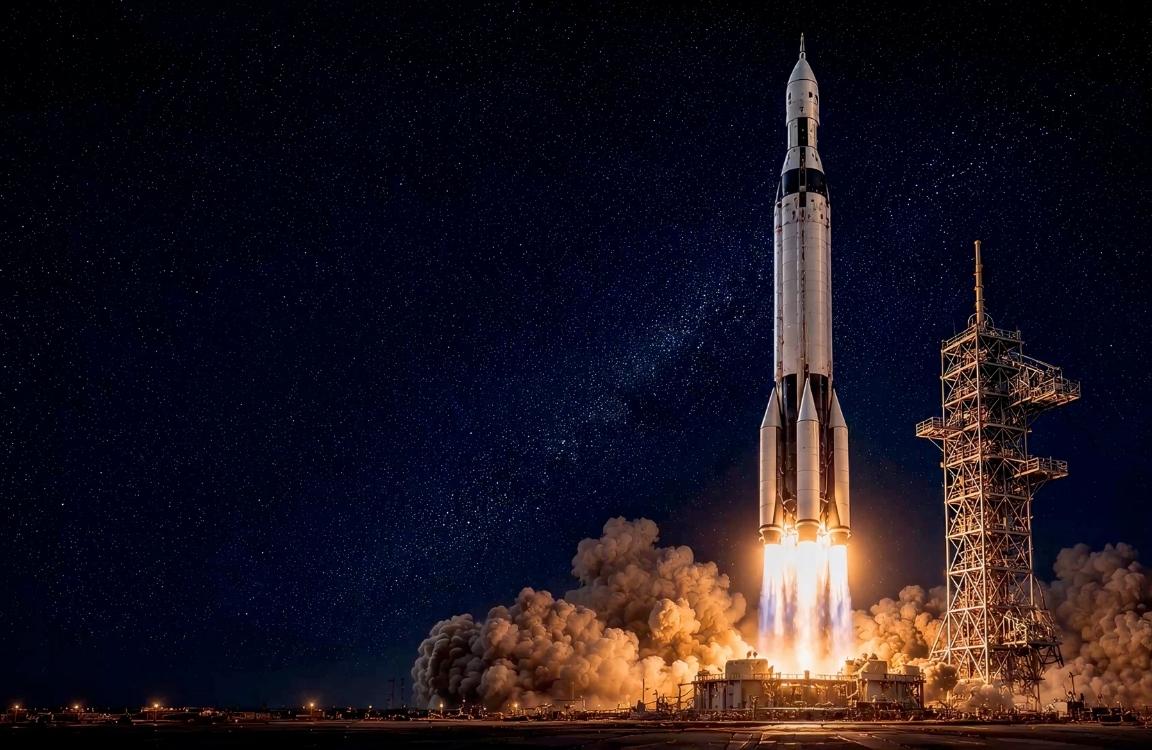
Rocket One announced it has entered into a nonexclusive patent license agreement with NASA covering the Affordable Vehicle Avionics System.
Rocket One Inc., a technology company based in Hoboken, has formally announced its entry into a nonexclusive patent license agreement with NASA. This significant partnership, disclosed on July 30, grants Rocket One access to NASA's proprietary Affordable Vehicle Avionics System. This system represents a crucial technological asset, forming the cornerstone for Rocket One's ambitious plans to develop and commercialize advanced artificial intelligence infrastructure and sophisticated technologies tailored for the rapidly expanding defense and space sectors. The agreement underscores a strategic move by Rocket One to leverage established intellectual property to accelerate its innovation in critical aerospace applications, positioning itself at the forefront of AI integration in space technology.
The newly licensed NASA technology is poised to become the foundational core for Rocket One's forthcoming AI-powered software platform. This innovative platform is envisioned to provide comprehensive support for a multitude of critical functions, including intricate spacecraft mission planning, advanced avionics modeling, high-fidelity simulation, and streamlined engineering workflows. Under the specific terms of the nonexclusive agreement, Rocket One gains explicit rights to extensively develop and strategically commercialize software solutions, sophisticated analytical tools, and integrated technical workflows. These offerings will directly utilize NASA's patented technology, with a clearly defined scope of use concentrating on enhancing the capabilities for modeling, simulation, testing, and comprehensive mission planning specifically for space-vehicle avionics systems. This strategic acquisition of intellectual property is central to Rocket One's mission to modernize and optimize space operations through intelligent software.
Rocket One's overarching strategy involves the seamless integration of this licensed technology into a robust, AI-enabled platform. This platform is meticulously engineered to significantly enhance and streamline various aspects of spacecraft operations, ranging from the initial stages of engineering to ensuring mission readiness. It will also provide sophisticated tools for in-depth avionics analysis and support critical technical decision-making processes. The target clientele for this advanced platform includes a diverse array of stakeholders within the space industry: commercial launch providers, global satellite operators, leading aerospace companies, defense contractors, and governmental organizations. Robb Knie, President and CEO of Rocket One, articulated the profound impact of this development, stating that 'As humanity enters a new era of commercial spaceflight, orbital infrastructure and autonomous spacecraft, artificial intelligence will become an increasingly important component of mission planning and spacecraft engineering.' He further emphasized the company's belief that 'AI-driven mission software has the potential to improve engineering efficiency, accelerate mission planning and support the next generation of commercial and national security space missions.' This vision highlights AI's pivotal role in shaping the future of space exploration and defense.
This patent license agreement with NASA is a critical addition that strategically complements Rocket One's already expanding portfolio of intellectual property. The company has been actively building a diverse array of assets focused on artificial intelligence, advanced semiconductor technologies, and various space-related innovations. This latest acquisition is a testament to Rocket One's persistent execution of its long-term strategy, which centers on developing cutting-edge technologies to serve the rapidly evolving space economy. By integrating NASA's proven technology, alongside its previously announced initiatives in advanced computing architectures and AI infrastructure, Rocket One significantly bolsters its core technological foundation, thereby enhancing its capabilities to support a wide range of future aerospace and defense applications. This strategic growth positions Rocket One as a key innovator in the intelligent space technology landscape.
Rocket One has outlined a comprehensive commercialization roadmap for its AI-powered platform. This roadmap meticulously details the development of software solutions specifically designed to support crucial operational areas such as launch readiness assessments, intricate spacecraft mission planning, efficient engineering documentation, sophisticated avionics modeling, streamlined simulation workflows, and seamless mission integration. Beyond internal development, the company is actively seeking to establish strategic collaborations with prominent commercial space companies, esteemed universities, various governmental organizations, and other influential aerospace partners. These collaborations are integral to advancing the platform efficiently towards its full commercial deployment. The agreement itself incorporates a multi-phased commercialization plan, which includes initial product architecture design, rigorous prototype development, extensive market validation efforts, the execution of pilot programs with key partners, and culminating in an anticipated initial commercial launch. This structured approach aims to ensure a robust and successful introduction of their advanced AI platform to the market.