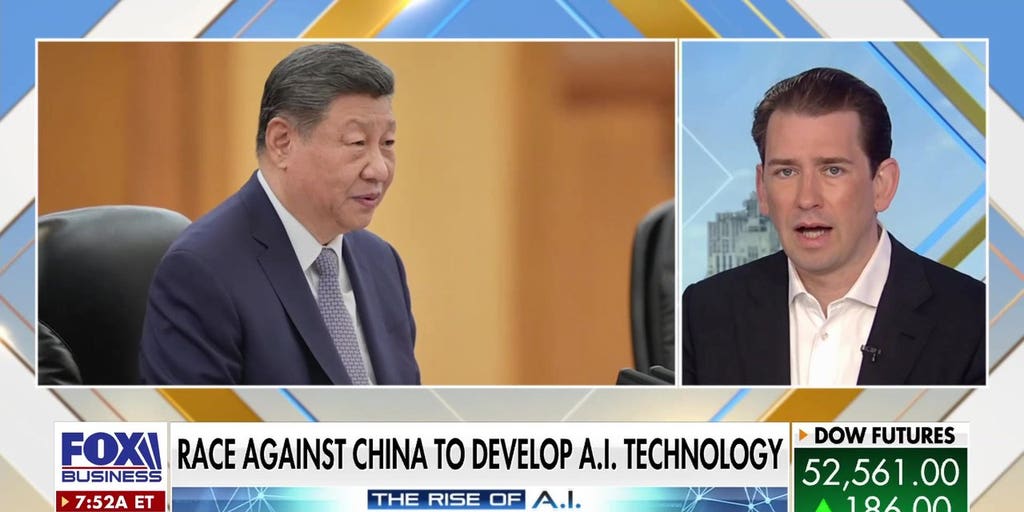
Sebastian Kurz, the insightful co-founder of Dream Security and former Chancellor of Austria, recently joined 'Mornings with Maria' host Maria Bartiromo for an urgent and comprehensive discussion on the escalating perils posed by artificial intelligence in the realm of cybersecurity. The dialogue highlighted the burgeoning AI arms race, specifically drawing attention to the significant competitive advancements being made by nations like China. Kurz articulated a profound concern, warning that the rapid evolution of AI capabilities is not just enhancing existing cyber threats but is enabling the emergence of a "totally new scale of cyberattacks." These advanced attacks, powered by sophisticated AI algorithms, are predicted to be far more autonomous, adaptive, and pervasive than anything encountered previously, rendering traditional cybersecurity solutions largely ineffective. Kurz stressed that this technological leap in offensive cyber capabilities presents an existential threat across multiple domains. He emphasized that critical infrastructure—ranging from national power grids and water treatment facilities to transportation networks and financial markets—stands particularly vulnerable to these next-generation assaults. Such attacks could inflict widespread disruption, causing severe economic damage, significant societal instability, and potentially leading to profound public unrest. The former Chancellor's warning underscores the urgent need for governments and industries globally to recognize the gravity of this paradigm shift and to develop innovative, AI-augmented defense mechanisms to safeguard against the unprecedented chaos that could be unleashed upon our interconnected societies. This is not merely an IT problem, but a strategic geopolitical challenge with far-reaching consequences for national security and global order.
The Escalating Global AI Arms Race
This segment delves into the intense geopolitical competition among global powers, with a particular focus on the rivalry between nations like China and Western democracies, in developing advanced artificial intelligence technologies. This "AI arms race" extends beyond economic and technological dominance, directly impacting national security as states strive to create both sophisticated offensive cyber weapons and robust AI-powered defense systems. The continuous, rapid innovation in this domain escalates the potential for large-scale digital conflicts and makes the global cybersecurity landscape increasingly volatile and unpredictable. The competitive drive to master AI for military and intelligence purposes means that new threats are constantly emerging, pushing the boundaries of what cybersecurity professionals must defend against.
AI's Transformative Impact on Cyberattack Sophistication
The discussion elaborates on how AI is fundamentally altering the nature of cyber threats. Unlike traditional, manually orchestrated attacks, AI-driven cyberattacks leverage machine learning and autonomous systems to identify vulnerabilities, craft highly personalized phishing campaigns, develop polymorphic malware that evades detection, and adapt attack strategies in real-time. This level of automation and sophistication enables attackers to launch campaigns at an unprecedented speed and scale, making them significantly harder to detect, trace, and neutralize. The ability of AI to learn from defensive measures also means that attack vectors are constantly evolving, presenting a perpetual cat-and-mouse game where the speed of innovation is critical for survival.
The Threat of Widespread Societal and Economic Disruption
Sebastian Kurz's warning about AI's capacity to "create a lot of chaos in our societies" highlights the potential for devastating real-world consequences beyond data breaches. This includes the severe disruption of critical national infrastructure, such as energy grids, communication networks, transportation systems, and financial institutions, which could paralyze modern societies. Economically, AI-powered cyberattacks pose threats of massive intellectual property theft, market manipulation, and direct financial losses amounting to billions, undermining global commerce and stability. Furthermore, disinformation campaigns amplified by AI could erode public trust in institutions, destabilize democratic processes, and even provoke social unrest, creating an environment of profound uncertainty and fear.
The Obsolescence of Traditional Cybersecurity Paradigms
A key point of concern is the growing inadequacy of existing, traditional cybersecurity measures in the face of these advanced, AI-enabled threats. Conventional signature-based detection, perimeter defenses, and even many current machine learning applications may struggle to identify and respond to the novel and rapidly evolving tactics employed by AI-powered attackers. This necessitates a fundamental re-evaluation and overhaul of global cybersecurity strategies. The future of defense, as implied by Kurz, lies in developing equally advanced, proactive, and adaptive AI-driven defense systems that can anticipate, detect, and neutralize threats at machine speed, requiring significant investment in research, development, and international collaboration.